
 E-Paper



‘Savarkar Sadan was granted heritage status 16 years ago’
Maharashtra's UDD urges a heritage committee review to preserve Savarkar Sadan, amid concerns over redevelopment plans linked to political interests.

 Prefer HTon Google


MUMBAI: The state government’s urban development department (UDD) has asked the petitioner in the Savarkar Sadan public interest litigation (PIL) to seek the BMC heritage committee’s assent to preserve the building at Shivaji Park in which Hindu Mahasabha leader and Hindutva icon Vinayak Damodar Savarkar lived. The petitioner’s response is that the BMC had given its nod to the heritage status proposal 16 years ago, and the government is now playing games.
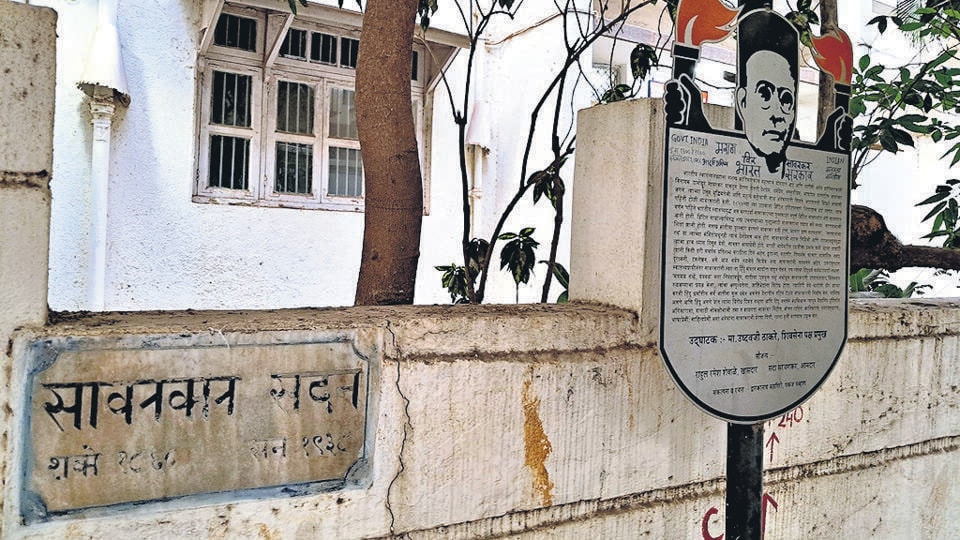
Subsequent to Hindustan Times’ report on May 5 that the building where Savarkar once lived would be demolished and redeveloped, the PIL was filed in the Bombay high court by Pankaj Phadnis, president of the Savarkar-founded Abhinav Bharat Congress. Phadnis is seeking heritage status for Savarkar Sadan, the process of which has been pending with the urban development department since 2011.
On Wednesday, in a letter to the BMC commissioner, the UDD advised the latter to call a meeting of the committee to give an opportunity to Phadnis to present his case, and then take a decision based on merit.
Phadnis, however, is sceptical of the move. “The letter ignores that such a meeting has already been held on January 6, 2009, and a record of the same is already part of the PIL filed in May. Consequent to this meeting, the committee had recommended grant of Heritage Structure Grade II A to Savarkar Sadan...,” his response to the department states.
Grade II A heritage status pertains to buildings/ precincts of regional/ local importance possessing special architectural/ aesthetic merits or cultural/ historical significance. No modification is allowed to the exteriors of such structures while internal changes and adaptive re-use is allowed, subject to strict scrutiny.
In fact, a public notice was also published by the BMC on June 3, 2010, highlighting the proposal to include Savarkar’s Shivaji Park residence in the heritage list. No objections were received in response to the notice.
“It is clear that the intent of the latest letter in advising the municipal commissioner to reinvent the wheel is not simply ignorance of past events,” Phadnis’ communication to UDD reads. “It is nothing but a nefarious design to advance the cut-off date from August 30, 2010, to some undefined date in future so as to protect the financial interests of those who have created third-party rights on the plot subsequent to the cut-off date.”
Hindustan Times had reported that the builder evincing interest in redeveloping the property was close to a political family that espouses the cause of Marathi. Two plots adjacent to Savarkar Sadan will also be amalgamated in the redevelopment project. These include the plot that houses Laxmi Sadan, once home to the renowned classical vocalist Pandit Jitendra Abhisheki, and a plot facing Shivaji Park.
Savarkar Sadan was constructed as a two-storey bungalow in 1938 on a plot measuring around 436.36 square metres. Savarkar, founder of Abhinav Bharat Society, a secret grouping of revolutionaries and a leading figure in the Hindu Mahasabha, lived here. He met several top leaders at the bungalow, including Subhas Chandra Bose in 1940 as well as Nathuram Godse and Narayan Apte in 1948 before the duo left for Delhi to assassinate Mahatma Gandhi.


Stay updated with all the Breaking News and Latest News from Mumbai. Click here for comprehensive coverage of top Cities including Bengaluru, Delhi, Hyderabad, and more across India along with Stay informed on the latest happenings in World News.


