
 E-Paper



State didn’t provide data on political backwardness: MSCBC
Though the Marathas dominate Maharashtra’s politics, the OBCs, who are spread across religion, classes and castes, are considered the largest social block at around 53% of the population


Mumbai After the Supreme Court (SC) refused to accept its interim report that recommended the restoration of the political quota for the other backward classes (OBCs) in the state, the Maharashtra State Commission for Backward Classes (MSCBC) pointed a finger at the state government and said that it did not provide empirical data on political backwardness of the OBCs.
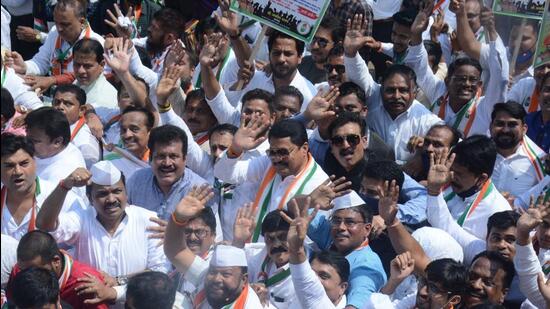
“The said report was entirely based on information submitted by the state government. The Commission’s report clearly mentioned that work on the proposed empirical data-based survey is pending. The reports and papers that were made available by the state government to the Commission were largely dealing with the OBC population and did not indicate political backwardness. As per the SC order, it was binding on the Commission to submit an interim report based on the documents given to it by the government, and hence, the Commission had refrained from expressing its opinion about political backwardness,” said a release issued by the MSCBC after its meeting on Tuesday. The state had submitted eight types of reports and data sets to the Commission.
BL Sagar Killarikar, member of the MSCBC, said, “We analysed the data that was submitted to us by the state government. How can we determine political backwardness if the state did not give us any data in this regard?” B.L. Sagar Killarikar, member of the MSCBC.
Though the Marathas dominate Maharashtra’s politics, the OBCs, who are spread across religion, classes and castes, are considered the largest social block at around 53% of the population. Though some estimates peg their population lower, there is no scientific measurement of caste numbers in Maharashtra, with the last caste-based census having taken place in 1931 in British India.
The MSCBC has also launched work on its final report—the proposed state-wide socio-economic, political and caste survey. This survey, which will cost ₹435 crore, will be the first of its kind in a century to reveal accurate figures of various castes and classes and their social, economic and political status, and may catalyse a major reboot of affirmative action policies. The release pointed out that it took over six months for the state government to approve funds for developing the software to be used in this exercise.
On March 4 2021, the SC had stayed the 27% political reservation for OBC candidates citing the lack of empirical data about the exact nature of their backwardness. The SC had last week refused to accept the interim report of the MSCBC citing “lack of rationale” and “absence of contemporaneous data.”
On January 19, the SC had directed the Maharashtra government to submit data on OBCs to the Commission to examine its correctness and make recommendations on their representation in elections for the local bodies, creating hope that this quota would be restored. The MSCBC submitted its interim report to the government on February 5, in which it said that the OBCs form over 38% of Maharashtra’s population and also recommended 27% reservation in the local body elections. This was later submitted to the SC, which rejected it.
Stay updated with all the Breaking News and Latest News from Mumbai. Click here for comprehensive coverage of top Cities including Bengaluru, Delhi, Hyderabad, and more across India along with Stay informed on the latest happenings in World News.


