
 E-Paper



Mumbai trains: Suburban railway ridership inches back to pre-pandemic levels
The surge in railway commuters over the past 3-4 years was despite the operationalisation of four metro rail corridors in the city

 Prefer HTon Google


Mumbai: The number of passengers ferried by Mumbai’s suburban rail network has returned to pre-pandemic levels after nearly three-and-a-half years. Data collated by Central and Western Railway show that in September this year, the average number of daily commuters on the western, central and harbour lines stood at 7.06 million, just a few thousand short of the average ridership before the first wave of the pandemic emerged in March 2020.
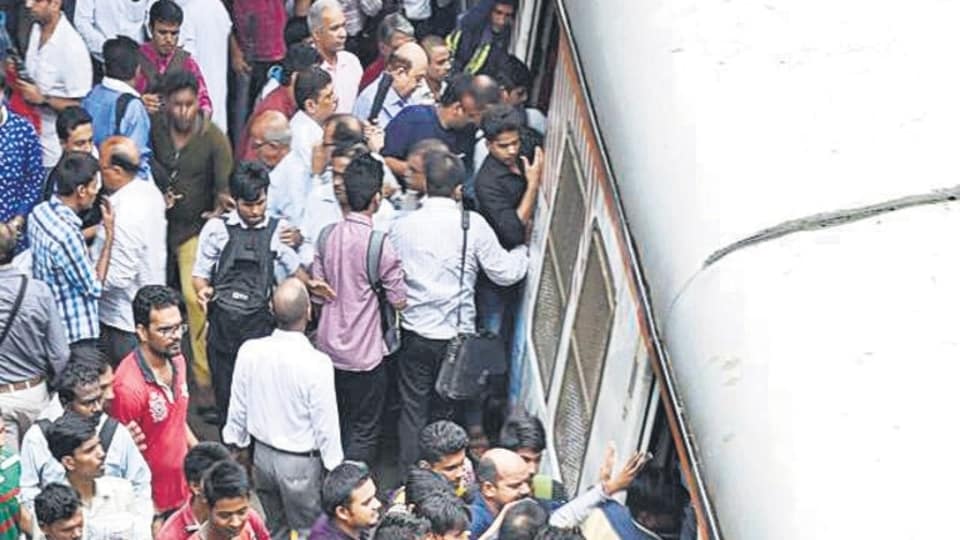
The surge in railway commuters over the past 3-4 years was despite the operationalisation of four metro rail corridors in the city, including the first phase of the Metro 3 corridor between Aarey and Bandra Kurla Complex. The footfall in railway stations on the suburban network – especially at Borivali, Andheri, Dadar, Thane and Kalyan – also spiked during this period, heightening chances of stampedes like the one that occurred at Bandra Terminus on Sunday.
Busiest stations
Data collated by the railways shows that Chhatrapati Shivaji Maharaj Terminus (CSMT) and Churchgate are the most crowded stations on the suburban railway network. In August, the number of commuters who accessed CSMT and Churchgate every day were 569,000 and 432,000, respectively. Stations located in the distant suburbs such as Thane, Kalyan, Panvel, Borviali, Virar and Bhayander followed these two, with an average daily footfall of more than 200,000.
“This trend speaks volumes about how Mumbaikars travel. It shows that people patronise a mode of public transport that has the best last mile connectivity and provides ease of travel,” said an expert in the field of mobility and public policy.
Ticketless travel
The number of ticketless travellers had also increased in the past couple of years, said railway officials. “We suspect that the number of commuters travelling ticketless has gone up substantially, to over 30%, which ideally hovers around 15-20% percent. This seems to be one of the reasons for the heavy crowding inside local trains, although the daily ridership numbers are still lesser than pre-Covid levels,” explained a senior railway official on condition of anonymity.
Between April and September this year, railway authorities recovered ₹22.70 crore through fines in the Mumbai suburban section. Around 8,000 ticketless passengers were detected on the Western Railway network in September, from whom ₹2.69 crore was recovered in fines.
“It is good to see that suburban railway ridership is going back to pre-COVID levels. The induction of air-conditioned locals and new services have a role in this,” said a retired bureaucrat. The spike in railway commuters shows that despite the development of new office districts and modes of public transport, people want last mile connectivity, he noted, adding, “This is a precious lesson for planners.”


