
 E-Paper



The PayTM story is still unfinished business
From a business perspective, “what defensible moat did PayTM build over the last few years?” asks Krishna Jha, an investor and technology entrepreneur. By way of examples, Naykaa caught the imagination of young people looking for beauty products

 Prefer HTon Google


As things are, there are two kinds of people: Those who believe karma has caught up with Vijay Shekhar Sharma for his excesses and PayTM is getting what it deserves. Then there are those who argue Sharma has been wronged and a company built on blood, sweat and tears is being torn down for no apparent reason. The Reserve Bank of India’s (RBI) orders that it cease operations from next month smacks of arbitrariness. “This is not a business blow, but a regulatory blow,” a Bengaluru-based public policy professional who has seen Sharma from close quarters said. “It is the lone desi wolf in a landscape dominated by Amazon, Google and Walmart,” he goes on to add.
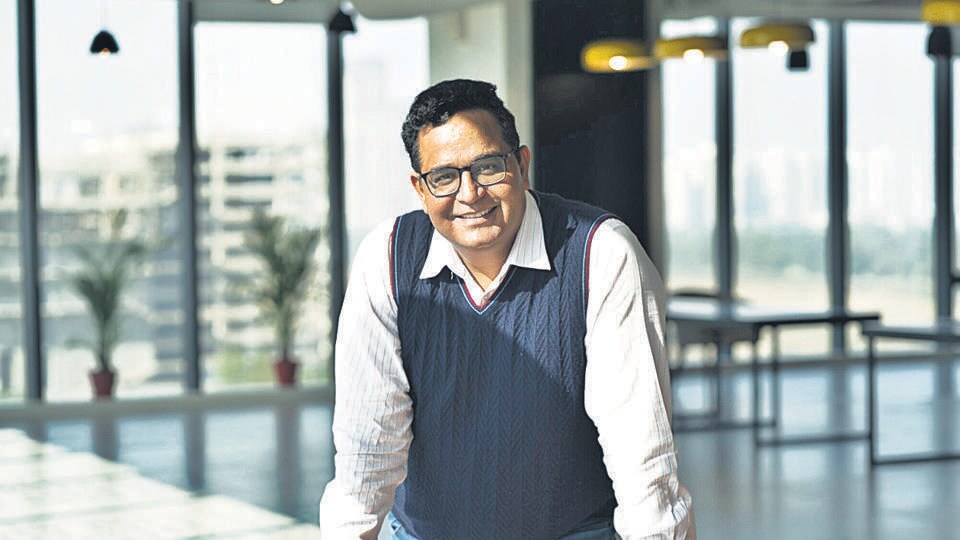
Whatever that truth be, fact is, like all lone wolves, Sharma may have pushed the boundaries of regulation a little too far often. “He was warned at least twice since last year,” the public policy professional says.
From a business perspective, “what defensible moat did PayTM build over the last few years?” asks Krishna Jha, an investor and technology entrepreneur. By way of examples, Naykaa caught the imagination of young people looking for beauty products. Policybazaar is the go-to place for insurance. Cartrade is what people look to for second-hand cars. Jha’s larger point is that after UPI was made interoperable, did PayTM innovate to create an USP? How different is it from GPay or PhonePe? If anything, PayTM resembles just another Non-Banking Financial Institution (NBFC) like Bajaj Finance with an app even as it masquerades as a technology company.
“I still haven’t understood what exactly he is being punished for,” says Sanjay Jain, partner at Bharat Fund, a fintech professional who in an earlier avatar was part of the core team that worked to build UPI. There is much gossip on the street about Sharma falling foul of the political establishment to PayTM being set up for a takeover by a behemoth. “At such times, the industry would benefit greatly from the regulator’s guidance on what went wrong so that they can collectively learn, and course correct, rather than react to rumors and speculation,” says Jain.
The company started life as an app that could be used for payments to mobile devices—that’s why the acronym PayTM. Sharma’s original bet, it would seem, was that money would stay in the PayTM ecosystem. This money could then be deployed to create other innovative financial products and delivered in equally innovative ways by deploying technology.
But Jha argues the first blow Sharma suffered was when this bet went awry. The introduction of UPI and the regulator’s insistence that it be made interoperable with other similar apps such as Google’s GPay and PhonePay. A Mumbai-based industry analyst closely watching the space points out, “PayTM did a great job of acquiring users. Then they did the hard work of getting merchants on UPI. However, the payments business is not a lucrative place to be in.” Which is why, he further explains, the company morphed into an “online mall” to sell other financial services to their users. But this is pretty much what all other banks with an app and fin-techs such as Bajaj Finance do. While Bajaj has gone on to rake in the profits, PayTM has been struggling to staunch its losses.
At the same time, Jha points out, all of this may be true for GPay and PhonePe as well. What is different is that these entities have sugar daddies such as Google and Walmart to bankroll them. When looked at from a distance then, as PayTM’s share prices fall (36% over the last two days), it becomes an increasingly attractive target for a large conglomerate which needs a company such as this in its portfolio. PayTM has done all the grunt work of acquiring users and lining them up.
But will anyone sing? All lips are sealed. What everyone is willing to confirm is that Sharma is the kind of man who has fought many tough battles, gets an adrenaline rush out of it, and writing him off would be foolish.


