
 E-Paper



Triangular fight in offing to gain control of Mumbai
Claiming BMC, which governs India’s financial capital, adds to the wining party’s or alliance’s equity in state politics

 Prefer HTon Google


MUMBAI: With Thackeray cousins forging a united front and Congress deciding to go solo, the civic polls in Mumbai on January 15 is set for a triangular contest – between BJP-Shiv Sena, Shiv Sena (UBT)-MNS and Congress on the third side.
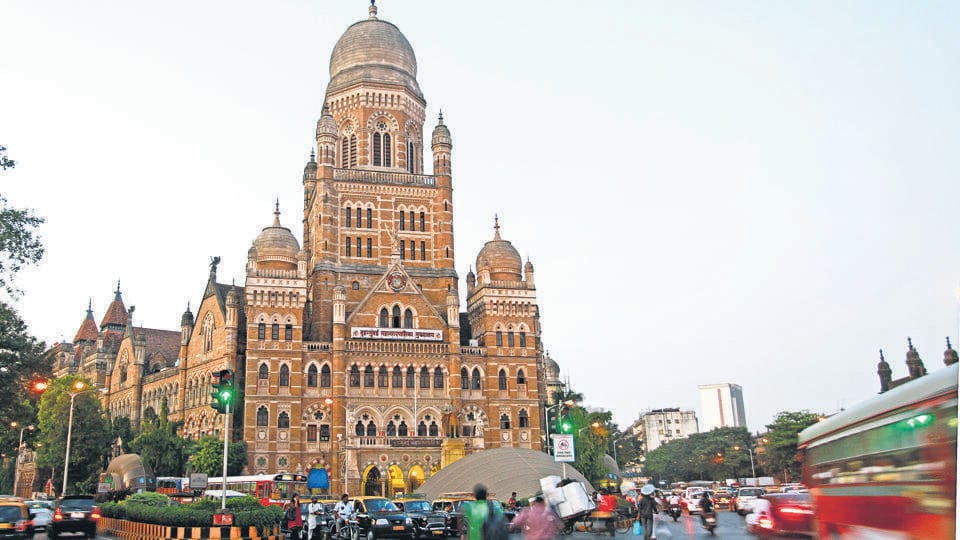
Though the elections are being held for the municipal corporations governing 29 cities, the crucial fight will be for the Brihanmumbai Municipal Corporation (BMC). Claiming BMC, which governs India’s financial capital, adds to the wining party’s or alliance’s equity in state politics.
One of the richest civic bodies in India, the BMC’s budget for 2025-26 is र74,427 crore, possibly the highest of all civic bodies in the country. The undivided Shiv Sena ruled it for around three decades -- sometimes on its own and sometimes with the BJP as its ruling partner. In the last civic election in 2017, Shiv Sena won 84 out of 227 seats and BJP finished a close second with 82 seats. Rest of the seats were won by Congress (31), NCP (9), MNS (7), MIM (3) and others (11). The Sena managed to retain its claim over BMC. A party or an alliance needs to win 114 seats to gain power over BMC.
After 2017
Much water has flown under the bridge since 2017 – Sena split up in 2022 and BJP became the state’s power centre. Aligning with the Eknath Shinde-led Shiv Sena, BJP is bent on winning BMC and choosing its first mayor in Mumbai. While both parties have initiated several infrastructure projects and attempted to solve many of the city’s long pending issues affecting the sections that have been traditional Shiv Sena supporters – from fisherfolks to residents of old buildings -- the two parties have also tried to weaken Shiv Sena (UBT) by poaching its former corporators and grassroots leaders.
A bruised Uddhav Thackeray buried his two-decade long rivalry with cousin Raj, teaming up to win BMC, pushing the Marathi manoos agenda. Raj minced no words when he announced the alliance on Wednesday: “The next mayor of Mumbai will be a Marathi person from the Shiv Sena (UBT)-MNS alliance.”
A senior Shiv Sena (UBT) leader said the party is hoping to repeat its performance from the 2017 civic polls with some improvement in its tally as it is finding support from the city’s Muslims and Dalits. “We fought on our own in 2017 and won 84 seats. The MNS won 7. Yes, Shinde could damage us to some extent but with Raj on board, the losses will be compensated. Also, 40 to 50 seats were won by Congress, NCP and other parties in 2017. Dalits and Muslims will help us win 10-15 from that lot. Together we should be able to reach close to 100 seats,” he said.
Though it is believed a majority of north Indians and Gujaratis – a sizable voter base -- will veer towards BJP and its allies, Sena (UBT) leaders feel some are likely to vote for the party’s candidates where local equations matter.
Their calculations, however, could get affected due to a triangular fight, say leaders from both sides.
“The Congress has three MLAs and one MP in the city, mostly from areas where minority and Dalit votes are decisive. These votes also helped the Thackeray faction to win three Lok Sabha and 10 assembly seats last year. The votes may get divided now with these two parties contesting separately, which may turn out to be an advantage for the BJP-Sena alliance,” pointed out a senior MNS leader.
The BJP, which is hoping to win 100 seats on its own, has planned a campaign blitzkrieg hinging on development, accusing the Thackerays of appeasing minorities. A Hindutva line would be their counter to their Marathi manoos spiel.
“They are speaking about Marathi manoos only for their politics, even as they themselves are responsible for many Marathi-speaking people leaving the city,” chief minister Devendra Fadnavis said on Wednesday. “On the other hand, non-Marathi people are angry with them because they were targeted. Nobody is voting for them. And don’t forget their track record of corruption.”
The Shinde-led Sena is also using the same ammunition and has poached from its rival Thackeray faction, with an aim to weaken the party. Since the split, at least 55 former Sena (UBT) corporators who had won in 2017 have joined Sena. Leaders from both Shiv Sena (UBT) and MNS admit the challenge they are facing to find suitable candidates for all the seats they are contesting. Their resource crunch adds to the handicap.
Meanwhile, with an eye on north Indian votes, Congress looked away from an alliance with MNS. At the same time, its efforts to get Prakash Ambedkar-led Vanchit Bahujan Aghadi (VBA) as an alliance partner in Mumbai has not succeeded yet as the latter is demanding almost half the seats.
“We could not have an alliance with Shiv Sena (UBT) in Mumbai because our party workers wanted to contest most of the seats. We will have an alliance with the Ambedkar-led party wherever possible, depending on local conditions,” said state Congress chief Harshvardhan Sapkal.
The two NCP factions are minor players. While the Ajit Pawar-led NCP is likely to contest on its own, Pawar led NCP (SP) is talking to both its former allies for an acceptable seat-sharing pact.
Though the contest is triangular, the Mumbai civic polls will be largely a fight between the BJP and Sena (UBT), with the former aiming to deliver another blow (after helping Shinde to split the party) by winning the BMC and the latter trying to fight back. The next three weeks will see a high decibel battle in Mumbai.


Stay updated with all the Breaking News and Latest News from Mumbai. Click here for comprehensive coverage of top Cities including Bengaluru, Delhi, Hyderabad, and more across India along with Stay informed on the latest happenings in World News.


