
 E-Paper



Tussle between Guv, MVA on for 27 months
For the first time in the history of the state, a tussle between the ruling parties in the state and the centre-appointed Governor, has kicked up a series of controversies in the past 27 months

 Prefer HTon Google


Mumbai For the first time in the history of the state, a tussle between the ruling parties in the state and the centre-appointed Governor, has kicked up a series of controversies in the past 27 months.
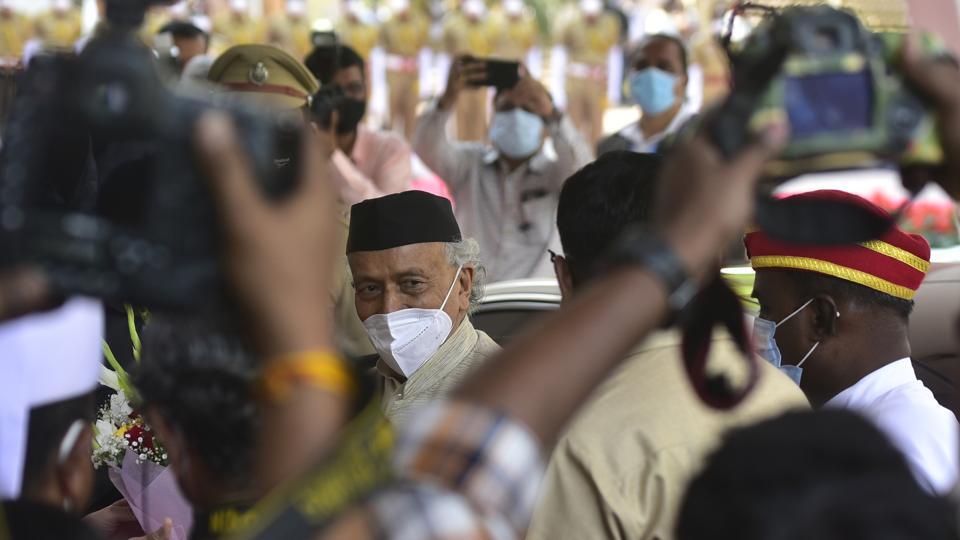
The tussle between the MVA and Governor Bhagat Singh Koshyari started even before the Uddhav Thackeray-led government came to power. Koshyari was criticised for swearing-in the Devendra Fadnavis-led BJP government in a hurried early morning ceremony, even as the MVA partners were working out details of the coalition.
The government that Fadnavis tried to form with a breakaway faction of NCP leaders, led by Ajit Pawar, did not last even for three days. Since then, the relationship between Koshyari and Thackeray government has been anything but cordial, with frequent frictions over various issues.
This tussle is likely to escalate further if Thackeray sends a letter to President Ram Nath Kovind, expressing his unhappiness over Koshyari’s act of leaving the joint session of the state legislature without completing his inaugural address.
Within months of his appointment, the Governor drew ire of the MVA allies for imposing President’s rule on November 12, 2019, based on a report sent by Raj Bhavan.
This tussle between MVA and Raj Bhavan turned bitter in February last year when chief minister Thackeray did not permit Koshyari to use the state’s plane to travel to Mussoorie for a function. The Governor had to de-board the aircraft and take a commercial flight to Dehradun. The chief minister office (CMO) blamed Raj Bhavan officials over the incident.
Political analysts opine that Koshyari is not an isolated case, as all the states where opposition parties are in power are witnessing friction between Governors appointed by the BJP-led central government.
Abhay Deshpande, a political analyst said it is the result of a changed political scenario in the entire country. “Maharashtra is the worst affected among all the other states. This is because the political situation here is intense as BJP could not form the government even after being elected as the single largest party. The Central Bureau of Investigation (CBI), enforcement directorate (ED) and narcotics control bureau (NCB) have never been so active in the state and it is not a coincidence. Maharashtra is certainly on a hit list (of the BJP) and its impact can be seen on the relation between MVA and Raj Bhavan,” Deshpande said.
Hemant Desai, another political analyst, said that this is the strategy of the BJP government. “They have selected Governors of opposition-ruled states who are aggressive and considered mischievous by the opposition parties. Before Maharashtra, we have seen this in Delhi, where the Arvind Kejriwal-led Aam Aadmi Party (AAP) is in power and in West Bengal, where Mamata Banerjee-led Trinamool Congress Party (TMC) is ruling.”
Earlier this week, Koshyari walked out of the joint session of the state legislature by wrapping up his inaugural address in just two minutes.
NCP chief Sharad Pawar, who normally avoids bitter language, did not mince his words on Saturday.
“He (Koshyari) is one of the examples of low-level (politics) of the (BJP-led) central government,” remarked Pawar in Pune.
“Many times, he has refused to follow democratic rights of the state government. For the last one year, he has not appointed 12 members of the legislative council, which is the right of the state government to recommend. If someone has determined that he will not maintain the dignity of a position, then it is better not to comment about that person. President and the prime minister need to look into all this,” he remarked.
Shiv Sena Rajya Sabha MP Sanjay Raut said on Saturday, “The removal of the Governor is not being sought just by the government but by the people of Maharashtra, as he works like the BJP state unit chief.”
Coming in defence of the Governor, leader of opposition Devendra Fadnavis said that the MVA is creating a narrative against Koshyari, who is following the Constitution.
“They purposely committed unconstitutional acts and then blame the Governor. They are trying to create a narrative. I feel that the Governor occupies a constitutional position and is acting as per the Constitution. It is wrong to target him like this,” said the former chief minister.
On Thursday evening, a delegation of senior MVA ministers headed by deputy chief minister Ajit Pawar met the Governor and requested him to allow the Speaker election.
The state government wanted to hold the Speaker election on December 28 last year during winter session but they could not get Governor’s permission. This led to an engagement of harsh words between Thackeray and Raj Bhavan.


