
 E-Paper



27% water samples taken this year fail safety tests
According to data available with the health department, total 358 water samples were collected randomly from different public and private establishments this year, of which 95 samples failed the safety tests


At least 27% of the drinking water samples collected by the health department from different sources across the city this year have failed the safety tests and were unfit for consumption with officials claiming that most of the failed samples were checked for contaminants, which majorly included faecal matter that causes a large number of water-borne diseases.
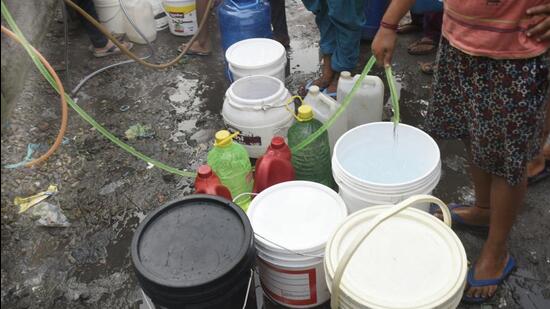
According to data available with the health department, total 358 water samples were collected randomly from different public and private establishments this year, of which 95 samples failed the safety tests.
While the average failure rate is about 27%, the highest failure rate of about 37.5% was reported in April while it was about 31.4% in March. Around 22.86% of the water samples collected this month till June 28 failed to pass the safety tests.
“The health department collects water samples and gets them tested for chlorination and even for contaminants. Some of the samples, which failed to pass the safety tests, were without chlorination while a majority of them contained faecal matter. The samples may have been contaminated due to mixing of water from broken sewage lines or so. This could lead to serious water borne diseases,” said district surveillance officer Dr Rakesh Gupta.
“The samples are collected randomly from places such as water ATMs, malls, schools and other public and private places. If the samples fail in the safety tests, we send the reports to the district administration and even the civic agency for remedial action,” said Dr Gupta.
Officials familiar with the water testing procedures said the samples are tested at the district public health laboratory in Ghaziabad, which is among the three such facilities in the state. The other two labs are in Gorakhpur and Lucknow.
“Due to constraint of resources, the water samples are tested primarily for presence of chlorination and faecal matter. The water samples can also be tested for presence of heavy metals, fluoride and other contaminants, which pose health complications upon consumption. However, the testing facility has constraints and therefore, testing is limited as per the present capacity,” said an officer from the health department requesting anonymity.
Data available with the health department indicates that the rate of failed samples has stood over 20% in the last four months.
Officials from the Ghaziabad municipal corporation said that they have about 82% tapped water coverage in 100 residential wards.
“Some cases, where around 90-95% of the samples collected from an area fails, are from colonies which have not been handed over to the corporation. We regularly take up chlorination of drinking water at source. In areas where there is no provision for tapped water supply, we ensure the water supplied through tankers is properly chlorinated,” said Anand Tripathi, general manager (water works), Ghaziabad municipal corporation.
Health experts said the contamination rate of about 27% is on the higher side. “It is not expected in a city which falls in the National Capital Region. The contaminated water leads to outbreak of diseases such as cholera, dysentery, diarrhoea and typhoid among others. It is vital that different agencies take up the issue on priority as monsoon is round the corner and the number of patients affected by water-borne diseases is expected to rise,” said Dr Ashish Aggarwal, former president of Indian Medical Association (Ghaziabad chapter).

Stay updated with all the Breaking News and Latest News from Mumbai. Click here for comprehensive coverage of top Cities including Bengaluru, Delhi, Hyderabad, and more across India along with Stay informed on the latest happenings in World News.


