
 E-Paper



Air quality ‘satisfactory’ in Noida, mercury rises by 7°C
According to weather analysts, rainfall in most of the northern parts of the country have suppressed the transport of pollutants and reduced the biomass burning, leading to a better air quality


The air quality in Noida and adjoining areas continued to remain under ‘satisfactory’ levels even as the temperatures soared by seven degrees Celsius (°C) on Tuesday.
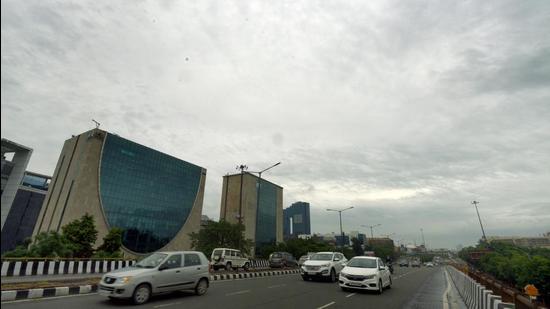
According to weather analysts, rainfall in most of the northern parts of the country have suppressed the transport of pollutants and reduced the biomass burning, leading to a better air quality.
The air quality in the city, which oscillated between ‘very poor’ and ‘poor’ category till Sunday, improved a little following the rainfall on Sunday, thereby keeping the air quality in the ‘good’ category on Monday and the ‘satisfactory’ category on Tuesday.
“Though rainfall activities have stopped in Delhi-NCR, most of the parts of northern India saw patchy rainfall on Tuesday. This suppressed the biomass burning and reduced transport of pollutants. The region is receiving northwesterly winds, which for the time being will be cooler because of the snowfall in the hilly region. The air quality will, however, start dropping over the next two days as the region will become dry and the daytime temperatures will increase, leading to the resumption of transport of pollutants and biomass burning,” said Mahesh Palawat, vice-president, meteorology and climate change, Skymet.
According to the Central Pollution Control Board (CPCB), the air quality index (AQI) reading, on a scale of 0 to 500, for Noida on Tuesday was 79 against 45 a day earlier. Similarly, Ghaziabad’s AQI was 77 against 45 on Monday, and Greater Noida’s AQI was 78 against 38 a day earlier.
An air quality index (AQI) between 101 and 200 is considered ‘moderate’, between 201 and 300 is ‘poor’, between 301 and 400 is ‘very poor’, and above 400 is ‘severe’.
According to the India Meteorological Department (IMD), the maximum and minimum temperatures in Noida on Tuesday were recorded at 30.1°C and 20.5°C against 23.1°C and 20°C, respectively, a day earlier. At Delhi’s Safdarjung weather station, considered average for the national capital region (NCR), the maximum and minimum temperatures were recorded at 31.2°C and 19.9°C -- one degree below and two degrees above the season’s average, respectively.
“The maximum and minimum temperatures will hover around 31°C and 19°C, respectively, on Wednesday. The sky will mainly remain cloudy,” said an official of the IMD on Tuesday.
According to the System of Air Quality and Weather Forecasting and Research (SAFAR), the low biomass burning has led to an improvement in the air quality in the city. “Local land surfaces are wet, so the dust re-suspension is the bare minimum, which has led to a low presence of particulate matter (PM10) in the air. Presence of western disturbance has led to scattered rainfall over North India and low biomass burning. This condition improved the AQI, with low PM2.5,” according to a statement issued by the SAFAR on Tuesday.
Stay updated with all the Breaking News and Latest News from Mumbai. Click here for comprehensive coverage of top Cities including Bengaluru, Delhi, Hyderabad, and more across India along with Stay informed on the latest happenings in World News.


