
 E-Paper



GB Nagar starts sero survey, to include children this time
As many as 24 samples will be taken from 31 PSUs (primary sampling units) each, which have been identified across the district, including 18 urban and 13 rural areas. Each PSU is divided in four zones each and samples from two men, two women and two children are taken from each zone.

 Prefer HTon Google


The district health department on Friday started Gautam Budh Nagar district’s serological survey to check the prevalence of antibodies against the Sars-Cov-2 pathogen in residents that causes the coronavirus (Covid-19) disease.
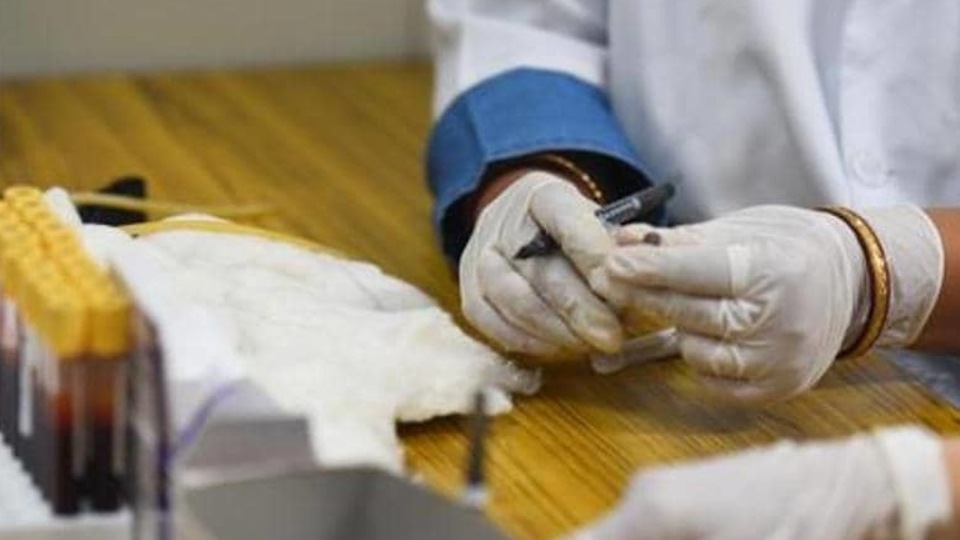
As many as 24 samples will be taken from 31 PSUs (primary sampling units) each, which have been identified across the district, including 18 urban and 13 rural areas. Each PSU is divided in four zones each and samples from two men, two women and two children are taken from each zone.
According to officials, samples of children between the ages of 5 and 17 years will also be a part of the survey since an anticipated third wave is expected to affect children more than adults.
“A total of 744 samples will be taken from across the district, for which ten teams have been created. Each team comprises a medical official, an assistant, an Anganwadi worker and an ASHA worker. Equal number of men, women and children will be sampled. The survey started on Friday and will end on Sunday. At the end of each day, samples will be sent to the microbiology lab at LLRM Medical College in Meerut,” said Dr Deepak Ohri, chief medical officer, GB Nagar.
Dr Amit Kumar, district public health expert and nodal officer for conducting the survey, said that it is a major task to convince people to give their samples for the survey.
“The Anganwadi and ASHA workers have to go door to door with consent forms to convince at least 24 people, including men, women and parents of children, to give their samples. The consent forms of children are signed by their parents. Once the people are convinced, the candidates are asked to come to the temporary sample collection point that the health team sets up in the locality, where samples are taken,” said Dr Kumar.
He added that before taking the sample, a questionnaire consisting of 15 queries is filled by the participants, which includes their health history, whether they have been infected before and when, as well as whether they have been vaccinated.
As many as 504 samples from 21 PSUs (primary sampling units) in the district were sent to Meerut by Saturday evening while 240 more will be taken on Sunday.
In May last year, the Indian Council of Medical Research had conducted a sero-survey of which GB Nagar was a part. In September 2020, the Uttar Pradesh health department had conducted a serological survey in 11 districts – Meerut, Lucknow, Kanpur, Varanasi, Gorakhpur, Kaushambi, Prayagraj, Moradabad, Ghaziabad, Baghpat and Agra. About one in five of the 16,000 people had presence of antibodies, the survey had sows, the results of which came out the following November.
Infectious diseases expert and the secretary general of the Organised Medicine Academic Guild (OMAG), Dr Ishwar Gilada, said that the sero-surveys would also help the government formulate their vaccination strategy.
“The figures released by the government on Covid cases represent only 2% of the real extent of the virus’ penetration hence, sero-surveys are important to know the real picture. After the results are out, the government should vaccinate areas where prevalence of antibodies is low, so that they can develop antibodies needed to fight Covid-19,” he said.
Antibodies are immune molecules produced by the body to fight pathogens. The presence of antibodies in the blood typically suggests that people infected with a virus would gain immunity for some period, said Dr Gilada.
“Antibodies developed by vaccination are not identified in the test that is conducted for the survey as it only identifies antibodies developed after getting a Covid-19 infection. Hence, a person who may be vaccinated might show negative on the antibody test. However, it does not mean that they have not developed antibodies. A separate test called the neutralising antibody test or spike protein test is conducted to test the presence of antibodies developed after vaccination”, Dr Gilada said.


