
 E-Paper



Ghaziabad sees its first ‘severe’ air quality day this year as stage 4 of Grap kicks in
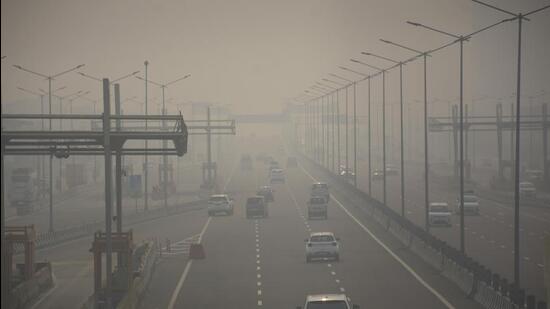
The Ghaziabad city on Thursday recorded its first “severe” air quality day this year with an air quality index (AQI) reading of 416, as per the data kept by the Central Pollution Control Board (CPCB), with the primary pollutant being particulate matter (PM) 2


The Ghaziabad city on Thursday recorded its first “severe” air quality day this year with an air quality index (AQI) reading of 416, as per the data kept by the Central Pollution Control Board (CPCB), with the primary pollutant being particulate matter (PM) 2.5. The officials of the Uttar Pradesh Pollution Control Board (UPPCB) said the last time the AQI entered the severe zone in Ghaziabad was on December 26, 2021, when the AQI touched 429.
An AQI reading between 0 and 50 is considered ”good”, 51 and 100 “satisfactory”, 101 and 200 ”moderate”, 201 and 300 ”poor”, 301 and 400 ”very poor”, and 401 and 500 ”severe”.
During the graded response action plan (Grap) period in 2021, the AQI touched “severe” zone on November 4 with a reading of at 419. In 2020, the city recorded its first “severe” category pollution of 464 on November 5, while in 2019, the first “severe” day came on October 29 with a reading of 446.
The Grap period this year started on October 1, at least 15 days earlier as compared to previous years, with the intention of getting a head start in tackling winter pollution.
“The primary reason for the spike in city’s pollution level is due to external factors such as stubble burning -- tthe activity contributes about 34% of the total pollution in Ghaziabad. The wind direction is bringing in smoke from stubble fires in Haryana and Punjab towards Delhi and other NCR towns. On our part, different measures under stage 3 of the Grap are already being implemented and different agencies have been asked to intensify water sprinkling and mechanised road sweeping measures,” said Utsav Sharma, regional officer, UPPCB.
On Thursday, given the further spike in AQI in Delhi to the “severe” zone, the Commission for Air Quality Management (CAQM) ordered that even more stringent measures be implemented under stage 4 of Grap in Delhi-NCR.
Measures under stage 4 includes a ban on entry of truck traffic( except for trucks carrying essential commodities), Medium and heavy goods diesel vehicles and closing down of all industries in Delhi NCR.
Additionally state/central governments may also allowing 50% of the staff in public, municipal and private offices to work from home, a closure of educational institutions and the plying of vehicles on an odd-even basis.
Sharma said in the coming days, a reversal in wind direction is likely and that may help lessen the impact of stubble burning.
Ghaziabad is already among the 16 “non-attainment” cities in the state of Uttar Pradesh and its pollution levels generally remain on the higher side after the onset of winter.
Cities are declared “non-attainment” if they do not meet the national ambient air quality standards for particulate matter (PM10) or nitrogen dioxide (NO2) for over a period of five years.
The forecast by the System of Air Quality and Weather Forecasting and Research (Safar) on Thursday said the air quality deteriorated significantly due to “strong upper level (700-1000 m) wind blowing from stubble burning areas towards Delhi”. The fire count on Thursday was 2,994 and they contributed 34% of the PM2.5 level in Delhi.
It further stated that local surface winds were 10-12km per hour with the maximum temperature remaining between 31-32 degrees Celsius and a minimum of 15-16 degrees Celsius over the next three days. The pollutant dispersal level on Friday will likely remain “moderate”, Safar said.
According to the data from the Consortium for Research on Agroecosystem Monitoring and Modelling from Space (CREAMS) laboratory of the Indian Agricultural Research Institute, New Delhi, the total fire counts in Punjab stood at 21,480 during the period from September 15 to November 2, while they were 18,066 during the same period last year.
The fire count in Haryana during the same period this year was 2,249 , which was fewer than the 3,241 recorded during the same period in 2021.
“The external factors like stubble burning has been impacting NCR and Ghaziabad city for past several years. On the other hand, road dust, traffic congestion and burning of garbage are also major concerns in Ghaziabad. The different agencies seem to lack the will to counter local factors. The city could not even spend the full ₹60.5 crore allotted to it in (2020-21) by the Fifteenth Finance Commission to tackle pollution. There is a definite lack of serious ness,” said Akash Vashishtha, a city-based environmentalist.

Stay updated with all the Breaking News and Latest News from Mumbai. Click here for comprehensive coverage of top Cities including Bengaluru, Delhi, Hyderabad, and more across India along with Stay informed on the latest happenings in World News.


