E-Paper



Noida: Over 1.65 million voters to decide fate of 39 candidates
The administration has made elaborate arrangements at 1,840 polling booths, including 250 model polling booths, to ensure that more people turn up to vote this time

 Prefer HTon Google


Over 1.65 million voters of the three assembly seats of Noida, Dadri and Jewar in Gautam Budh Nagar district will vote on Thursday under phase one of the seven-phase elections in the state. The administration has made elaborate arrangements at 1,840 polling booths, including 250 model polling booths, to ensure that more people turn up to vote this time.
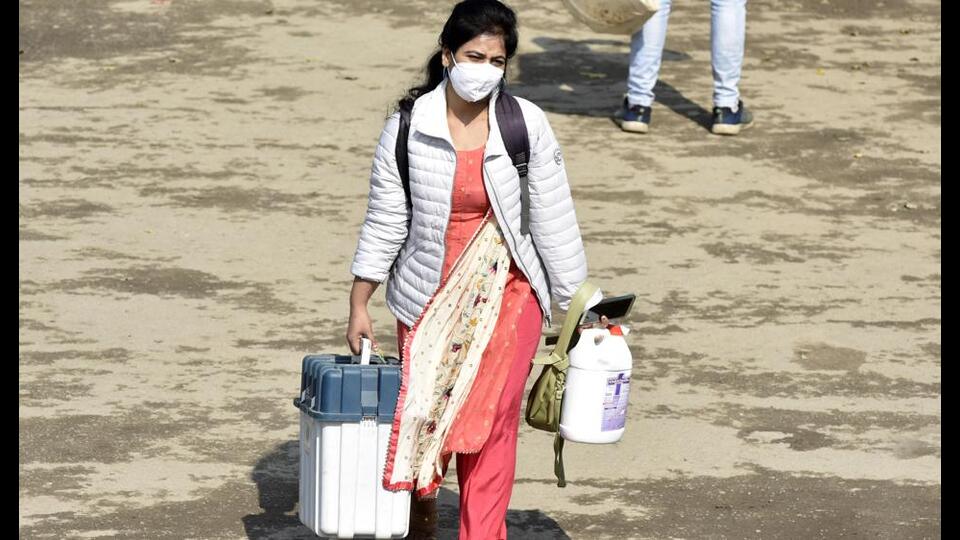
Voting will commence at 7am Thursday and end at 6pm, election officials said, with the last hour of voting being reserved for Covid-infected persons. Counting of votes will be on March 10.
Given that this is the first election to be conducted in the district since the Covid-19 pandemic began, the administration has also ensured thermal screening and sanitisation facilities at all booths. Special drives and online campaigns have also been held in sectors with the lowest polling to boost voter turnout this time, district officials said.
The district has never seen a voter turnout of more then 60%, on average, and even that figure has been possible only because of the better voter turnout in the mostly rural segment of Jewar.
According to election commission figures, Noida saw a 48.57% voter turnout in the 2017 assembly elections and a 48.98% turnout in the 2012 elections, while Dadri had a 60.13% turnout in 2017 and 58.03% in 2012. Jewar recorded the highest polling percentages both times, with 65.46% polling in 2017 and 62.05% in 2012.
“The voting percentage in this district, especially in Noida, has been low these past few elections and the 2022 elections are our opportunity to set the record straight. Apart from having over 250 model booths, we have also tried to improve the basic facilities at every single booth, such as having clean drinking water and comfortable waiting areas. We are also taking all necessary Covid-19 precautions and we can assure people that they will not face any problems in exercising their franchise. We only hope that each and every citizen over 18 years of age go out and vote on Thursday,” said Suhas LY, district election officer and district magistrate, Gautam Budh Nagar.
“There are 131 model polling booths in Noida, including 20 pink booths where all polling staff will be women. We also have four divyang booths that will be managed by differently abled staff. Similarly, Dadri constituency has 90 model polling booths, including four pink booths and two divyang booths. Jewar has 22 model polling booths, including five pink booths and two divyang booths,” a district official said.
There are 39 candidates in the fray from all three seats, with Noida having the highest number of young as well as independent candidates. There are 12 candidates in Jewar, 13 in Noida and 14 in Dadri.
The Jewar constituency has four candidates from national parties, three candidates from registered parties (excluding national parties) and five independents. This assembly seat has the highest number of candidates over 60 years of age and also the most women candidates at two -- Poonam from Aam Aadmi Party (AAP) and Neeru Walia from Sarva Samaj Party.
Dadri constituency has four candidates from national parties, six from registered parties and four independents. The BJP candidate and sitting MLA Tejpal Nagar, 68, is the only candidate over 60 years of age. He is also the oldest among all candidates in Gautam Budh Nagar.
A battle of youth in Noida
Noida is an interesting battlefield this time with the young making up more than half the candidates. Seven of the 13 candidates in the fray are in their 20s. Pankhuri Pathak from Congress is the only woman candidate. Noida constituency has four candidates from national parties, six candidates from registered parties and three independents.
A relatively new assembly seat, Noida’s sitting MLA Pankaj Singh is also the son of senior BJP leader and defence Minister Rajnath Singh. Contesting for the first time in 2017, Singh won by a margin of over one lakh votes by defeating SP’s Sunil Choudhary.
Noida has traditionally been a stronghold of the BJP with all three former MLAs and the sitting MP belonging to the saffron party. The SP also has a good voter base in the constituency, according to political pundits. This time, though, Congress has fielded Pankhuri Pathak, a known student leader from Delhi University. She joined the SP during her student days and recently switched to the Congress. BSP candidate Kriparam Sharma is also a strong contender as he has been active in local politics for over 30 years now.
Jewar is grabbing eyeballs this time
It is, however, the Jewar seat that is grabbing eyeballs these elections, especially after the Rashtriya Lok Dal nominated senior leader Avtar Singh Bhadana from the constituency. Bhadana is a four-time MP and MLA from the Meerapur constituency in Muzaffarnagar. He left the BJP to join RLD just last month. Bhadana has contested the Lok Sabha seat from Meerut and Faridabad previously. He is contesting against Dhirendra Singh, the incumbent MLA from Jewar, who won the state elections for the first time in 2017 on a BJP ticket. With big ticket projects like the Jewar international airport and Film City coming up in Greater Noida, Singh is a popular leader and a difficult candidate to beat.
Caste to be crucial in Dadri
In Dadri, while sitting BJP leader Tejpal Nagar has a stronghold, other parties have taken advantage of the caste composition of the constituency. Nagar, a Gurjar, is contesting against Gurjar candidates fielded by SP, BSP and Congress. They include Raj Kumar Bhati from SP, Manveer Singh Bhati from BSP and Deepak Bhati Cotiwala from Congress. The caste divide became more spelt out after a tussle broke out last year -- and continues to this day -- over the identity of ninth century ruler King Mihir Bhoj. Both Gurjars and Rajputs, the other prominent caste in the region, have locked horns over a statue of the ninth century ruler, installed at an inter-college in Dadri, and want their caste name on the plaque. Nearly, all parties have jumped into the Mihir Bhoj controversy since then.