E-Paper



14 die in unseasonal rains in Gujarat, IMD warns of rough weather in coming days
Kheda district reported the highest toll with four fatalities, followed by Vadodara with three. Ahmedabad, Dahod, and Aravalli each recorded two deaths, while one person died in Anand

 Prefer HTon Google


Ahmedabad: At least 14 people died in Gujarat following unseasonal rainfall and storms on May 4 and 5, according to the State Emergency Operation Centre (SEOC).
Kheda district reported the highest toll with four fatalities, followed by Vadodara with three. Ahmedabad, Dahod, and Aravalli each recorded two deaths, while one person died in Anand.
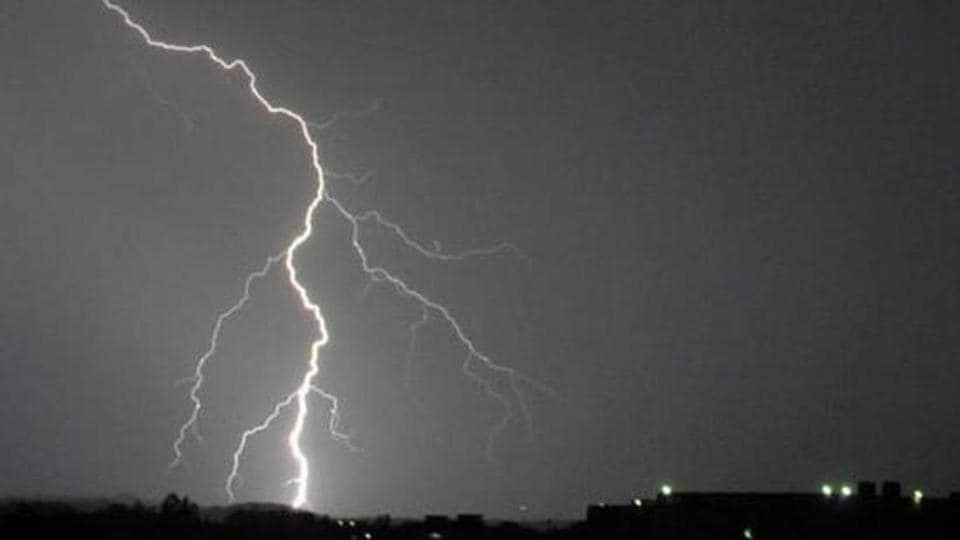
Three were killed by lightning strikes, and four died after uprooted trees fell on them, said an official aware of the matter. One person was crushed in a wall collapse, and another when their house gave way. A hoarding brought down by strong winds claimed two more lives, while two others were electrocuted. One fatality took place when a roof, unable to withstand the weight of the rainfall, gave way.
For the next 24 hours, the India Meteorological Department (IMD) has warned severe thunderstorm with lightning and surface wind 60- 70 kmph (in gust) accompanied with hailstorm and heavy to very heavy rain at isolated places in the districts Bharuch and Surat; in the districts of Saurashtra-namely Amreli and Bhavnagar.
According to SEOC data, 168 out of 253 talukas in the state received rain in the last 24 hours. Districts like Kheda, Gandhinagar, Mehsana, and Vadodara recorded between 25 to 40 mm of rainfall.
The impact of the rainfall was especially severe during a 24-hour period from 6 am on May 5 to 6 am on May 6, with over 30 talukas across Gujarat reporting more than 20 mm of rain. The highest rainfall in this span was recorded in Kapadvanj (40 mm), followed by Mansa and Sihor (37 mm each). Vadodara city reported 30 mm, leading to waterlogging in multiple areas.
Unseasonal rainfall swept across large parts of Gujarat between 6 am and 6 pm on Tuesday, with Mahuva taluka in Bhavnagar recording the highest rainfall in the state, with a total of 93 mm (3.66 inches) during the 12-hour period. The rain intensified in the afternoon, with 28 mm falling between 2 pm and 4 pm, followed by a sharp 63 mm between 4 pm and 6 pm, indicating the severity of the downpour.
Several talukas in Amreli district also witnessed significant rainfall. Lathi received 61 mm (2.40 inches), mostly concentrated in the later hours, while Lilia recorded 49 mm (1.93 inches) and Amreli town received 47 mm (1.85 inches), mainly on Tuesday afternoon between 4 pm and 6 pm.
In Rajkot district, Gondal taluka recorded 33 mm, while other areas such as Jasdan, Vinchhiya, and Rajkot city itself recorded between 14 and 20 mm. Rainfall was more scattered across other parts of Gujarat — Nakhatrana in Kachchh received 22 mm, and parts of Surat district like Mahuva and Umarpada each recorded 22 mm and 15 mm, respectively.
Unseasonal rainfall in May is uncommon in Gujarat and can severely disrupt harvesting activities, particularly in rural Saurashtra where many farmers had stored their produce outdoors.
The Meteorological Department said that maximum temperature during next 3-4 days is likely to fall by 3-5 degree Celsius.