
 E-Paper



365 samples, including 90 from Mumbai, sent for genome sequencing
The Brihanmumbai Municipal Corporation (BMC) has sent 90 swab samples of Covid-19 patients to the National Institute of Virology (NIV), Pune, for genome sequencing on Tuesday


The Brihanmumbai Municipal Corporation (BMC) has sent 90 swab samples of Covid-19 patients to the National Institute of Virology (NIV), Pune, for genome sequencing on Tuesday.
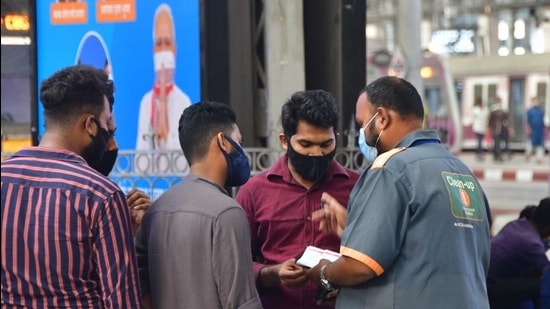
Additionally, three districts —Amravati, Yavatmal and Akola — which have the highest positivity rates in the state, have sent 275 samples to the institute on Fridays. While Amravati and Yavatmal sent 100 samples each, Akola sent 75 samples.
The samples were sent after preliminary examination had revealed that four samples from Amravati showed a mutation (E484Q), while another four from Yavatmal showed a second mutation (N440K) of Sars-CoV-2 — the virus that causes Covid-19.
To ascertain the virological characteristics of the two mutated strains, the four districts have sent a total of 365 samples of infected patients to NIV.
At a time when the state’s overall positivity rate stands at 13.4%, Amravati, Yavatmal and Akola have recorded a positivity rate of around 50%, 47% and 25%, respectively. To look into the epidemiology of the virus among the newly infected patients, a few samples were also sent to BJ Medical College, Pune, for genome sequencing.
The number of new Covid-19 cases has doubled in Mumbai in the past 10 days.
“Though our positivity is still under 5% unlike many other districts, we didn’t want to take any chance. We therefore sent 90 samples for genome sequencing, and expect a report within 12 days,” said Suresh Kakani, additional commissioner, BMC.
Genome sequencing is a technique that involves analysing the genetic code of an organism and is done with the help of powerful computers.
“We have found a mutation in the virus, but we need to understand its epidemiological nature to gauge its implication in spreading the infection among the public,” said Dr Dilip Ranmale, district health officer (DHO), Amravati.
In addition to having the highest positivity rate, Akola, Amravati and Yavatmal are also reporting a large number of people from the same families contracting the infection.
“People across the state have put their guards down and are not maintaining safety norms. But how has then the positivity rate of only these districts gone up at such a whopping rate? We believe that one of the reasons behind this is the new mutated virus, which just like the UK variant, is transmitting faster,” said Ranmale.
The swab samples are being sent in three categories—mildly, severely symptomatic and asymptomatic.
“We have sent 25 samples in each of three categories for analysis,” said Dr Suresh Asole, DHO, Akola.
Doctors said that if NIV finds out anything alarming about the mutated variants, the government should seal the boundaries of the districts to stop the further spread of the virus. Amravati is already going into a partial lockdown after 6pm till Monday.
“If the cases keep rising with the new variant of the virus, then it will be essential to impose local lockdown in those areas,” said Dr Lancelot Pinto, an epidemiologist.
Meanwhile, the three swab samples that were sent from Satara for genome sequencing have not shown any mutation. Dr Aniruddha Athalye, DHO, Satara, said, “We had sent the samples 10-12 days ago, but didn’t find any variant.”
Medical experts said there is nothing to worry as virus mutation is a regular phenomenon. Also, the same two mutated strains of the virus have been observed all across the country.
“These two mutations are not new. So we aren’t observing any drastic changes until the detailed analysis at NIV finds something unique. Hopefully, the report will be available in the next eight days,” said Dr Subhash Salunke, technical adviser to the Maharashtra government on the Covid-19 outbreak. “But yes, the new mutated virus is spreading aggressively. However, it is not severe as it hasn’t pushed up the mortality yet.”
DHOs, in addition to virus mutation, have also blamed the careless attitude of citizens as one of the contributing factors for the rise in cases.
“People went for functions such as weddings and birthday celebrations without wearing masks. Now, the collector has instructed us to impose heavy fines on those found without masks. We will also inspect wedding functions to keep a check on the crowd,” said Dr Asole.
Dr Pradip Awate, state surveillance officer, also said the recently held gram panchayat elections played a role in spreading the virus.
The state health department in a press release on Friday announced that so far, no new strain similar to Britain, South Africa and Brazil have been discovered.


