
 E-Paper



Advanced monitoring systems to check pollution generated by factories in U.P.
These devices will be connected to the online monitoring system at U.P. pollution control monitoring system. The system will instantly send a prompt in case the pollution level crosses the set standard.


LUCKNOW: In a bid to keep a tab on factories emanating pollutants into the air, the Uttar Pradesh Pollution Control Board (UPPCB) has ordered the installation of advanced online monitoring systems in the chimneys of all factories in Lucknow and 16 other cities of the state.
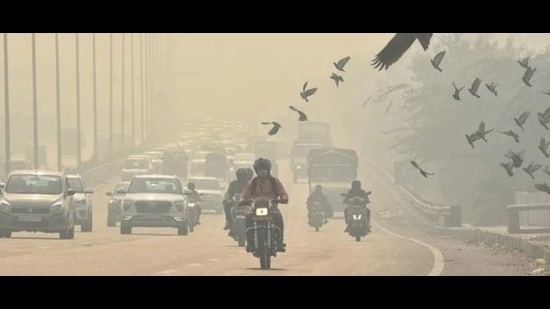
These devices will be connected to the online monitoring system at U.P. pollution control monitoring system. The system will instantly send a prompt in case the pollution level crosses the set standard, said Umesh Chandra Shukla, regional officer, UPPCB, Lucknow.
“We have come to know that several factories shut their operations during inspection but resume functioning during odd hours when there is no oversight. As it is impossible to invigilate all of them at once, this system will alert us swiftly in case the pollution level breaches the set standard. These units can then be fined or controlled instantly,” he added.
Meanwhile, seven government departments have been given the responsibility to check pollution levels. According to UPPCB, it has written a letter to at least seven departments of U.P. government in the wake of an increasing rate of air pollution in Lucknow. The letter asks departments to check air pollution levels in the city and other parts of the state in their respective areas of work. These departments include -- agriculture, traffic management, LDA-Awas Vikash, PWD, and U.P. state bridge corporation, among others.
“As 90% of the pollution in the state is caused due to dilapidated roads and traffic congestion, we have asked the PWD to repair bad roads. Similarly, the U.P. bridge construction department has been asked to use anti-smog guns, green covers, and regular water sprinkling to control the dust. Besides, the traffic department has been asked to manage the traffic and take stringent action against the vehicles creating pollution,” the official added.
Graded Response Action Plan stage-I implemented in Lucknow
LUCKNOW: To bring down pollution levels, Graded Response Action Plan stage-I has been implemented in Lucknow, said Umesh Chandra Shukla, regional officer, UPPCB, on Tuesday. “Implementing GRAP-I (Graded Response Action Plan) will help in managing the city’s air pollution level. This was discussed in the last meeting with district magistrate Surya Pal Gangwar as well,” the official further said.
For the unversed, GRAP is a set of emergency measures initiated in 2017 by the ministry of environment, forest, and climate change to prevent the deterioration of air quality once it reaches a certain threshold. When air quality falls into the ‘poor’ category, the first stage of GRAP is imposed. In this stage, the government fines people who burn garbage or sweep without using water. Water is also sprayed on roads with heavy vehicular traffic as part of efforts to check pollution.
The development comes in the wake of Lucknow’s air quality index (AQI) falling to 202 (considered poor) on Monday and 218 on Tuesday. “Six pollution measuring devices are installed at different stations in Lucknow. They have a range of 2-3 kilometres to detect pollution. So, its information is pretty accurate,” Shukla added.
Comparatively, most of the cities in the state -- barring a few western U.P. districts -- recorded a ‘moderate’ air quality of below 200 AQI.


