E-Paper



AI upgrade to make more Kanpur traffic signals intelligent
The system employs cameras connected to artificial intelligence to monitor vehicles, efficiently regulating traffic based on real-time observations

 Prefer HTon Google


Kanpur became the first city of Uttar Pradesh to implement an artificial intelligence (AI)-driven advanced traffic control system. The system was initially launched at five intersections of the city and is now set to expand to 32 junctions.
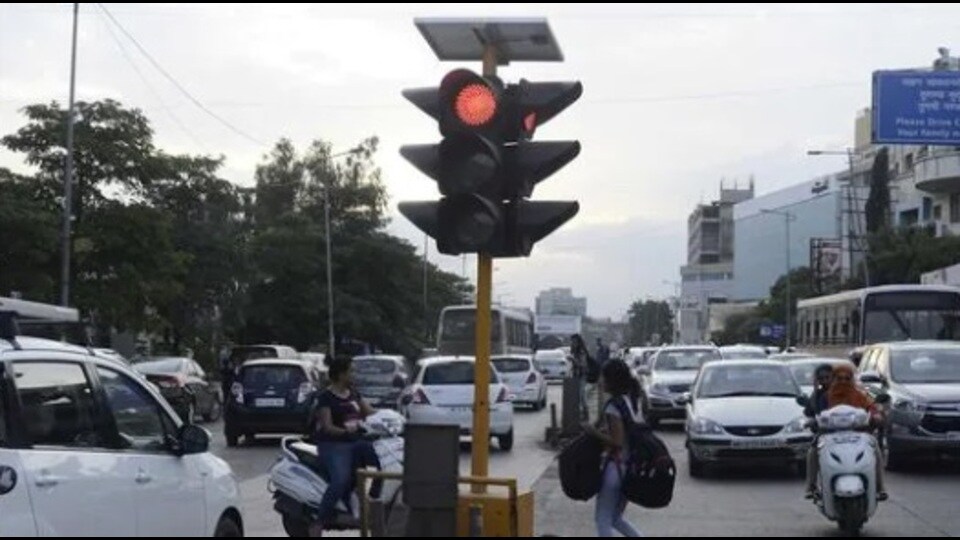
The system employs cameras connected to artificial intelligence to monitor vehicles, efficiently regulating traffic based on real-time observations. The significant advantage of this technology lies in its ability to not only streamline traffic flow but also to reduce the reliance on manpower of traffic police.
“Kanpur is the first city in the state where AI-driven traffic control system is effectively regulating the traffic; now we are bringing 27 more intersections under the purview of this system where the number of traffic policemen will be reduced by 30%,” said Rahul Sabbarwal, IT manager, Kanpur Smart City Limited.
Imagine a scenario where a designated 60-second signal cycle persists even when one side of the intersection is devoid of traffic. In such instances, the AI system, rather than adhering to the full cycle, intelligently waits for a maximum of five seconds for vehicles on the opposing side, swiftly granting them a green signal. This tactical adjustment has notably alleviated traffic pressure at five highly congested intersections, said Sabbarwal.
According to Sabbarwal, no new cameras were added to the existing infrastructure. Instead, through the sophisticated software, pre-existing cameras were trained to learn and adapt to traffic patterns effectively. The system undergoes a three-step process, wherein learning information is incorporated, rules are established, and cameras are programmed to function akin to human decision making.
The learning phase involves feeding information which is important to establish rules. Cameras are then required to follow these rules and deliver flawless 100% results. Through self-correction, the cameras autonomously make decisions after various learnings, utilising software to issue instructions.
Kanpur Smart City, in collaboration with IIT Kanpur, has entered into a contract with Kanpur Smart City Limited, according to nodal officer RK Singh. Under this agreement, IIT’s software will not only aid in traffic regulation but also facilitate catching criminals through facial recognition technology.
The Integrated Command and Control Center located in Kanpur Municipal Corporation will receive photos and profiles of criminals, enabling the police to feed them into the IIT’s software. This innovative system will initiate camera identification at intersections, triggering immediate alerts upon detecting a match, allowing law enforcement to act.