E-Paper



All 1994 cold storages in U.P. to run on solar energy
The Yogi Adityanath-led state government is making efforts to enhance the efficiency and environmental friendliness of the 1994 cold storages operating in the state.

 Prefer HTon Google


PRAYAGRAJ: In a bid to keep farm produce fresh and safe in cold storages across Uttar Pradesh, eco-friendly solar power is set to play a crucial role. The Yogi Adityanath-led state government is making efforts to enhance the efficiency and environmental friendliness of the 1994 cold storages operating in the state. These cold storages, with a total storage capacity of over 1.65 crore metric tonnes (MT), will be transitioned to run on solar power through the installation of rooftop solar plants. This initiative is being undertaken at a greatly subsidized cost, as shared by officials from the state Department of Additional Sources of Energy.
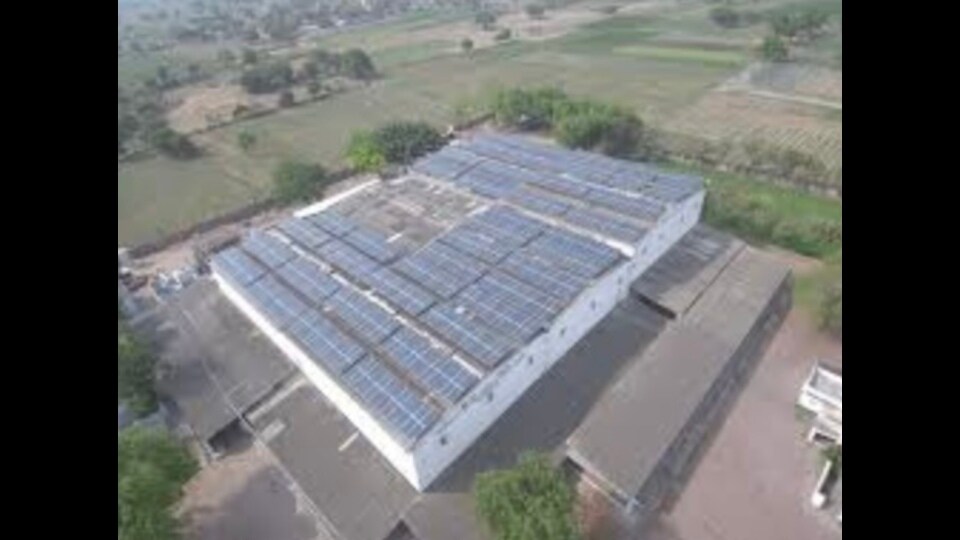
To kickstart this transition, a survey exercise has been initiated in all districts of the state to assess the power loads of these cold storages. This survey is being carried out on the orders of the director of the Uttar Pradesh New and Renewable Energy Development Agency (UPNEDA), Anupam Shukla. In a directive dated November 20, Shukla instructed all project officers to undertake a survey of cold storages in their respective districts, evaluating their capacity, power load, and suitability for setting up solar power plants.
The communication, a copy of which is with HT, emphasizes that this initiative is part of the ongoing efforts to transition industries, institutional buildings, and more to solar power. It also notes that the Uttar Pradesh Electricity Regulatory Commission has made provisions and arrangements for net billing/net metering of the solar power generated.
Following these orders, the survey process has commenced in the districts. Shahid Siddiqui, Project Officer, UPNEDA-Prayagraj, stated, “An order for this had come from the Directorate after which the load survey is being conducted. In the initial phase itself, some cold storage operators have given their consent for setting up solar power plants. After getting the survey work done, the details in the set format will be sent to the directorate.”
Breaking down the count of cold storages, Agra division leads with 542, having a total capacity of 50,31,700.74 MT, followed by Kanpur division with 398 and a total capacity of 40,69,366.47 MT. Aligarh Division has 287 cold storages with a total capacity of 24,96,786.47 MT, while Bareilly division has 134 with a total capacity of 7,24,674.42 MT. Lucknow Division has 117 cold storages with a total capacity of 8,12,753.05 MT, Meerut division has 110 with a total capacity of 6,43,379.22 MT, Moradabad division has 92 with a total capacity of 5,80,328.75 MT, and Prayagraj division has 80 with a total capacity of 5,76,063.79 MT, among others.
In Prayagraj division specifically, there are 42 cold storages in Prayagraj district, 19 in Fatehpur, 10 in Kaushambi, and 9 in Pratapgarh district.
Officials maintain that solar-powered cold storage units are far more cost-effective than running an electric plant of the same capacity. They claim that if one were to use non-renewable energy sources where the electricity tariff in an area might be ₹8/unit, the price of solar energy would be somewhere close to ₹3-4/unit or lower. While it may take a few years to recover the cost of setting up the unit, the average shelf life of these solar-powered food processing plants is 25-30 years, making this not only an eco-friendly alternative but a more economical one as well, they add.
PHOTO: A solar-powered cold storage (for representation only)