E-Paper



Atmanirbhar Bharat: Army to get 75K more AK-203 rifles by year-end
The Indian Army will receive 75,000 AK-203 rifles this year, enhancing self-reliance in defense and replacing aging INSAS rifles with locally made parts.

 Prefer HTon Google


The Indian Army is set to receive another 75,000 AK-203 assault rifles by the end of this year, giving a strong push to the centre’s Atmanirbhar Bharat (self-reliant India) initiative in the defence sector. These rifles will replace the ageing INSAS rifles that have been in service for over three decades.
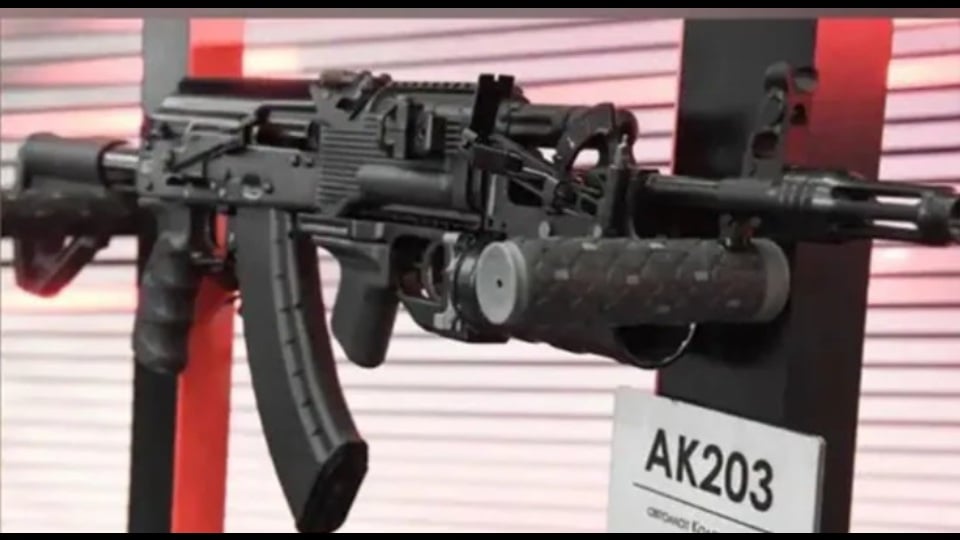
The AK-203 rifles are being assembled at the Korwa ordnance factory in Amethi, under a joint venture between India and Russia. But what makes this development more significant is that most parts used in these rifles are now being made locally—especially at the Small Arms Factory (SAF) in Kanpur.
The SAF has played a key role in the indigenisation of the AK-203 rifle. Since February 2023, the factory has been producing almost all critical components needed for the weapon. This includes the barrel, trigger group, receiver, and other metal parts that were earlier imported.
“Under the Atmanirbhar Bharat mission, most parts of the AK-203 are now being made at SAF,” said Surendra Pati, general manager of the factory. “The supply of these rifles to the Army has already started.”
Last year, the Army received 48,000 AK-203 rifles. With the upcoming batch of 75,000 weapons, the number will soon cross 1.2 lakh. In total, more than six lakh rifles are to be supplied to the Army over the next five years. The overall cost of the project is estimated to be ₹5,200 crore.
In addition to manufacturing parts, SAF Kanpur has also been supplying critical spare parts and subassemblies to support the assembly line at Korwa. Its engineers have also developed specialised metallurgical solutions to meet stringent Russian GOST standards, which were essential for ensuring quality and performance. These technical breakthroughs have been vital in making the AK-203 a truly Indian-made weapon, not just an assembled import.
Officials say the SAF’s work has been central to the success of this project. Its deep experience in small arms production and research and development has helped resolve multiple design and production challenges. The factory’s contribution is seen as a model for future efforts in indigenising advanced weapon systems and reducing dependency on foreign suppliers.
The rifles are known for their reliability, easy maintenance, and high performance in different weather and combat conditions. Chambered for 7.62x39 mm ammunition, the AK-203 combines the classic AK-47 design with modern features, such as better ergonomics and compatibility with optical sights and accessories.
The Indo-Russian joint venture, Indo-Russian Rifles Private Limited (IRRPL), is now planning to ramp up production. The goal is to produce up to 12,000 rifles per month by next year.
Officials believe that the success of this project not only strengthens the Army’s firepower but also boosts India’s defence manufacturing capabilities. The role of factories like SAF highlights how India’s traditional ordnance units are being modernised to meet current needs.
This project is being seen as a model for future defence collaborations and Make-in-India success stories. With more such efforts, India aims to reduce dependence on foreign weapons and build a stronger, self-reliant defence industry.