E-Paper



Behind Odisha move to return land in Ganjam village, some see link to new project
Former Chhatrapur MLA Narayan Reddy said the Odisha decision was linked to the opposition to setting up of an ammonium nitrate complex in the SEZ area next to Kalipalli village


Bhubaneswar: Days after the Naveen Patnaik government decided to return 206 acres of land to the people of Kalipalli village, one of the 15 villages in Ganjam district where a 10 million tonne integrated steel complex by Tata Steel was to come up back in the nineties, the farmers are sceptical of the government’s intentions.
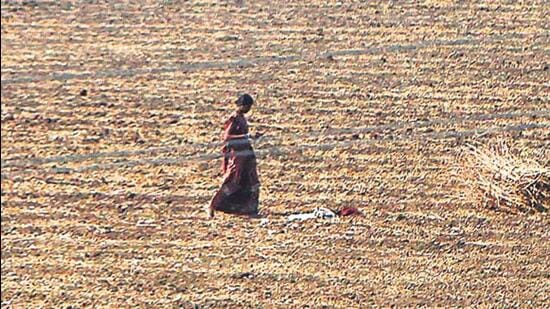
On Friday, the Naveen Patnaik cabinet in Bhubaneswar decided to return 206.685 acres in Kalipalli village under Chhatrapur tehsil of Ganjam district that remained unutilised for 26 years in line with Rule 20 of Right to Fair Compensation and Transparency in Land Acquisition, Rehabilitation and Resettlement (Compensation, Rehabilitation and Resettlement and Development Plan) Rules, 2015.
In Kalipalli village 200km from the state capital where farmer Chandra Reddy’s 4 acres was acquired in 1995 said he was not sure what took the government so long to decide to return the land.
“No discussion took place in 1995 when the government decided to acquire my land as well as hundreds of other families in my village. The state government paid ₹1 lakh per acre to some people of my village. IDCO(Industrial Infrastructure Development Corporation of Odisha) people came and just recorded the land in the name of the government. I did not get anything in 1995 though the government was paying ₹1 lakh per acre. I, however, got ₹5 lakh per acre in 2015 when Tata Steel decided to pay additional compensation. What I don’t udnerstand is why did not the government return our land the moment it realised that the steel plan project was falling through,” said Reddy.
Another villager, P Chenna Reddy said the speed with which his 3 acres of land was acquired in 1995 still rankles him.
“We saw at least two major natural disasters, first in 1999 when a cyclone struck Ganjam district just before the October supercyclone that year and Phailin cyclone in 2013. As our land was acquired for the Tata Steel plant and we did not have any land on our name, I did not get government compensation. In between, I have suffered as I could not sell part of my land for treating a family member,” said Reddy.
“We are small farmers… The government paid just about 40% people of our village and forgot about the rest,” Kanak Gopal Reddy added.
In Kalipalli village, the government acquired land from 283 families for the Tata Steel plant in Gopalpur region that was promised to be “the epicentre of unparallelled activity and wealth” by 2002 when the first phase was scheduled to be completed.
On 25th August 1995, Tata Steel signed a Memorandum of Understanding with the state government for construction of 10 million tonne steel plant at Gopalpur with a total land requirement of 6,500 acres for the plant and a township to accommodate the plant employees.
The grand plan was eventually aborted but the land wasn’t returned.
In 2010, the company decided to set up an industrial park and multi-product special economic zone over 4,200 acres of the acquired land. In February 2017, it commissioned a 55,000 tonnes per annum capacity ferrochrome plant on the acquired land making it the anchorage industry for the SEZ near Gopalpur port.
Narayan Reddy, former MLA of Chhatrapur, who spent 52 days in detention for the 1996 agitation against the land acquisition, said the returning of the land after 26 years was suspicious. “We believe the decision is aimed at confusing the people of Kalipalli who are against setting up of an ammonium nitrate complex in the SEZ area next to the village. The ammonium nitrate plant would lead to air and water pollution of the area and since last 2 years people are waging a battle against it. We don’t oppose industrialisation, but such polluting industries should not be set up in Ganjam, the most populous district of the state,” said Reddy.
B Mohan Patra of Kalipalli village who is leading the protest against the ammonium nitrate plant, said the people have already suffered for 26 years. “The decision to return the land will not mean that we will agree to a polluting industries in our backyard,” he said.
Surendra Panigrahy of Bharat Bikash Parishad, a Ganjam-based social organisation said the government hadn’t done anyone a favour. The Right to Fair Compensation and Transparency in Land Acquisition, Rehabilitation and Resettlement Act, 2013 requires the government to return the land if the purpose for which it was acquired is not met within 5 years. “The important question to ask here is why did the government take so long. I will file a PIL in the Orissa High Court in this regard soon,” he said.
Chhatrapur tehsildar Prakash Mishra said he can’t give a timeframe for restoring possession of the land. “The state cabinet has just passed a resolution and it will come to the district administration in due course. Only after it comes, we would take a decision,” he said.