
 E-Paper



BWGs seek civic support for waste management
Residents have written a letter to MCG Commissioner Narhari Singh Bangar, outlining their problems and offering suggestions on processing of wet waste by bulk waste generators. The letter points out the need for more support and infrastructure to implement both ‘in situ’ and ‘ex situ’ wet waste processing in housing societies


Gurugram: Residents from various sectors of Gurugram on Thursday approached the Municipal Corporation of Gurugram (MCG) to address concerns regarding the management of solid waste for bulk waste generators (BWGs). They have highlighted the challenges they are facing in both ‘in situ’ and ‘ex situ’ wet waste processing and have requested the municipal corporation’s support in implementing more efficient decentralized waste management solutions.
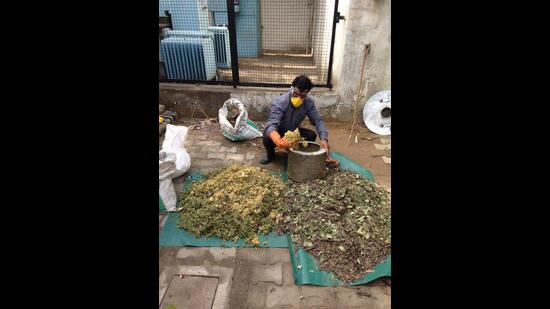
Residents have written a letter to MCG Commissioner Narhari Singh Bangar, outlining their problems and offering suggestions on processing of wet waste by bulk waste generators. The letter points out the need for more support and infrastructure to implement both ‘in situ’ and ‘ex situ’ wet waste processing in housing societies and other BWG units across the city.
In the letter, residents highlighted several issues that have hindered efficient waste management recently.
Residents have urged the municipal corporation to examine the constraints that hinder BWGs and other waste generators from effectively managing wet waste. They believe that the city’s current waste collection system, which relies on contractors to simply collect, transport, and dump waste at secondary sites, undermines efforts to process waste sustainably.
Shona Chatterji, a resident of Silver Oaks in DLF Phase 1 and a member of a sustainability group focused on SWM, said, “Despite having good waste segregation at source, BWGs face challenges such as lack of space and knowledge about wet waste processing technologies. Additionally, vendors treat waste as a commodity rather than working toward environment-friendly management. For example, they push for 24x7 composters that aren’t always practical,” she said.
Ruchika Sethi Takkar, founding member of a citizens’ collective advocating sustainable waste management, said, “Though the SWM Rules 2016 and MCG’s objectives are to achieve sustainable waste management, the city is yet to implement proper source segregation. MCG has not established secondary segregation facilities for recyclable dry waste or processing organic matter at the ward level. The current work orders with contractors focus on simple waste collection and dumping rather than promoting resource recovery, which discourages participation from waste generators.”
Takkar further pointed out that if MCG’s work orders prioritised resource recovery and sustainable practices, the city would see significant participation from BWGs and other waste generators. “It would also drastically reduce the indiscriminate dumping and burning of mixed waste within the city and at landfill sites.”
Kavita Bansal, a resident of La Lagune in Sector 54 and an SWM lead, suggested that a ‘City-to-Soil’ policy is crucial for improving waste segregation. “BWGs need strong support for the buyback of organic compost. SWM rules already emphasise the role of urban local bodies in promoting and utilising organic compost,” Bansal said.
Priyanka Jha, a resident of Tata Primanti in Sector 72 and a strong advocate of zero-waste practices, added, “MCG should have, by now, set up processes to divert non-recyclable plastic waste generated by BWGs to its ‘plastic waste road-making facility’ in Begampur Khatola or send it to co-processing plants. This will motivate BWGs to continue improving their waste segregation efforts.”
Takkar, who launched the citizens-led initiative “Why Waste Your Waste” in 2014, expressed disappointment that MCG has not fully leveraged the enthusiasm of waste generators. “Despite strong leadership from residents, corporations, and RWAs in waste reduction, MCG has not partnered effectively with these communities on decentralized solutions. We hope our representation receives a favourable response,” Takkar said.
“We are carefully reviewing the suggestions put forward by the residents and are committed to implementing a more sustainable and efficient waste management system for Gurugram. Our focus will be on reducing waste, improving segregation practices, and ensuring that waste processing is done at the source. We aim to create a system that addresses the challenges while promoting environment-friendly practices,” Bangar said.


