
 E-Paper



Chhattisgarh quota bills: Guv seeks details from state govt
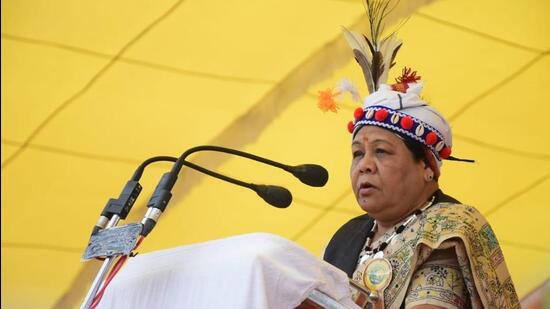
Chhattisgarh governor Anusuiya Uikey said that she has sought details from the state government to understand how the hike in reservation to 76 per cent can be defended if the bills are challenged in the court of law


Chhattisgarh governor Anusuiya Uikey, who is yet to grant assent to two amendment bills to hike the overall reservation in the state to 76%, on Monday said that she has sought documents from the state government regarding the basis on which the reservation was increased.
The state Assembly on December 3 passed the Chhattisgarh Public Service (Scheduled Caste, Scheduled Tribes and Other Backward Classes Reservation) Amendment Bill and Chhattisgarh Educational Institutions (Reservation in admission) Amendment Bill related to quota in government jobs and admission in educational institutions in proportion to the population of different categories.
According to the bills, the Scheduled Tribes will get a quota of 32 per cent, Other Backward Classes 27 per cent, Scheduled Castes 13 per cent and four percent has been provisioned for the Economically Weaker Section (EWS) in public employment and admissions in educational institutions.
Asked about the delay in approval from the governor to the two quota bills, Uikey said, “I had earlier written to the Chhattisgarh CM about increasing the tribal reservation quota to 32 percent and granted assent for a special session of assembly for the purpose (ST reservation bill). Later, I found that OBC, SC and EWS quota was also increased. When the matter is in the Supreme Court and it is evident that reservation exceeding 50 per cent ceiling is unconstitutional, how will the government defend itself in the court.”
The governor said that she had sought details from the government to understand how the hike in reservation to 76 per cent can be defended if the two bills are challenged in the court of law.
“The government has not provided any details till now. After getting documents and details, I will take advice from my legal cell and if it is satisfactory, I will surely sign the bills. But if I find the answer of the government is not satisfactory, I will surely search for other options after consultation with my legal team,” said Uikey.
On Saturday, Chhattisgarh chief minister Bhupesh Baghel while taking to reporters had said that the statement (earlier) issued by the Raj Bhawan (governor’s house) had said that as soon as the bill is passed by the Assembly, the governor will immediately give her assent to it, which has not been done yet.
Over the possible legal challenges to the bills, Baghel said, “Can anyone be stopped from going to court? How can anyone presume what will happen in the court?”
The Chhattisgarh high court in September this year had set aside the Raman Singh-headed state government’s 2012 order to raise the quota to 58 per cent in government jobs and admissions in educational institutions, observing that reservation exceeding the 50 per cent ceiling was unconstitutional.
The decision halted the recruitment process for government jobs, and also brought down the quota for STs from 32 per cent to 20 per cent, which triggered protests.
The governor seeking more information from the government is an indication of the first major confrontation between the Congress led state government and Uikey. Several opposition ruled states such as Kerala, Tamil Nadu, West Bengal and Telangana had accused the state’s respective governors of interfering in the governments’ work.
-kW0H-U20214218012MgB-250x250%40HT-Web.jpg)


