E-Paper



CM Patnaik to lay foundation stone of Odisha’s first metro rail on January 1
Official said the project would be funded entirely by the state government and would be completed in next the four years. For the current year, Rs.210 crore has been provided in the supplementary budget

 Prefer HTon Google


Odisha chief minister Naveen Patnaik will lay the foundation stone for the much-awaited Bhubaneswar Metro project on January 1, 2024, officials said.
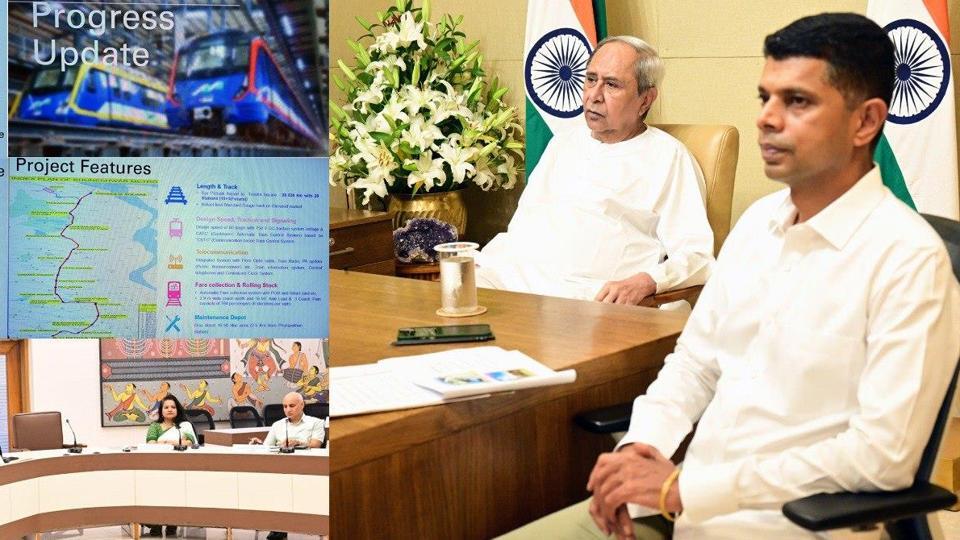
Patnaik, who reviewed the project on Saturday, approved the ‘detailed project report’ (DPR) while reviewing the status of Phase I of the metro rail project.
Taking to X, CM Patnaik said it is going to be a major landmark project for Odisha.
“Reviewed the status of Phase-1 of Bhubaneswar Metro Rail project, which is going to be taken up under our 5T initiative. and with this, Bhubaneswar will join the select cities in the country with a metro rail system. OdishaOnTheMove,” he wrote.
The project would entail a total expenditure of Rs. 5929 crore and would be executed by the Bhubaneswar Metro Rail Corporation Limited (BMRCL), a dedicated entity, said officials.
Official said the project would be funded entirely by the state government and would be completed in next the four years. For the current year, Rs.210 crore has been provided in the supplementary budget.
The new metro rail would connect the Biju Patnaik airport in the city to Cuttack by covering a distance of 26 km.
The metro rail from Bhubaneswar Airport to Trisulia will be on an elevated structure and will run on the median/side of the existing roads having 20 stations.
The stations will cover important places like Nandankanan, KIIT Square, Damana Square, Jaydev Vihar, Vani Vihar, Ram Mandir, Bhubaneswar Railway Station, Bapuji Nagar, Sishu Bhawan and Capital Hospital.
“This project will further strengthen the public transport in the city and spur economic growth. Bhubaneswar has been recognised for various urban projects and is emerging as a city with an enhanced quality of life. I am sure this mega project will make Bhubaneswar a top liveable city in the country,” the CM wrote on X.
It would ease the daily commute of thousands, especially students and professionals, who currently traverse these cities for work and education, said officials.
The transformative project connecting a series of pivotal landmarks holds immense promise for the state’s urban landscape as it aims at alleviating the challenges posed by rapid urbanisation in the twin cities of Bhubaneswar and Cuttack.
The metro project in Bhubaneswar, Puri, Khurda and Jatni is likely to entail an investment of over Rs.15,000 crore. The metro rail will reduce the travel time between Puri and Bhubaneswar to under 30 minutes for a 64 km journey.
The metro project is likely to be expanded further to other nearby towns, including Cuttack, Khurda and Puri in subsequent phases, officials said.
A high-level committee has also been constituted to oversee the expeditious engagement of an executing agency for the project, officials said.