
 E-Paper



Experts rule out locust threat this season
Breeding and movement pattern of locusts suggest a stray swarm may hit the desert areas of Gujarat alone


A year after swarms of desert locusts invaded several Indian states causing widespread damage to crops, the central government said the chances of invasion this season are bleak.
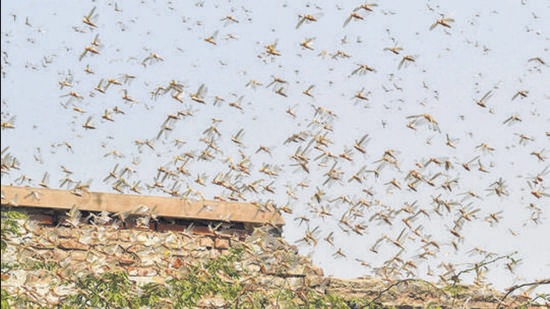
Dr N Sathyanarayana, joint director of the Locust Warning Organisation (LWO), a subsidiary of the central ministry, said the latest feedback this week from UN’s Food and Agriculture Organisation says the entire southwest Asian region is calm.
Experts say nearly half a billion population of the locust had invaded India from Pakistan from October 2019 onwards. But locust has not been spotted in Iran and Pakistan till last week and this is good news for India, said the official.
“A detailed analysis was done by the LWO on Tuesday after FAO’s sent its field and aerial studies being conducted in the locust hotbeds in African, Middle East region and Asian countries. Unlike last year, there is no potential threat of locust in India,” said Sathyanarayana, the national coordinator on mitigating locust attacks.
He, however, said the breeding and movement pattern of swarms in other parts of the world suggest a stray swarm may hit the desert areas of Gujarat alone. But there is no need to panic and FAO or LWO is not issuing any forewarning, he said.
“Locust may arrive only for breeding and we do not see any threat to vegetation. But chances are remote. The LWO is constantly coordinating with FAO for locust movement,” said the official.
Experts say locusts move with the wind and follow a definite cycle from the Sahara desert in North Africa, into East Africa – Ethiopia, Kenya, Eritrea and parts of Chad. They then move to the Arabian Peninsula and Iran. When they finish the food there, they move to Pakistan and India.
According to the FAO bulletin issued on June 21, swarms persist in Kenya and Ethiopia but other areas in Asia, including Afghanistan and Pakistan, are calm.
“Intensive ground and aerial operations are underway in eastern Ethiopia and northern Somalia to reduce swarm formation by detecting and treating hopper bands and new swarms,” it reads.
It was after about three decades that India experienced a massive locust attack in 2019-20 when the insect moved from Rajasthan to various states, including Haryana, Delhi, Uttar Pradesh, Chhattisgarh and parts of Punjab.


