
 E-Paper



Gauhati HC allows five declared foreigners to prove their Indian identity
Five members of a family in Assam’s Cachar district were declared foreigners by Tribunal Court-4 of the district in 2018


Five members of a family in Assam’s Cachar district were declared foreigners by Tribunal Court-4 of the district in 2018. Now after three years, the High Court has directed Foreigners Tribunal-4 of Cachar to hear the case again on December 24 and give them a chance to prove their identity again.
Rajendra Das, along with his wife Renubala Das and three kids (all minors), was declared foreigner on January 18, 2018, by FT-4 of Cachar district. It was an ex-parte judgement, issued after they failed to appear before the court. They are residents of Mahadevpur village under Katigorah police station of Cachar district and the court is almost 60 kilometres far.
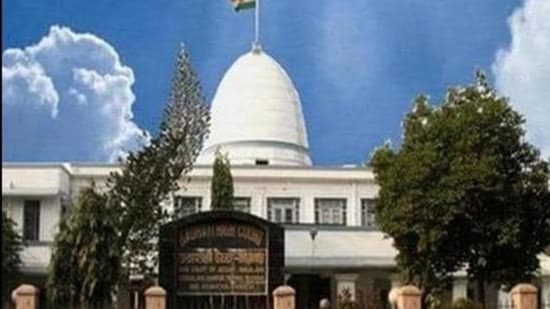
The 2018 order was recently challenged at Guwahati High Court by lawyer Swati Bidhan Baruah on behalf of Rajendra Das and his family. The High Court found that the family has documents that can prove their Indian identity.
In their order, Justice N Kotiswar Singh and justice Malashri Nandi mentioned that Rajendra Das’s father’s name appeared in the voters’ list of 1965 and was regular in upcoming years as well.
They wrote, “The voters’ list of 1965 has the names of one Gandhi Lal Das and Sumurta Bala Das are shown, who the petitioner No.1 (Rajendra Das) claims to be his parents. Similarly, the petitioners have also annexed one photocopy of the voters’ list of 1970, where the aforesaid names of the parents of the petitioner are shown.”
“They have also referred to a certificate issued by the Mahadevpur Gaon Panchayat which shows that the petitioner No.2 (Renubala Das) is married to the petitioner No.1 (Rajendra Das). And we believe that the petitioners have sufficient materials to show. We are of the view that if the petitioners are able to prove the aforesaid documents, they may have a legitimate claim that they are Indians and not foreigners,” the order stated.
The High Court also observed that Rajendra Das could not appear before the FT-4 in 2018 due to his physical illness and he deserves another chance.
“Lawyer of petitioners submitted documents which shows that because of his ill health, he, along with his family members, could not appear before the Tribunal resulting in the passing of the ex-parte order,” they wrote.
High Court feels even if the order of the Tribunal is merely quasi-judicial in nature, it has huge implications for the right of a person.
“We are conscious of the fact that ex-parte orders cannot be interfered with in a routine manner. But the present case pertains to a very important right of a person, which is citizenship. If the person could not appear before the learned Tribunal and ex-parte order was passed, it would have a cascading effect on other members of his family, as the rest of the family members are dependent on him,” they said.
The order further states that, if the petitioners are not able to engage any counsel on their own and of their choice, the petitioners may approach the Cachar District Legal Services Authority for providing a legal aid counsel.
However, since the citizenship of the petitioners has come under a cloud, they will remain on bail during the proceedings for which they will appear before the Superintendent of Police, Cachar, within 15 days from today by furnishing a bail bond of 5,000/- each with one local surety of the like amount to the satisfaction of the said authority.
The concerned Superintendent of Police shall also take necessary steps for capturing the fingerprints and biometrics of the iris of the petitioners. It is also made clear that the petitioners shall not leave the jurisdiction of the Cachar district without obtaining permission from the Superintendent of Police, Cachar.
It is to be mentioned that the FT-4 is located in Silchar town which is almost 60 kilometres away from the residence of Rajendra Das. Some lawyers (without revealing their names) mentioned that the petitioners appear before the court but the members (judges) keep delaying the hearing.
“In most of the courts, either there are no government lawyers or they are absent. The petitioners keep returning and if they miss any date, members declare them foreigners. This has become a process of harassing common Indians and the victims are mostly financially backward,” a lawyer said.


