E-Paper



How Alang ship breaking yard struggles to survive as govt comes to its rescue
According to data provided by the Alang ship-breaking companies, Alang did 1.09 mn tonnes of Light Weight Displacement (LDT) recycling in 2022-23


Haresh Parmar, the owner of Somnath Ship Recycling Company, the world’s biggest ship breaking yard Alang in Gujarat, has not received a ship for recycling in the past 20 months.
Before the current slowdown, he used to get at least three ships in a year.
Of the 135 operational plots, only about a third have vessels for recycling, industry experts said.
“There is a scarcity of available ships, and the freight rates have significantly increased after the Covid pandemic. As a result, shipowners prefer to keep their vessels operational for a longer duration,” he said, explaining how the competition from less environmentally compliant ship breaking yards in Pakistan and Bangladesh has also caused slowdown in Alang.
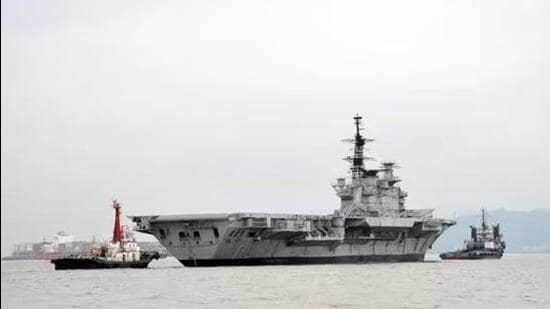
Also Read:Iconic INS Viraat makes final journey to Alang ship breaking yard
According to data provided by the Gujarat Maritime Board, the regulator for all the maritime activities in the state, the Alang did 1.09 million tonnes of Light Weight Displacement (LDT) recycling in 2022-23 financial year as against the capacity of 4.5 million LDT, its worst since 2007-08 when Alang managed 0.64 million LDT.
Alang yard caters to 98% of ship recycling activities in India. The ₹5,000 crore annual ship breaking industry employs more than 15,000 workers directly and several thousands indirectly.
Parmar said while Alang faces the challenge of complying with stringent regulations its competitors in Bangladesh and Pakistan operate under less stringent oversight.
“So, at a time when the prices of buying ship for dismantling are very high, we have to bid at USD 15-20 per tonne lower to comply with the (environmental) norms,” he said.
The price for demolition of container ships is around USD 540 per tonne, according to industry watchers.
Five years ago, the union government passed the ‘The Recycling of Ships Bill 2019’ that provides for the regulated recycling of ships.
It includes the provisions of International Maritime Organisation’ Hong Kong International Convention (HKIC) for the Safe and Environmentally Sound Recycling of Ships, 2009.
Of the 135 operational plots, about 85 are HKIC compliant.
Johny Aggarwal, who runs AlangToday.com, an online portal that tracks ship recycling business at Alang, said India has the highest number of HKC compliant yards in the world.
A ship owner can either sell the ship directly to a ship recycling yard or sell it through a cash buyer.
Most owners prefer to choose the latter strategy because cash buyers pay a lump sum to the ship owners in cash in advance and charge commission to close the deal.
Nitin Kankia, owner of a ship-recycling firm at Alang said the yard is going through a critical phase and he has finally succeeded in buying a vessel for scrapping after a long gap.
“We need to watch out how things shape up soon. With an installed capacity of about 4.5 million light displacement tonnage (LDT) a year, today Alang scraps less than 1.5 million LDT,” said Kankia.
The issues
Ship breakers in Alang allege that many ships from countries in Europe and elsewhere that follow strict environmental norms send their ships to Bangladesh and Pakistan by changing flags to African countries where laws are relaxed (this change of flag is also known as flag of convenience to recycle ship). They do this in order to get a better price for their vessels that are set to retire.
This happens due to the United Nations Convention on the Law of the Sea (UNCLOS) that provides for the primary responsibility for ships to rest with the vessel’s flag state. Thus, every merchant ship needs to be registered under the flag of a particular state under whose regulatory control it consequently falls.
As rights and obligations under international law are mainly imposed on vessels via the flag states, they are a crucial factor in determining the enforceability of international standards.
Alang shipbreakers said that the industry saw some revival during the Covid period as freight rates had gone down and owners were forced to retire their ships to avoid financial losses.
In 2020-21, Alang scrapped 1.78 million LDT as compared to 1.62 million LDT in 2019-20.
However, with the global economy opening up post Covid and the Russia-Ukraine war along with unrest in Syria and Turkey, the freight rates have nearly tripled in the last year or so, said a shipbreaker at Alang who did not wish to be named.
Echoing similar sentiments, Johny Aggarwal said the slowdown affected ship breakers in Bangladesh and Pakistan, but they are seeing some revival.
“Bangladesh and Pakistan too, the number of ships arriving for scrapping is very less for past seven to eight months additionally due to foreign exchange problems. However, the situation has improved in Bangladesh since April this year,” he said.
Government intervention
To overcome the downturn being faced in Alang, the Centre and state government are “diligently formulating strategies” and “implementing measures” to ensure the yard’s sustainability and ongoing operation, said a senior Gujarat government official.
According to officials, the central government has chalked out a plan to double the capacity of Alang from 4.5 million LDT to 9 million LDT in the next few years to become India’s biggest vehicle recycling hub.
“Their collaborative efforts aim to revitalize the yard, effectively navigate the challenges posed by the industry slowdown, and address the competitive landscape, ensuring its long-term viability, said another government official.
The Gujarat government earlier this month came up with financial package of ₹28 crore for the revival of Alang-Sosiya Ship Recycling Yard. This includes waiver in housing cess of ₹200 per sq metres, waiver in development charges by 50% and to waive ₹35 per LDT for Indian flagged ships to be recycled, from ₹135 per LDT to ₹100 per LDT.
Vishnu Gupta, president of Ship Recycling Industries Association of India (SRIA), welcomed the government’s move and said it will help them in bidding at a competitive price in international market.
The Association has made representation to government of India with reference to amendment in Quality Control Order - 2013 of BIS and reducing basic customs duty to zero for ships for scrapping.
“While the customs duty has already been reduced to zero from earlier 2.5%, the industry’s demand for BIS is being actively considered by the Centre. Bangladesh does not have enough steel manufacturing units and is heavily dependent on ship recycling industry for its raw materials required for construction. Presently there is a ban on the production of rods in re-rolling mills using plates recycled from ships at Alang as raw material. With BIS approval, the recycled materials from scrapped ships can be used for high rise buildings and other such construction works,” said an industry expert aware of the matter.
On increasing the capacity, a government official explained that Alang is set to emerge as the country’s hub for vehicle scrappage and hence there won’t be any issue of capacity under-utilization.
A proposal is being actively considered by the Centre where the existing yards will double up for vehicle scrapping, he added.