E-Paper



Indo-Malaysian team identifies tobacco compound that can beat multiple cancers
The miracle compound, researchers including those from AU maintain, has shown impressive anti-cancer properties and can be taken as a lead compound for future clinical trials for treating cancers including those of the lungs, pancreas, bone marrow and blood

 Prefer HTon Google


Tobacco leaves that are known to cause cancer in people could emerge as a cure for the dreaded disease.
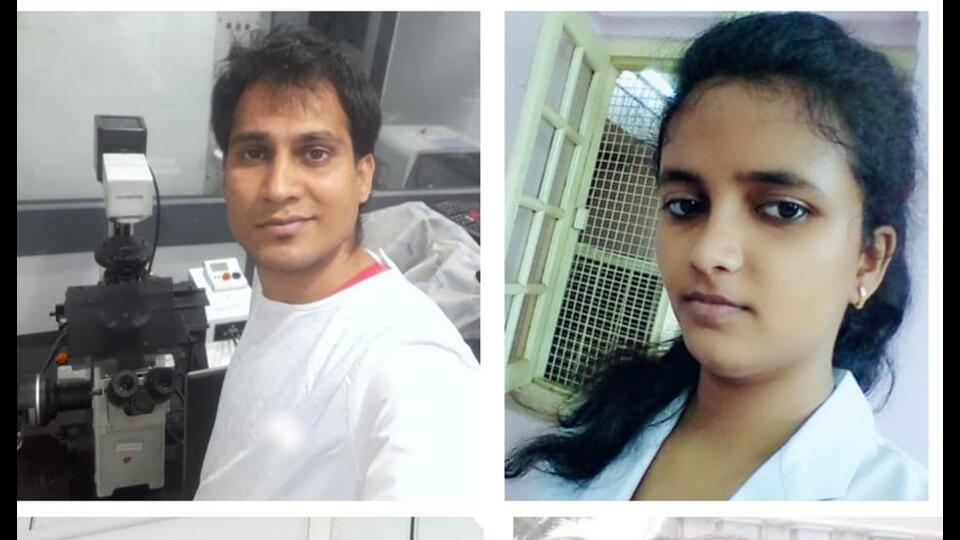
A team of Indian and Malaysian scientists including Amit Dubey, a visiting researcher of Allahabad University (AU), as well as Aisha Tufail, research scholar of AU’s Biochemistry department has made the claim.
They claim to have identified treatment of various cancers through a single anti-cancer compound — 4-[3-Hydroxyanilino]-6,7-Dimethoxyquinazoline — found in tobacco leaves.
The organic compound, the scientist maintain, has shown impressive anti-cancer properties and can be taken as a lead compound for future clinical trials and experiments for treating cancers including those of the lungs, pancreas, bone marrow and blood.
“Chemotherapy, surgical procedures, and radiotherapy are currently used to treat cancer. Since the current chemotherapeutic medicines are also toxic, there is a great need and demand from cancer patients to find novel chemicals that are toxic-free or have low toxicity but can kill tumour cells and stop their growth. Therefore, searching for new anti-cancer medications is one of the main objectives of drug research and discovery,” shared Dubey.
The proliferation, survival, adhesion, migration, and differentiation of cancer cells are all significantly influenced by the epidermal growth factor receptor (EGFR). The walls of tumour cells contain EGFR. They require this protein to survive and develop. Therefore, in a number of cell phenotypes in the human skin, the EGFR plays a crucial role in regulating immunological responses, cell migration, adhesion, and proliferation. Additionally, the first receptor to demonstrate a connection between mutation and overexpression in tumor cells is EGFR. This receptor has a broad role in signal transduction, oncogenesis, and the development of epithelial malignancies, he explained.
The findings would be published in the forthcoming issue of the prestigious ‘Journal of Biomolecular Structure and Dynamics’ brought out by Taylor & Francis Ltd of the United Kingdom.
The two Indian researchers from AU and Malaysian scientists Miah Roney and Prof AKM Moyeenul Huq from Universiti Malaysia Pahang Al-Sultan Abdullah (Malaysia University) claimed that their study has shown the 4-[3-Hydroxyanilino]-6,7-Dimethoxyquinazoline compound to inhibit the activities of the EGFR cancer target.
“The most important fact about this compound is that it has no side effects,” Dubey said.