
 E-Paper



India-US: Difficult times call for difficult measures
India should not wait for a future moment when it is more powerful to exercise leverage over the US when it has a menu of options to consider today

 Prefer HTon Google


Finance minister Nirmala Sitharaman’s statement that the negotiations with the US for a trade deal have reached a “plateau” reflects the challenges the world is facing from the Trump administration’s maximalist and mercantilist orientation.
Last month, India faced yet another transgression at the hands of the US. The US Congress passed the Sanctioning Russia and Iran Act of 2026. This legislation allows the imposition of up to 100% tariffs on countries buying Russian oil. Democratic senator Richard Blumenthal was clear about who this targets. “China and India, you better buy your oil and gas somewhere else,” he warned.
In this tumultuous phase of the Washington-New Delhi relationship that Trump 2.0 is — marked by the killing of Indian seafarers, AI access woes, ebbs and flows in tariff impositions — the Indian response has largely been to play down the transgressions while simultaneously working to mitigate the impact. This constraint has been partly on account of the economic and military disparity between the US and India. While a mushrooming India-US relationship spanning investment and tech domains has been in New Delhi’s interest, constraints need not define India’s response when subjected to coercion.
Every country, irrespective of its size, economy, or military might, holds some leverage. India should not wait for a future moment when it is more powerful to exercise leverage over the US when it has a menu of options to consider today.
Drawing from the work of Thomas Schelling, we define leverage “as the ability of a State to absorb a high cost and yet be willing to impose costs and cause pain to others.” While factors such as reversibility and clarity of signalling help us assess leverage, asymmetry of vulnerability (who suffers more when the leverage option is exercised) and political salience in the target State (does the leverage option generate domestic political pain in the target State) are most significant. Given the democratic structure of the US, politically salient measures mean that grievances from even small but consequential constituencies can be channeled to the US Congress and the White House — thereby leading to potential policy change.
If asymmetry of vulnerability and political salience are plotted in a 2x2 matrix, India should act in areas where high asymmetry intersects with high salience. We suggest some options here for New Delhi’s consideration. These options are not rigid; rather, they allow for flexibility and reversibility based on evolving US behaviour.
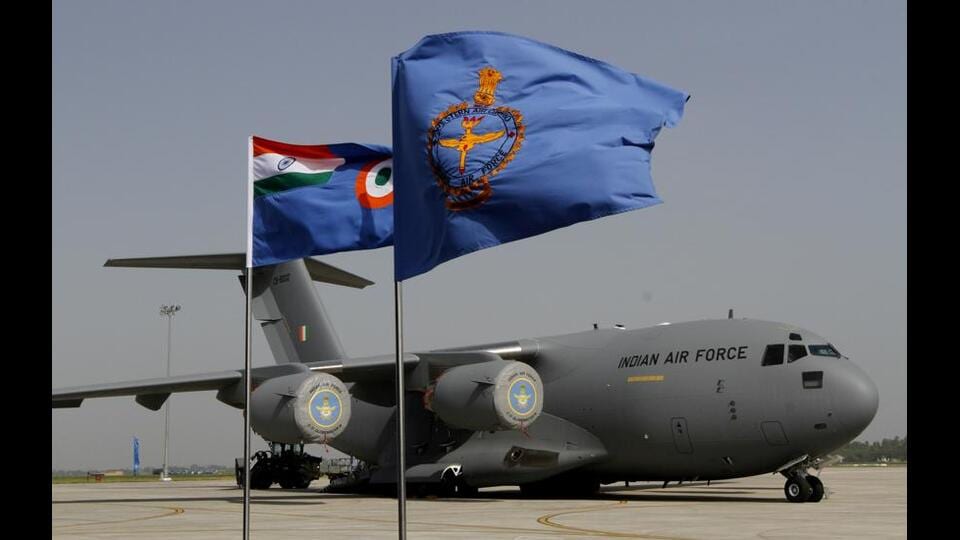
The first option is to change the defence procurement approach with respect to US contractors. India has been a significant buyer of US arms for more than a decade, with a recent Congressional Research Service document pegging the number at $25 billion for the last two decades. The same document claims that India is the largest operator of two US platforms outside America: C-17 Globemaster heavy transport and P-8I Poseidon maritime patrol aircraft. Even a public announcement, short of awarding a contract, of New Delhi finding alternative suppliers for big-ticket defence purchases would likely activate the lobbying efforts of US defence contractors who are deeply enmeshed in the US polity. This option is reversible, as excluded US defence contractors can be included in future procurement cycles even if India’s actions go beyond public announcements (to actually awarding contracts to non-US players).
Second, India can establish an equivalent of China’s State Administration for Market Regulation (SAMR) to target mergers and acquisitions that involve US companies with market presence in India. China’s SAMR has blocked Intel’s acquisition of Tower Semiconductor and delayed Broadcom’s acquisition of VMware. India, a future growth market for the US private sector, can similarly target e-commerce, social media, payments and cloud companies.
Beyond these two leverage options in the sweet spot (intersection of high asymmetry and high political salience), India can also consider the option which offers relatively high asymmetry but low political salience: freezing the implementation of foundational defence agreements such as the Logistics Exchange Memorandum of Agreement, Communications Compatibility and Security Agreement and Basic Exchange and Cooperation Agreement. This would affect US force projection capabilities in the Indian Ocean Region, but may not necessarily generate lobbying efforts by specific groups in the US polity. This measure might also be relatively difficult to reverse.
India’s external affairs ministry has already set the tone for New Delhi’s response to the latest tariff salvo: “The Indian side has also made clear its determination to take all necessary measures to protect its trade and economic interests.” In furtherance of this posture, New Delhi can consider the leverage options that we have listed here.
This not to argue that any of the Indian measures against the US will not carry consequences for India. They would carry a cost, but they would still convey New Delhi’s red lines. In normal times, all of them are bad options. But these are not normal times given the deterioration of the US-India relationship in the Trump 2.0 era, the withering of bipartisan consensus on India’s significance due to upheavals in the US polity, and the overall difficult geopoliticalenvironment India finds itself in. While India must build geopolitical backstops in the future by architecting sectoral plurilateral blocs in areas such as space, digital public infrastructure and AI, it should not wait for that future to exercise leverage options when faced with transgressions today.
Lokendra Sharma is a staff research analyst with the high-tech geopolitics programme of the Takshashila Institution. Pranay Kotasthane is deputy director of the Takshashila Institution and chairs its high-tech geopolitics programme. The views expressed are personal


