
 E-Paper



Ludhiana: Sowing maize is bad economics, states PAU study
The study was conducted by principal extension scientist Raj Kumar from the department of economics and sociology, PAU, Ludhiana. As per the study, ₹17,888 per acre is required for the cultivation of spring maize in comparison to ₹10,393 for summer moong


Summer moong cultivation is more viable than water-guzzling maize crop, a study carried out by the Punjab Agricultural University (PAU) stated.
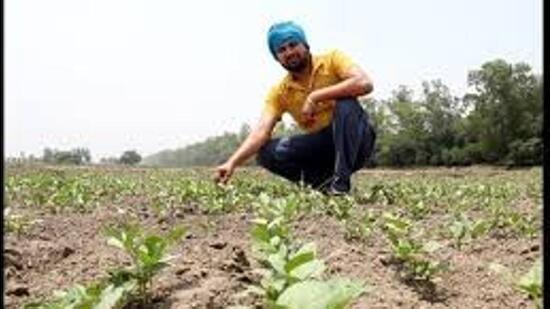
The study conducted by principal extension scientist Raj Kumar from the department of economics and sociology observed that paddy-wheat monoculture in Punjab has exploited the soil health and water resources of the state. About 80 per cent water blocks of the state are overexploited.
In spite of this peculiar situation, farmers especially in the central plain zone of the state are still cultivating spring maize after potato and pea from February to June. Moreover, due to very high evaporative demand of the atmosphere from April to June, the water requirement of this crop is high.
“The cost of irrigation water for raising the spring maize is not taken into account by farmers because of free electricity to the farm sector. Therefore, farmers should be sensible in choosing the crops for this season as the groundwater level in the state is plummeting every year,” said Kumar.
On the other hand, the moong (Vigna radiata) being a leguminous crop has a unique role in fixing atmospheric nitrogen through the process of biological nitrogen fixation. The biological nitrogen fixed by the moong crop not only meets its own requirement but also leaves nitrogen for the next crop.
Recently, vice-chancellor Satbir Singh Gosal had cautioned Punjab farmers against the depleting groundwater table and appealed to them to adopt drip and sub-surface irrigation practices for spring maize cultivation.
Already grappling with water depletion, spring crop, particularly maize, is further exacerbating the decline of the watertable, observed the PAU V-C.
“Since 1990s, farmers, especially the potato and pea growers have adopted spring maize cultivation, the area of which is escalating day by day,” he claimed.
As compared to kharif maize, spring maize cultivation results in improved production and profitability due to fall in minimum temperature, enhanced vegetative stage, low weed pressure and insect-pest attack, the V-C added.
Comparative evaluation of summer moong and spring maize
The comparative analysis of performance of spring maize and summer moong revealed that an amount of ₹17,888 per acre is required for the cultivation of spring maize in comparison to ₹10,393 for summer moong. It is important to note that spring maize is a water-intensive crop as it needs about 18 irrigations as compared to only three or four for summer moong. It has been observed during the field surveys that farmers have to apply even more than 18 irrigations to spring maize.
Summer moong is a short duration crop of 65-70 days, while spring maize matures in about 115-120 days. Hence, spring maize requires more than 3.5 times the quantity of irrigation water than that of summer moong. “Although, net returns from spring maize are higher than that of summer moong, the reverse is true when we take into account water productivity in terms of returns over variable costs. As from each cubic metre of water used, summer moong yields ₹21.23 and spring maize yields ₹8.41,” stated Kumar.
Summer moong being a leguminous crop fixes atmospheric nitrogen in the soil, thus helps in maintenance of soil fertility. On the other hand, continuing the cultivation of spring maize may cause the depletion of groundwater. Further, it also puts a financial burden on the state government on account of high electricity consumption provided free to farmers.
Therefore, in Punjab, especially in the central plain zone, the existing crop rotation of paddy-potato-spring maize needs to be replaced by paddy-potato-summer moong for sustenance of both soil and water resources.


