
 E-Paper



Model solar villages: Semi-urban hamlets in sights, rooftop panels planned for Prayagraj dist houses
These villages will be developed as ‘Model Solar Villages’, with rooftop solar panels proposed for every household

 Prefer HTon Google


As part of a pilot project, the state government has decided to focus on relatively developed semi-urban villages for implementing its ambitious solar energy programme.
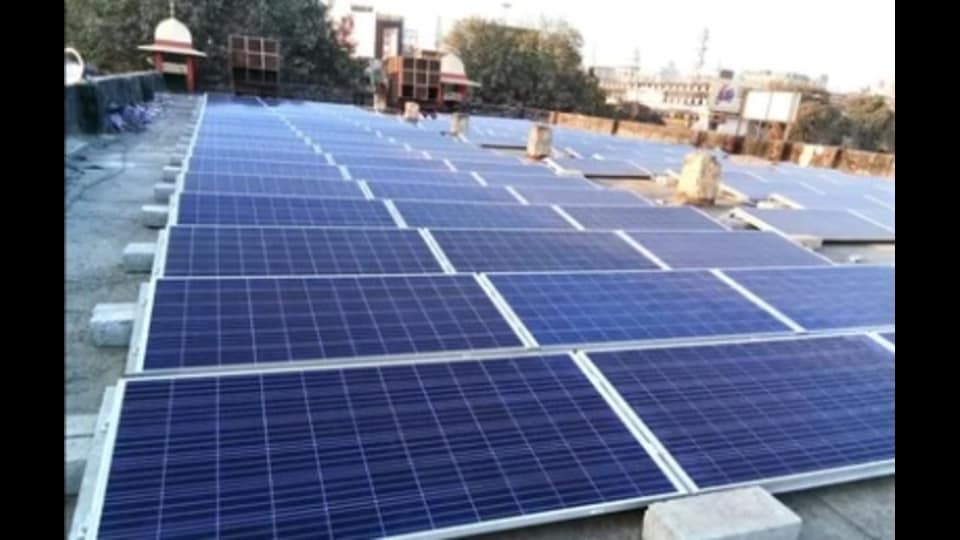
Once the model is successfully implemented in these villages, the government plans to expand the initiative to other rural areas. The broader objective is to encourage the adoption of clean energy, reduce dependence on conventional power sources and lower carbon emissions.
These villages will be developed as ‘Model Solar Villages’, with rooftop solar panels proposed for every household.
According to the records of the Panchayati Raj Department, 187 villages in Prayagraj district have been shortlisted so far under the scheme. Rooftop solar panels will be installed in these villages in a phased manner to provide residents with clean and affordable energy.
Officials said that the selection process has been expedited following government directives, emphasising villages that offer the highest potential for successful implementation and long-term sustainability of solar projects. The move comes amid concerns that solar initiatives in remote rural areas often face technical, financial and maintenance-related challenges, limiting their effectiveness.
The initiative is expected to help households reduce their dependence on conventional electricity and lower monthly power bills. Officials believe that generating electricity through rooftop solar systems will provide significant financial relief to consumers while promoting the use of renewable energy.
District Panchayati Raj Officer (DPRO) Ravi Shankar Dwivedi said surveys and assessments are currently underway in the shortlisted villages. The evaluation includes factors such as power supply conditions, population, housing structures, road connectivity and availability of other basic infrastructure.
“Work will begin on a priority basis in villages that demonstrate the greatest potential for the successful operation of solar energy projects,” Dwivedi said.
Apart from installing solar panels, the programme also focuses on creating awareness among residents regarding the use, maintenance and economic benefits of solar energy systems. Department officials believe that semi-urban villages are better positioned to adopt the technology because of their comparatively stronger infrastructure and higher levels of public awareness.
The DPRO further said that after the selection process is completed, detailed surveys, technical feasibility studies and beneficiary verification exercises will be carried out. The phased installation of rooftop solar systems will then commence, paving the way for the selected villages to emerge as models of energy self-reliance and sustainable development in the years ahead, he added.


