
 E-Paper



Nixing man-animal conflict: WTI launches pilot housing project in Bahraich
Auto-closing metal doors, solar-powered motion-sensor lights and a centrally installed hooter alarm system, among others to guard six dwellings as part of project

 Prefer HTon Google


The Wildlife Trust of India (WTI) has established the state’s first “Predator-Proof Housing Cluster” (PPHC) in Lohara village, under the Karikot Gram Panchayat, in the Nishangarh Range of Katarniaghat Wildlife Division, Bahraich district, in a pioneering effort to address the rising man-animal conflict in the region.
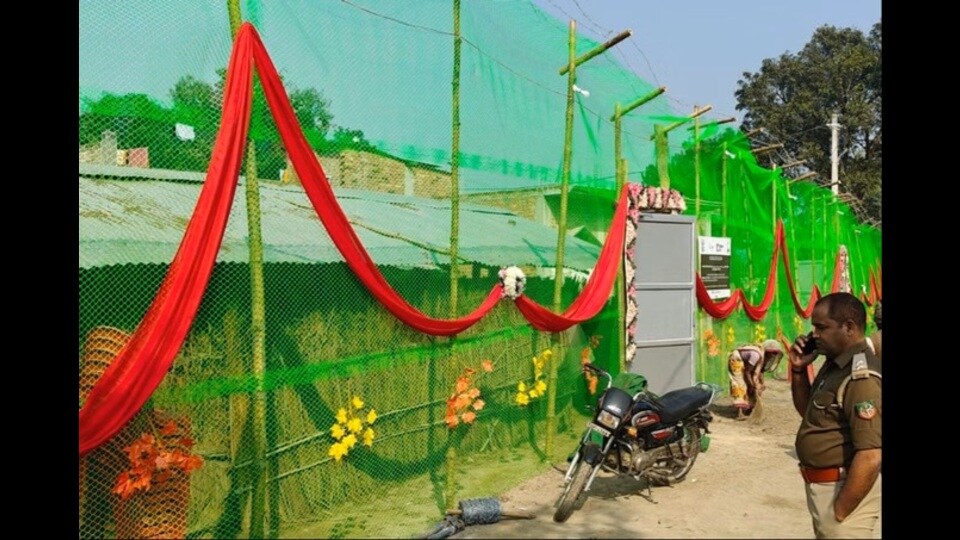
The initiative safeguards six closely situated houses belonging to residents Ramdev, Jogendra Singh, Rakesh, Pappu, Kanchhed, and Chunna. For several months, a leopard has frequently prowled the area, preying on livestock and instilling fear among villagers living on the forest fringes.
To protect these households, WTI has enclosed the cluster using sturdy bamboo poles and high-strength plastic nets reaching 16 to 18 feet in height. The enclosure features secure entry and exit doors, topped with barbed wire for added deterrence.
Additional safety measures include auto-closing metal doors, solar-powered motion-sensor lights and a centrally installed hooter alarm system to warn residents during any emergency, said Dr Abhishek Ghoshal, head of Human-Wildlife Conflict Division, WTI.
The initiative is focused on protecting vulnerable forest-edge communities—particularly children—from attacks by big cats such as leopards and tigers.
Villagers in Lohara welcomed the measure, viewing it as a practical solution to reduce risks without harming the leopard population. Authorities hope the project’s success will inspire broader adoption across conflict-prone zones in Uttar Pradesh.
Ghoshal, described the project as a pilot initiative. “This is an experimental approach to enhance community safety in areas prone to leopard visits. If successful, similar predator-resistant housing clusters will be replicated in other vulnerable villages adjacent to the Katarniaghat forest,” he stated.


