
 E-Paper



Ocean away from home, Nigerian-Muslim medicos in Lucknow celebrate ‘Ramadan’ with fervour
Wearing traditional Pathani Kurta, pyjama, and white skull caps, hundreds of university students could be seen walking the streets, standing in groups post-evening Iftar and morning Sehari.


LUCKNOW Streets along the Integral University at Kursi Road in Lucknow are buzzing and have come alive in full zest with students and locals as the holy month of Ramadan commenced on Friday.
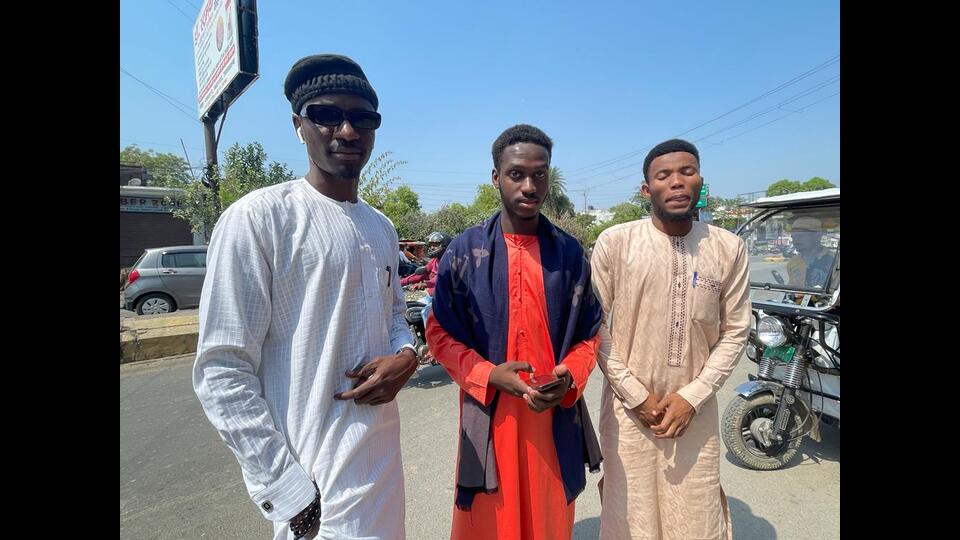
Wearing traditional Pathani Kurta, pyjama, and white skull caps, hundreds of university students could be seen walking the streets, standing in groups post-evening Iftar and morning Sehari. Among them are many Nigerian Muslim students who are studying medicine and related subjects at different departments of Integral University.
Despite being an ocean away from their native place and far off from their family and friends, these international students are observing Ramadan with equal fervour and spirit with a mix of Nigerian and Indian cultures along with their friends whom they call their Indian family.
“It is a month of blessing. Ramadan is a time when friends and family gather and visit each other frequently, offer namaz together, and break the fast together. However, when we are away from home, we miss all of those memories,’’ said Umar Farooq, a resident of Abuja, the capital of Nigeria.
“We’re living here for the last two years and we have started liking the kind of Ramadan celebrated here in India. There is a lot of buzz in the streets. Students from Nigeria are here in numbers so we kinda enjoy it together,” said another student Ibrahim who also comes from Abuja.
“Some of our Indian friends invite us too during Eid at their home to enjoy Indian delicacies, which makes us like a family and home,” said Bello, who lives in a hostel with three other Nigerian friends all of whom have come from Lagos.
“Most of our time goes in attending classes, but when we get time, we go to Lucknow’s old areas such as Chowk and Aminabad which we have learnt from our local college friends,” said Mudassir, who has flown from Kano city and is a third-year Pharmacy student.
When home we pray together and read ‘Tafsir Quran’
According to the students Ramadan celebration in Nigeria is a little different from how it is celebrated in India. “Generally, we do Tafsir during the evening time, where a learned religious teacher sits down with several disciples and interprets the holy book ‘The Quran’ to them,” explained Nusaiba Kabir, a fifth-year D-Pharma student.
“However, the five times prayer during a day is the same in our country as well,” said Bundi Shehu Maizango, another student of the university from the Nigerian state of Yobe who is on scholarship here by the Yobe’s government.
Love for Indian Cuisines
“Even though the celebration is the same, our cuisines are different from what Indian platters have during Ramadan,” said Nusaiba Kabir, 5th-year D-Pharma student informing about the special Ramzan dish of Nigerian ‘Tuwon-Shinkafa’ which is a thick pudding prepared from local rice that is soft and sticky, and is usually served with different types of soups like miyar kuka, miyar kubewa, and miyar taushe.
“Mini paradise and feast are among some of the dishes during Ramzan. “We use Ajinomoto and Onga (food colouring) to make our festival dishes more aromatic and colourful,” said Bundi Shehu. “However, in India, there is a lot of variety in food; for example, the same rice is used in biryani, pulao, fried rice, and many other dishes. Spices are used to enhance the flavour,” he added while expressing his love for Indian cuisines. The students also said that India’s welcoming culture has touched them and that they will keep coming even after completing their course in the country.


