E-Paper



Odisha announces land pattas to 1,749 families displaced by Hirakud dam in 1950s
The Hirakund Dam in Odisha had submerged 325 villages covering 1,83,000 acres of land, displacing about 1 lakh people

 Prefer HTon Google


Addressing a long-pending demand of land pattas for the people displaced by the Hirakud dam built in 1950s, the Odisha government led by chief minister Naveen Patnaik on Saturday decided to give pattas to 1,749 families in Jharsuguda district from December.
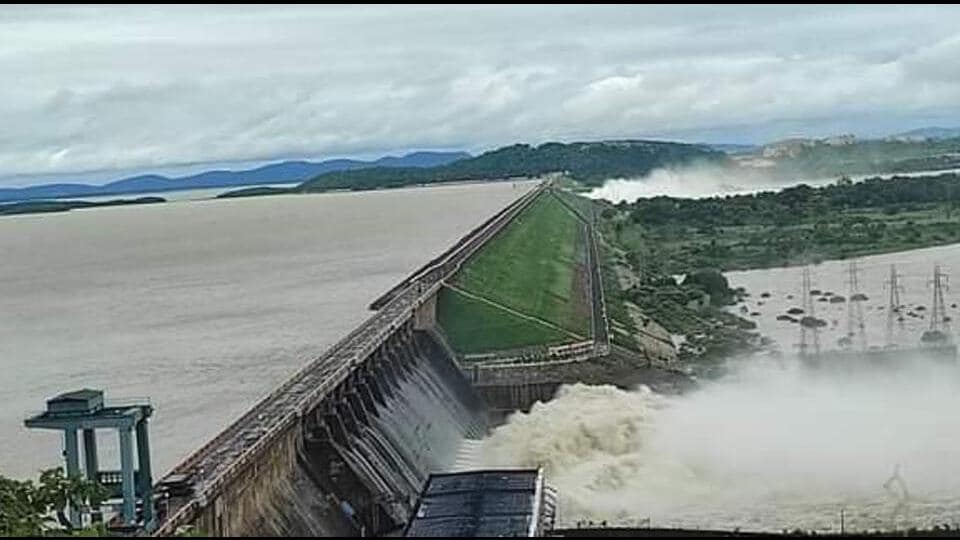
The decision was taken after a high-level meeting chaired by development commissioner Anu Garg on Saturday. The government announced that 1,749 families in 19 villages of Jharsuguda district would be given pattas over 3,231 acres. Officials said that the land distribution would begin from December in 5 of the villages.
Built at a cost of a little over ₹100 crore, the multi-purpose Hirakud dam, with an overall length of 4.8 km across river Mahanadi, was constructed between 1946 and 1957 for flood control, irrigation and power generation. Though the dam managed to irrigate over 24,280 hectares of farmland, 26,561 families of Sambalpur, Bargarh and Jharsuguda, Sundargarh and Sonepur districts were displaced from their homes in 1955-56 during the construction of the dam. It submerged 325 villages covering 1,83,000 acres of land, displacing about 1 lakh people.
So far, 13,470 families have been rehabilitated and given compensation, which in some cases ranged between ₹200 and ₹600 per acre, much lower than the market value back then. The villagers were described as encroachers and denied basic facilities for the last 53 years and compared to other villages in the region, these villages have poor access to schools, colleges, post offices, health centres and road connectivity.
The Naveen Patnaik government in 2002 announced 10 decimal (one-tenth of an acre) of homestead land to the displaced families. However, less than 500 families (all from Sambalpur district) got the land. In 2018, the National Human Rights Commission ,acting on a petition filed by lawyer Radhakanta Tripathy, sent its special rapporteur to investigate the failure of the rehabilitation of around 26,000 displaced individuals. In March 2021, NHRC directed the chief secretaries of both Odisha and Chhattisgarh to submit an Action Taken Report on the mitigation of problems with regards to oustees by April. In November 2021, Patnaik announced that around 2,000 families in Jharsuguda district will get homestead land.
Gopinath Majhi, general secretary of Hirakud Bhudianchal Sangharsh Samiti, said the government decision has given hope to the thousands of displaced families. “We hope all those who were given a pittance in the name of rehabilitation are adequately compensated within a deadline. We have been struggling for justice for far too long,” said Majhi.