E-Paper



Okhla barrage redesign among fixes proposed for Yamuna rejuvenation, tackling froth
An action plan proposes six measures to reduce froth in the Yamuna, including redesigning the Okhla barrage and preventing waste dumping.

 Prefer HTon Google


Redesigning the Okhla barrage at Yamuna to reduce the turbulence triggering froth formation, stopping solid-waste dumping and untreated industrial discharge, shutting dhobi ghats and improving the environmental flow are among six measures proposed to tackle recurring froth in the river, according to an action plan discussed at an interdepartmental meeting earlier this week.
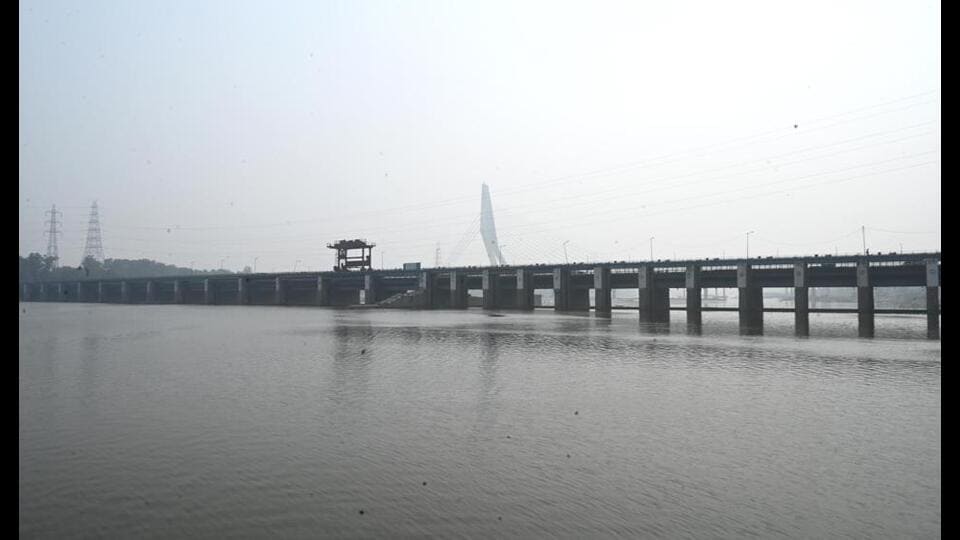
The six-point plan identifies the Okhla barrage, waste and effluent discharge, floating vegetation and inadequate river flow as key areas requiring intervention.
Okhla barrage redesign proposed to curb turbulence
The first measure proposes redesigning the Okhla barrage to moderate the “plunge and churn” created when water falls over the structure. The turbulence aerates water containing surfactants and other pollutants, resulting in visible foam downstream of the barrage, an official said.
“The froth formation in this stretch is linked to specific technical conditions at the barrage. The turbulence interacts with surfactants and other pollutants already present in the river to produce the visible foam,” said the official.
To be sure, the slope of the location only leads to the visible froth formation. However, it forms because of pollutants and surfactants already present in the river.
Also read: Delhi Speaker seeks MCD reports on handling of garbage, stray cattle
Waste dumping, floating vegetation targeted
The second measure calls for preventing solid-waste dumping into the river and removing garbage that has accumulated in the channel.
The third proposal is removing floating plants, including water hyacinth and other vegetation, from the river. According to the action plan, decaying vegetation adds to the organic load in the water and can contribute to froth formation.
“The fourth point focuses on dhobi ghats. Surfactants and phosphates in wastewater from domestic sewage, laundry activities and industrial sources are among the substances associated with frothing,” the official added.
Also read: 1,300 tonnes cattle waste from Delhi enters Yamuna everyday: MCD report
Illegal factories face action over untreated discharge
The fifth measure calls for action against illegal factories. The MCD has been asked to close unauthorised industrial units or regularise them where permissible, particularly those discharging untreated effluent into the drainage network. The sixth measure seeks to increase the river’s environmental flow, with the DJB tasked with augmenting water flow to improve dilution and movement of pollutants, particularly during lean months.
Delhi currently receives an allocation of 10 cubic metres per second (cumecs) of environmental flow, while a parliamentary panel in 2023 recommended at least 23 cumecs to support basic ecological functioning and reduce visible pollution symptoms, including frothing.
Also read: Waste dumped at 33 spots along Yamuna-linked drains: Report
The proposals have been divided among the irrigation and flood control department, MCD, DDA and Delhi Jal Board (DJB).
Lieutenant Governor Taranjit Singh Sandhu headed the meeting, which was attended by Chief Minister Rekha Gupta and Water Minister Parvesh Verma.