
 E-Paper



On Maha Ashtami, devotees shower flowers on Durga Maa; discarded petals saved for Dashami immersion
As the priest recites Sanskrit prayers over a loudspeaker, numerous devoted attendees join their hands, reciting the same words, and collectively offer their flowers to the idol or the mandap.

 Prefer HTon Google


LUCKNOW: Resplendent in traditional attire, hundreds of people gathered early in the morning on Maha Ashtami (Sunday) at Durga Puja pandals to partake in the revered Pushpanjali ritual. This sacred custom involves showering the Durga idol with flower petals and bael leaves on an empty stomach during the early hours of the day. Later in the evening, the same mandap would be adorned with 108 lamps, lotus flowers, and other offerings during the Sandhi Puja ceremony.
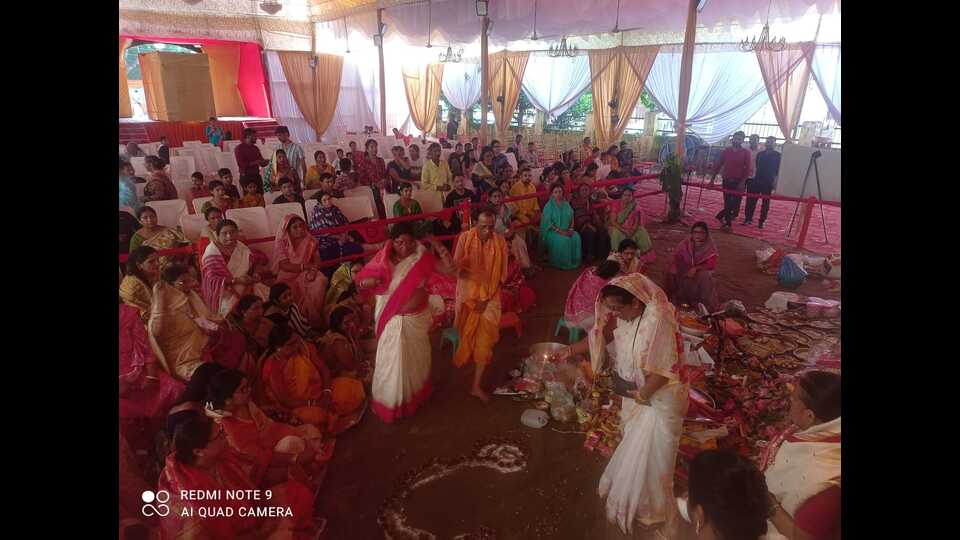
Every pandal conducts the Ashtami morning Pushpanjali as an integral rite, defining the eighth day of Durga’s visit. As the priest recites Sanskrit prayers over a loudspeaker, numerous devoted attendees join their hands, reciting the same words, and collectively offer their flowers to the idol or the mandap.
Sujoy Chatterjee, the pandal secretary of Naveen Sharodiya Utsav Durga Puja, stated, “We commenced the rituals at approximately 11 AM, organizing the Pushpanjali in four or five batches, each composed of around 300 devotees. Since we cannot expect visitors to bring their own flowers and bael leaves, we procure these items from a seller and distribute them during the Pushpanjali.”
At the Trans-Gomti Durga Puja pandal, priests Shanti Nath and Shambhu Nath Mukherjee reported a turnout of over 500 devotees for the Pushpanjali ceremony at 10 AM. These venerable priests, who have overseen Durga Puja at this pandal for numerous years, were impressed by the commitment displayed by the attendees. “Coming from West Bengal, it is heartening to witness Bengalis celebrating Durga Puja with such dedication,” they expressed.
At the Bengali Club, a pandal with a rich history, a large number of devotees flocked to participate. Arun Kumar Banerjee, the club’s president, stated, “The turnout was so substantial that it’s impossible to count. We conducted multiple rounds of Pushpanjali today, and the crowds continue to arrive even after the Sandhi Puja has concluded.” Located in Shivaji Marg, an area renowned for its Bengali residents, this pandal typically attracts larger crowds than most others.
Saroj Mahanto, the general secretary at Sarbojonin Durga Puja Samiti, Vidyant College, reported that their morning Pushpanjali continued from 9 AM to nearly 12:30 PM. As a relatively smaller pandal, they conducted the anjali in batches of 40-50 people. Mahanto noted that at least 400-500 individuals participated in the morning rituals.
Responsible disposal of waste petals, leaves
The Pushpanjali ritual, while popular, also generates a substantial amount of organic and biodegradable waste. Pandal authorities, mindful of the sanctity of these discarded flowers, ensure they are responsibly disposed of. Sujoy Chatterjee of the Naveen Sharodiya Utsav Durga Puja committee explained, “After the ceremony, we collect the discarded petals and leaves and either bury them or immerse them in the river, along with the idol during the immersion process.”
The Bengali Club Puja, on the other hand, immerses their idols within the club premises in a specially dug hole. “The waste flowers are also immersed along with the Goddess on our club grounds,” said the president.
Saroj Mahanto shared that his pandal disposes of the discarded flower petals in the Gomti River on the day of idol immersion, following the rules set by the administration. The Trans Gomti Dussehra and Durga Puja Committee members personally oversee all aspects of the Puja, from pandal construction to serving food to visitors. Tuhin Banerjee, a senior member of the Puja Committee, added, “Our committee members also take care of the eco-friendly mandap cleanup following the Pushpanjali.”
PS - Some were errors in my original copy which got retained. And I added the ‘numerous’ in the second para because it helps to show that the mandap becomes a mess later because of the number of people. In the Bengali club para, I changed ‘Bengali devotees’ to just ‘devotees’ because all kinds of people are allowed and do visit. Whether or not they are only Bengalis we cannot say.


