E-Paper



Photos of Naveen Patnaik’s aide VK Pandian go missing in BJD campaign posters
Pandian, the most powerful person in BJD after chief minister Naveen Patnaik, earlier toured the state and addressed party functions


Elections to the 147-member assembly and 21 Lok Sabha seats in Odisha are scheduled to be held over a month later. Prominent parties Biju Janata Dal (BJD) and Bharatiya Janata Party (BJP) are yet to announce their candidates for all the seats. The campaign is yet to pick up momentum in most places. Bureaucrat-turned-politician VK Pandian, meanwhile, has gone missing from BJD’s posters and banners.
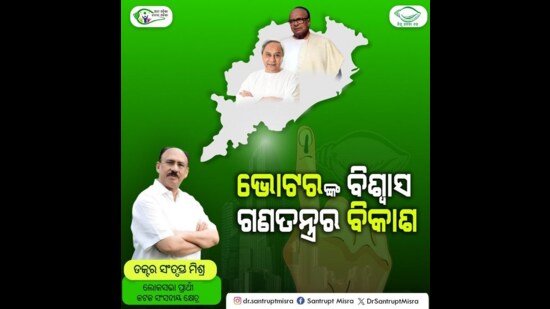
Pandian, the most powerful person in BJD after chief minister Naveen Patnaik, earlier toured the state and addressed party functions. It was seen as an attempt to project him as Patnaik’s successor.
Ajoy Kumar, the Congress’s Odisha in-charge, said in January that he found only Pandian’s posters as he travelled over 1000 km across the state. “It was Pandian in most posters while Patnaik’s photos have gone missing.”
Posters of prominent BJD candidates, including Pranab Prakash Das, did not feature Pandian’s photo last week after the party announced the candidates for 15 Lok Sabha and 72 assembly seats. The late former chief minister Biju Patnaik, whom the party is named after, again featured on the posters.
BJD spokesperson Priyabrata Majhi said some candidates may have removed Pandian’s photo from their posters, but he is the biggest leader.
A BJD leader said the removal of Pandian’s and re-appearance of Biju Patnaik’s photo is a strategic move to thwart BJP’s proposed campaign on “Odia asmita (pride)”.
BJP plans to bring out a “chargesheet” against the Patnaik government and to make “Odia Asmita” highlighting the alleged hijacking of governance by a set of non-Odia officers as a poll plank.
“As Pandian is a Tamilian and BJP has been railing against him targeting his roots, the decision to remove his photos from posters is a strategic one,” said the BJD leader, admitting Pandian’s tours undercut Naveen Patnaik’s popularity. “The party surely lost some of its popularity due to his aggressive tours across the state.” He stressed Pandian still calls the shots, pores over survey reports, decides candidates, and formulates strategies.
Political analyst SP Dash said Pandian is seen as Patnaik’s successor but has not seen much success in getting popular acceptance, despite his publicised district visits. “Many voters see the Tamilian as an outsider being foisted upon the state. This realisation may have led to the rethinking.”
Dash said Naveen Patnaik last week announced the names of party candidates himself. “The canny politician that he is, Patnaik will do everything to get back the voters on his side and beat anti-incumbency even if that means relegating his blue-eyed boy to the back room.”
Political analysts say the removal of Pandian’s photo from the posters may also have to do with the breakdown of the alliance deal between BJP and BJD. The parties agreed to an in-principle pre-poll alliance.
But BJP’s refusal to back BJD’s demand for giving some sort of political insurance to Pandian after Naveen Patnaik for at least two to three years was one of the reasons the talks broke down.