
 E-Paper



Staff, students restricted from entering IIT Bhubaneswar if not vaccinated
While the faculty and students decried the mandate, a representative of the institute said that they needed the information for contact tracing, to control infection effectively and responsibly, and to keep track of those coming in from other states


Indian Institute of Technology (IIT) Bhubaneswar has imposed restrictions on the entry of students and staff unless they are vaccinated. It has also asked them to submit a “self-declaration every Monday” that no guest arrived at the campus to meet them, and neither did they travel outside the Khordha district where the institute is located.
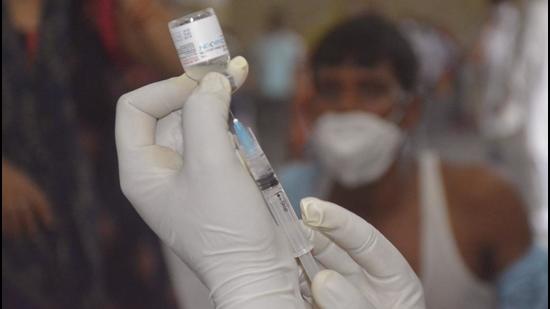
While the government has declared vaccination against Covid-19 “voluntary”, the institute has said that “all the fraternity of IIT Bhubaneswar, including outsourced manpower, mandatorily be inoculated at least one dose of vaccine by July 10, 2021.”
It added that even if the staff and students were vaccinated with both doses, their entry to the campus would be restricted if they “visited outside Khordha-Bhubaneswar-Cuttack regions.”
“While coming back, (students are) mandatorily required to inform the (Covid) nodal officer (at the institute) and should be at home quarantine for 5 days followed by RT-PCR test (sample of which should be collected on 5th day of quarantine),” the guidelines issued by the institute’s registrar Debraj Rath read.
Also Read | Orissa HC orders probe into allegations mismanagement in Covid hospitals
It further said that guests of any member of the institute needed to follow the same instructions and were also required to undergo “home quarantine for 10 days if both the doses of vaccine are not completed.”
“Further, during the quarantine period, the entire host family of the guests must quarantine at home,” the guidelines read.
The institute fraternity, however, alleged that the administration was using Covid-19 to issue their “autocratic and arbitrary diktats.”
“Actually, this SOP is to put faculties/staff under severe pressure to keep them shut. While hundreds of people are coming and going from the institute every day, they want to terrify their employees so that they can be arbitrarily punished; their lives fully controlled,” said a faculty member of the institute, on condition of anonymity.
A scholar at the institute said, “While the government is promoting vaccines as effective, I don’t understand, how a government-funded research and higher education institution can consider vaccines completely unreliable.”
He added that the SOPs with “bizarre” restrictions will not just affect employees and scholars, but also their family members. “Imagine a family member such as a son or daughter of an employee studies or commutes to his job in the adjoining district? In effect, he cannot stay with the employee if we go by these guidelines,” he said.
Meanwhile, an official from the institute said that vaccination at IIT Bhubaneswar is mandatory in general. “However, it provides exceptions for those who have valid reasons not to do so. [They can] inform IIT [in that case]. In a community, if vaccination is done in part, it will not work and protect. Also, it is not a ritual that we vaccinate. We need to holistically immunise a community,” he said.
Asked why a self-declaration was required every Monday, the official said that they needed the information for contact tracing, to control infection effectively and responsibly, and to keep track of those coming in from other states. “Please note that it is a self-declaration that is sought from our staff and students coming from the outside. Without this information readily available how do you act quickly and protect the community?” he said.
He added that at the IIT campus, the mechanism was well-controlled through several checks at the entry point. “We have students, families of faculty, staff, much outsourced staff, and 1,000 construction workers living or working on the campus. It is challenging to protect the campus. The campus cannot be Covid-19 free with a casual approach,” the official added.
Chandrakant Lahariya, a public health expert and a senior epidemiologist said vaccination should be a priority, but it is not the only protection against Covid-19. He added that enforcing a mandatory vaccination protocol was very impractical.
“Not everyone is lucky enough to get a shot instantly. When there is a limited vaccine supply, there are many people who have to wait for a long time before a vaccine is made available to them. So, there is no point of mandating vaccination in such circumstances,” he said.
Lahariya added that the restrictions of quarantine of students, of temporary guests and even of their host families is an unrealistic approach. “The biggest problem with our country is that at times the decision to define Covid-19 protocols is made by individuals who have no scientific understanding of the problem,” he said.


