
 E-Paper



Sugar saves day as Goa Port on lookout for commodity to replace iron ore export
Goa’s Mormugao Port has been forced to diversify from being a single commodity port to a multi commodity port to stay afloat, thanks to the mining ban.


PANAJI: Nearly a decade after Goa’s mining industry came to a virtual standstill, Goa’s Mormugao Port is yet to come to terms with the loss but has found succour in an unlikely commodity, sugar, to help keep it afloat.
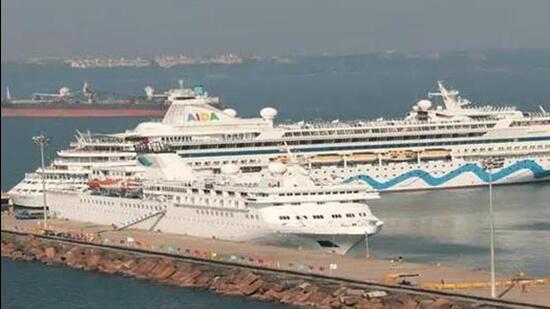
The port, which till the end of 2021 had never before exported sugar, has this year allocated nearly 4,000 square metre shed space within the port for the new commodity.
“In order to record a profit, the port needs to handle between 24-25 metric tonne cargo annually. This year thanks to sugar we were able to reach about 18 million metric tonne which was higher than what we expected,” deputy chairman of the Mormugao Port, G P Rai, said.
“Sugar was usually exported from the Jaigarh Port (coastal Maharashtra), but this year we were able to offer our services to sugar exporters here,” he said.
Up until 2012, Goa’s Mormugao Port used to handle nearly 55 million tonne cargo almost entirely of iron ore that was mined and exported from Goa. Thanks to the mining ban, the port was forced to diversify from being a single commodity port to a multi commodity port to stay afloat.
Besides sugar, the port has also banked on export of bauxite and granite, steel coils as well as the import of coal, which is currently capped at 7 million tonne as well as container cargo depending on the demand.
“We have realised that there is going to be no reliability of iron ore supply and if we are to remain afloat and profitable, we have to set a cargo of at least 24-25 million metric tonne,” Rai added.
Iron ore mining in Goa briefly resumed in 2015 after the ban that was imposed by the Goa government in 2012 was relaxed the previous year and some of the mining leases were renewed. However, in 2018 the Supreme Court ruled that the lease renewals done in 2015-16 were illegal and set aside the renewals, bringing mining to a halt once again.
This has been reflected in the cargo throughput at the port.
In 2016-17, the port handled 33.18 million metric tonne which fell to 26.90 in 2017-18 (towards the fag end of which the ban came into effect) and fell further the following years to 17.68, 16.02 and 21.99 million metric tonne in 2018-19, 2019-20 and 2020-21. Figures for 2021-22 are being compiled.
Via investment from the Central government, under the Sagarmala programme the port has also begun undertaking several modernisation projects including the construction of a new cruise terminal building, storage area for containers and two full rake wagon railway handling lines within the port.


