
 E-Paper



With help from forest employees, gharials are thriving in Katarniaghat Wildlife Sanctuary
Gharials (Gavialis Gangeticus), which are on the verge of extinction in the world, have been given a new lease of life with the intervention of the forest department in Katarniaghat Wildlife Sanctuary (KWS), located along the Indo-Nepal border


Gharials (Gavialis Gangeticus), which are on the verge of extinction in the world, have been given a new lease of life with the intervention of the forest department in Katarniaghat Wildlife Sanctuary (KWS), located along the Indo-Nepal border.
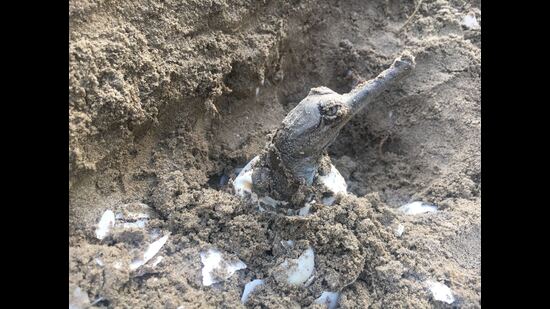
The reptiles are thriving in the Geruwa river, which flows through the KWS. As the hatching season started this year, hundreds of newborn young gharials are under the watchful eyes of KWS staff, waiting to be released into the river.
Giving information, Dudhwa Tiger Reserve (DTR) field director (FD) Sanjay Kumar Pathak said 94 nests have hatched so far in KWS.
In nature, the mother gharial breaks the eggs and takes out the babies, but here the forest employees keep them at a hatchery until released into the river.
“The forest employees have also created artificial sandbars along the river to help gharials make nest pits,” Pathak said.
The eggs take about 30 to 45 days to hatch, and the clutch size varies from 25 to 55 eggs per nest.
“There are only two rivers, Chambal and Geruwa, where Gharials breed naturally. The reptile has been listed as one of the most critically endangered species in the world. Sincere efforts by the officials and employees have helped in increasing the gharials’ population,” the forest official added.


