
 E-Paper



Wolves of Bahraich: On trail of devious duo, forest dept anticipates next attack
Forest mapping reveals elusive wolves' movements, aiding efforts to trap them after 10 attacks, mostly on children, in Mahsi tehsil, UP.


Thanks to the ‘on ground footprint mapping’ report of the forest department, the future movement of the elusive wolves is now being mapped.
The intelligent creatures that they are, the wolves have till now managed to avoid tranquilisers and eyes, but if the plans of the forest department are executed to perfection, the animals may find their attacking-at-will tactics difficult to continue.
Forest data shows these wolves killed 10 victims but didn’t kill twice in any village. Interestingly, they never left Mahsi tehsil. All this now is on record and being analysed to reveal a pattern to their movement and forest officers say, “they are close to catching the killers.”
“On-ground mapping of the movement of wolves since July reveals they are moving North in a subtle manner, but not far off from the River Ghaghra catchment. Though at times they revert for some distance but move North again,” said Sanjay Srivastava, principal chief conservator of forests (PCCF), wildlife.
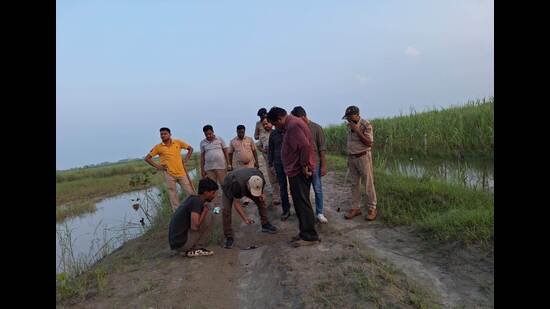
On-ground mapping has been done with the help of records of killing and location of victims, the route taken by wolves, old and new pugmarks, spotting through drone cameras that have thermal sensors and local input from residents and field staff.
Asked what significance this holds if the wolves move North, Srivastava said, “Movement North has no relevance to behaviour of wolves, it is a pattern revealed via mapping, and will help us catch them. Mapping helps in assessing the next possible move or attack where we can lay a trap.”
This is on the basis of the day of the last prey, the quantity it ate and ideal timing a wolf attacks for its next prey. With calculation the trap will be laid also in villages where the attack never happened but there is a possibility.
“Mapping will tell us when they can hunt again. Though they came out a few times out towards villages but could not hunt any humans due to aggressive arrangements by our team. We expect they will try soon and with the help of mapping we are assessing where,” said Srivastava, who is chief wildlife warden of Uttar Pradesh.
However, the delay, since they killed a child on August 29, will also make the attack more vicious, for which teams are preparing.
Apart from nets, tranquiliser guns, experts on the ground, drones and camera traps, mapping is being done specifically to assess what will be their next move and when.
All teams have been allotted vehicles that can ferry them (entire team) to any location. This has been done keeping in view that the wolves might be spotted anywhere, anytime. In such a case, all teams will come to one spot where the location is spotted.
“We will still go with the plan to trap the wolves first, make them immobile physically in a cage or chemically via tranquilisers, and if nothing works, then a call to eliminate them will be taken,” said Srivastava.
As rain made the den of these wolves unfit to live, they moved towards villages in search of food and got children as easy prey. After the first and second hunt, they found villages as a prey base.
Till now, a pack of six wolves is linked to the 10 deaths, including 9 children below 8 years of age. The forest department has processed compensation to six families of the victims swiftly.
The wolf is a protected, Schedule 1 animal under the Wildlife Act hence killing is never the first option unless considered a major threat to human life.


