
 E-Paper



Panchayati Raj Day: How Bihar’s village courts bring down case load on judiciary
A study has found that 87% of cases filed in the village court in Bihar were resolved between 2021-23, with only 10-15% cases landing up in the courts of sessions judge or sub judge for appeal

 Prefer HTon Google


As India marks the Panchayati Raj Day today, Bihar’s village courts or Gram Kachharis have shown some inspiring statistics in terms of empowerment of grassroots democracy and women’s participation. They have resolved 87% cases between 2021-23, bringing down the load on judiciary, and helped women’s participation go beyond the 50% quota at various levels in the Panchyati Raj Institutions (PRIs), according to a study compiled by the PanchayatI Raj Chair, Chanakya National Law University (CNLU), Patna.
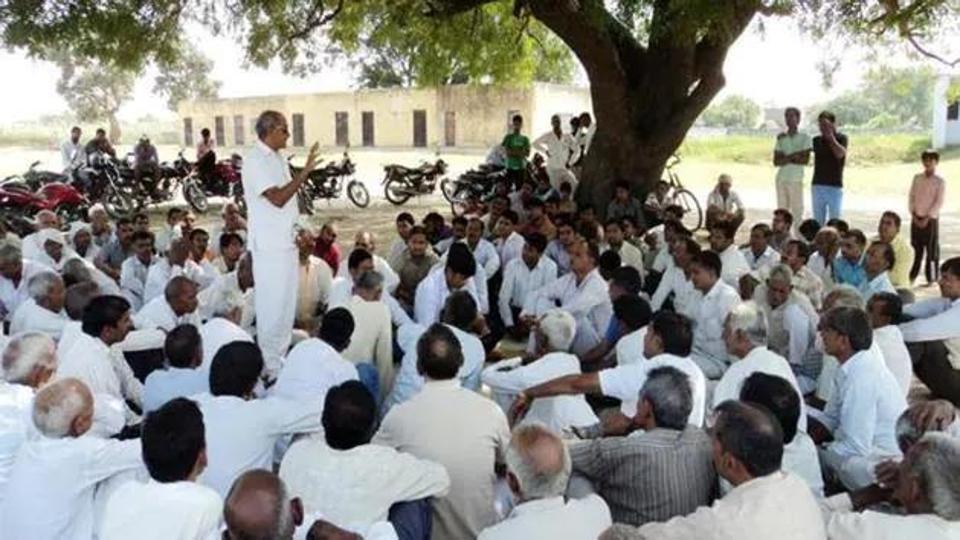
The state has set up such courts in every panchayat for resolving local disputes with the involvement of local people.
“The study pointed out that 87% of ‘diwani’ (civil) and ‘fauzdari’ (criminal) cases filed in the Gram Kachaharis were resolved between 2021-23, with only 10-15% cases landing up in the courts of sessions judge or sub judge for appeal. A very high percentage of cases are resolved at the Gram Kachahari level to bring down the load on judiciary,” said Prof SP Singh, Chair Professor, Panchayati Raj, CNLU, Patna.
“The village courts, where lawyers are prohibited from appearing, has emerged as the nursery of the judicial system in Bihar and is a successful example of the neighbourhood governance, as it saves time and money of the poor people of the rural areas with justice delivery at their doorsteps,” he said.
West Champaran had the highest number of 4,332 civil cases filed, followed by Darbhanga with 4,195 civil cases. While 3,143 cases were disposed of in West Champaran, the disposal figure was 3,781 in Darbhanga. Similarly in criminal cases, Darbhanga was at the top with 5,033 criminal cases filed in the two-year period, out of which 4,447 cases were disposed of. In West Champaran, 3,024 criminal cases were disposed of out of 3,143 filed.
Singh said the most important work of the Gram Kachahari is to bring amicable settlement of dispute as per Section 102 of the Bihar Panchayat Raj Act, 2006. “By amicable settlement of dispute, the problem dies down for ever and there is no ill feeling or enmity among the parties in future. The Supreme Court of India has also recently emphasized to resolve the petty issue through mediation, which is what Gram Kachahary is mandated to do in Bihar,” he added.
As per the study, in 2021-22 and 2022-23, a total of 75,860 Diwani Cases were filed across the state; out of which 65,823 cases were disposed of during the same period. Similarly, between the years 2021-22 and 2022-23, a total of 67,472 Fauzdari Cases were filed-out of which 59,070 cases were disposed of during the same time. “It has been found that in Maoist-affected areas, their activities have significantly decreased where the Gram Kachaharis are functioning in a proper manner,” he added.
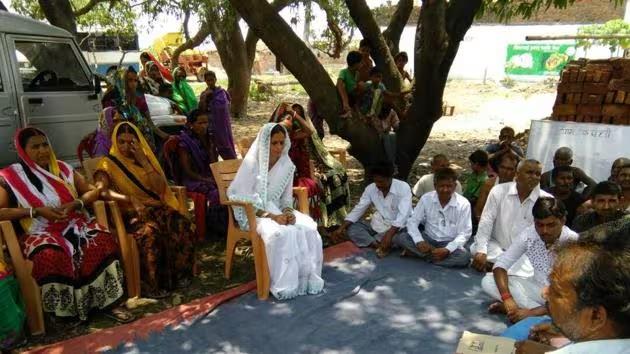
Singh also said that the village courts have also helped to significantly increase women’s participation in PRIs. “Bihar was the first state to give 50% reservation to women and the village courts have helped their participation go beyond the quota at various levels in the PRIs,” he said. The Gram Kachaharis have 50% women as rural arbitrators, who have helped connect locals with the system and restore confidence of the fair sex, he added.
The CNLU statistics have been provided by the PanchayatI Raj department with the Bihar government’s response to a writ petition filed by the National federation of societies for fast justice.
Under the Bihar Panchayat Raj Act, 2006, the members of the Gram Kachahari are elected on basis of adult franchise as per Article 326 of the Indian Constitution. Since the Gram Kachahari members have no professional degree to deal with legal matters, the Act provides for appointment of one law graduate as Nyaya-Mitra and an intermediate pass person as Gram Kachahari Secretary in each Gram Kachahari under Section 94 of the said Act. A provision exists in the Act to impart training to all elected members about their functions and responsibilities.
As per the Bihar Panchayati Raj Act, 2006 the government has to impart training to the members of the village courts, including sarpanch, up-sarpanch and its members and secretary, so that they could discharge their duties as per the laid down provisions in the Bihar Gram Kachahari Conduct Rules, 2007, to reduce certain types of litigations and tackle them at the panchayat level itself through mutual understanding and goodwill without the involvement of police and courts. CNLU has been conducting their training since 2017 periodically in collaboration with the department of panchayati raj, government of Bihar.
Under the Act, a criminal or civil matter is to be filed before the Gram Kachahari and a bench of five Panchas hear it. The Gram Kachahari is empowered to act under 40 bailable sections of the Indian Penal Code (IPC), the Bengal Gambling Act, 1867 and sections 24 & 26 of the Prevention of Cruelty to Animals Act, 1871, though they have not been able to act in the desired manner due to lack of acceptance within the administration.
Amod Kumar ‘Nirala’, president of the Bihar state Panch-Sarpanch Association, said the training of the village arbitrators had helped them equip with the knowledge about different provisions under which they could resolve small disputes and prevent them from snowballing into bigger problems. “Without training, things were not so well organised, even though provisions were there,” he added.
A woman Sarpanch from Saharsa, Rupam Devi, who holds the post for the second term, said that women were also feeling confident to approach the village courts. “The problems are related to land or family disputes and in some cases criminal cases also. We try to resolve the disputes by trying to convince the two parties and tell them that dragging the disputes could harm both,” she added.
Retired district judge Kumar Vijay Singh said that the mechanism and focus of Gram Kachahari was to ensure compromise at various levels, starting with the Sarpanch before whom the case is first filed. “If the case is not resolved, a five-member bench is formed, against which a party not convinced can appeal before a larger seven-member bench. If the matter still remains unresolved, the party not satisfied can approach the sessions judge with appeal in case of criminal cases and the sub judge in case of civil disputes. But the main priority is to amicably resolve the matter at the level of village courts,” he added.


