
 E-Paper



94% have transit access, but only 21% get frequent PMPML buses
PMPML buses is accessible to 94% of Pune and Pimpri-Chinchwad within five-to-10-minute walk, but only 21% have access to frequent bus services, states People Near Transit (PNT) 2026 study

 Prefer HTon Google


Pune: Public transport is accessible to 94% of Pune and Pimpri-Chinchwad’s combined population within a five-to-10-minute walk, but only 21% have access to frequent bus services, highlighting a significant gap between coverage and service frequency, according to the People Near Transit (PNT) 2026 study released by the Pune Mahanagar Parivahan Mahamandal Limited (PMPML) on Friday.
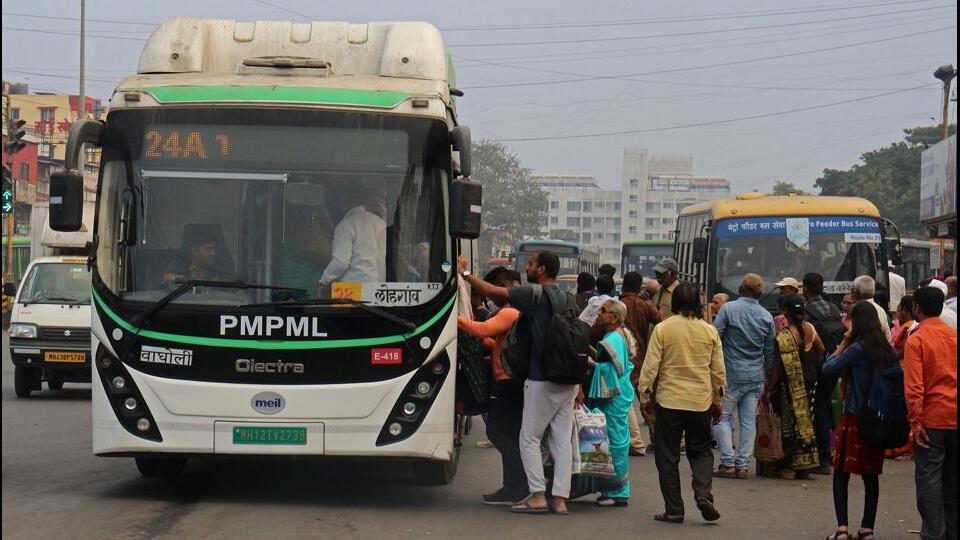
Prepared with technical support from ITDP India, the study was launched during a PMPML board of directors meeting. The PNT methodology measures the share of the population within 400-800 metres of public transport, including buses and metro, and assesses access to frequent transit.
While 94% of residents have public transport within walking distance, only 21% have access to frequent bus services, defined as a bus arriving at least once every five minutes. Such services are concentrated mainly along bus rapid transit system (BRTS) routes.
The 21% figure marks a sharp decline from the 66% frequent-transit coverage recorded in 2019. The study attributes the decline partly to the expansion of PMPML services into newly developed areas without a corresponding increase in fleet size.
PMPML currently operates around 2,000 buses on more than 450 routes.
The study identified 16 public bus transit deserts across Pune and Pimpri-Chinchwad — areas with relatively high population density but inadequate bus frequency. In Pune, these include Baner, Dhanori, Dhayari, Handewadi, Kondhwa, Kothrud, Ambegaon and Wadgaon Sheri. In Pimpri-Chinchwad, they include Akurdi, Bhosari, Chikhali, MIDC, Rahatani, Sangavi, Talawade and Wakad.
Some of these areas have population densities of up to 50,000 people per sq km, underscoring the mismatch between demand and supply, the study said.
“The study identifies a clear opportunity to strengthen Pune and Pimpri-Chinchwad’s public transport system through a combination of fleet augmentation, route rationalisation, improved service frequency, better bus stop infrastructure, pedestrian connectivity and integration with metro and BRTS,” said Mahesh Awhad, chairman and managing director, PMPML.
Awhad said PMPML had floated a tender for 1,000 CNG buses and was expected to receive another 1,000 electric buses under the PM E-DRIVE scheme. The additional buses, he said, would help address the gap in service frequency.
The study found that route restructuring could significantly improve access to frequent transit. Aditya Rane, deputy manager, Transport Systems and Electric Mobility, ITDP India, said that if routes currently operating at 10-to-20-minute intervals were restructured to run every five minutes, the share of the population with access to frequent transit could rise from 21% to 61%.
Such interventions could improve service levels in 10 of the 16 transit deserts and help move towards the Viksit Maharashtra 2047 target of providing frequent transit access in at least 60% of city wards, he said.
The findings present a mixed picture: while PMPML provides extensive geographical coverage, the sharp decline in frequent services shows that coverage alone does not guarantee convenient and reliable public transport. The study recommends fleet augmentation, route rationalisation, higher frequencies, improved bus-stop infrastructure, better pedestrian connectivity and closer integration of PMPML with metro and BRTS.


