
 E-Paper



After suspected dengue death of girl, PMC reviews preventive measures
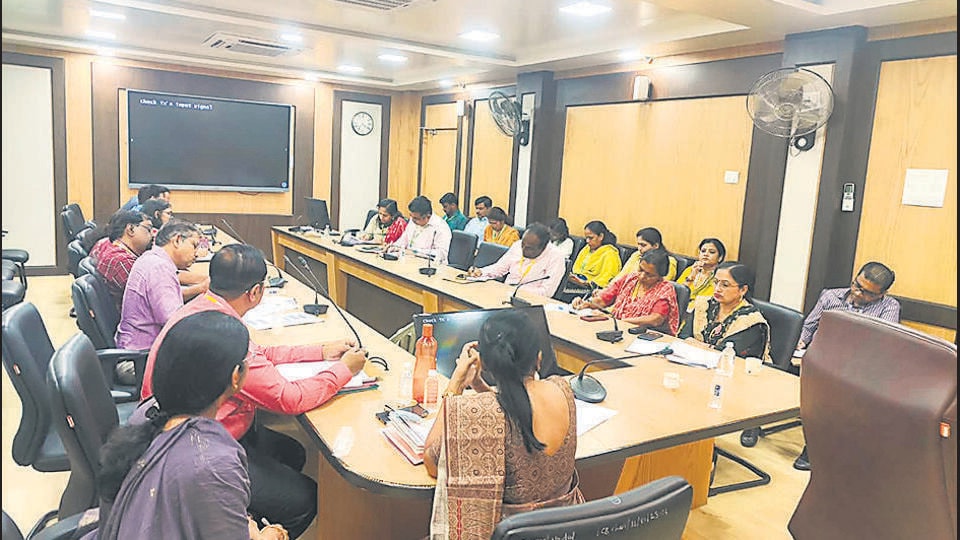
At a special meeting on October 23, chaired by additional municipal commissioner Pavneet Kaur, officials reviewed hospital preparedness, diagnostic and treatment facilities, and measures to prevent mosquito breeding.

 Prefer HTon Google


PUNE: The suspected dengue death of a nine-year-old girl from Lohegaon has prompted the Pune Municipal Corporation (PMC) to review its preparedness to tackle mosquito-borne diseases, including dengue and malaria. At a special meeting on Thursday, chaired by additional municipal commissioner Pavneet Kaur, officials reviewed hospital preparedness, diagnostic and treatment facilities, and measures to prevent mosquito breeding.
Hindustan Times reported on Thursday that the girl, a Class 4 student from Khese Park in Lohegaon, died at Ruby Hall Clinic (RHC) on October 18 after her condition deteriorated rapidly. Her dengue test was positive on a non-ELISA NS1 antigen test. The death will be treated as a suspected dengue fatality until the PMC’s health audit committee establishes the cause. The civic body has sought her treatment records and test reports from the hospital for further investigation.
According to PMC data, the city recorded 2,413 dengue cases between January 1 and October 20. Of these, 568 were reported in August, 726 in September and 553 in October.
As part of its preventive drive, civic teams visited around 14 lakh homes and inspected 28,31,386 containers and water-storage points. Aedes mosquito larvae were detected in 18,885 containers across 13,000 homes. The civic body issued notices to 2,664 properties and collected fines totalling ₹6.3 lakh, officials said.
At Thursday’s meeting, officials reviewed the availability of diagnostic tests and treatment facilities. Rapid diagnostic kits for free dengue testing have been made available at all PMC dispensaries. Free confirmatory tests are also available at sentinel centres at Dr Naidu Hospital, Dr Kotnis Hospital and Kamala Nehru Hospital, said Dr Nina Borade, the PMC’s health chief.
All government and private hospitals have been directed to register patient details on the Integrated Health Information Platform (IHIP) portal and avoid duplicate entries, civic officials said.
Private hospitals have 8,400 beds, including 670 intensive care unit (ICU) beds, available for dengue patients. Civic hospitals have 333 beds, including six ICU beds. On average, around 50% of these beds are vacant, according to the civic body.
Dr Naidu Hospital has reserved 50 beds exclusively for dengue patients, of which 10 to 15 are occupied daily. Treatment at the hospital is free. Officials have been directed to ensure that patients with severe symptoms receive immediate treatment at Dr Naidu or Kamala Nehru Hospital. The use of mosquito nets has also been made mandatory in dengue wards.
The civic body has directed its teams to prioritise spraying and other preventive measures in areas reporting higher case numbers. Instead of indiscriminate fogging in open spaces, teams have been asked to carry out fogging for 20 minutes inside the homes of patients and in adjoining enclosed areas. Biological larvicides will also be used regularly to treat stored water, particularly in settlements where residents store water during supply cuts.
“The PMC is also running an awareness campaign through audio messages played on garbage-collection vehicles. Audio files have been distributed to all 15 ward offices. Housing societies have been asked to keep water tanks and storage containers clean, while schools are conducting essay and drawing competitions to educate students. Residents should observe one dry day every week to prevent mosquito breeding,” Kaur said.
Standing committee flags delay in spraying after child’s death
The PMC’s review came amid criticism at Thursday’s standing committee meeting, where NCP corporator and committee member Suhas Tingre questioned delays in insecticide spraying and alleged inaction by the health department.
Tingre said an eight-year-old girl, a close relative of his, died of malaria on Sunday. He also cited the case of a two-and-a-half-year-old girl from his ward who, he said, had spent eight days in the intensive care unit at Sassoon General Hospital after contracting dengue. According to Tingre, insecticide spraying had not been carried out at the child’s home even eight days after she was discharged.
To highlight the issue, Tingre played a phone call from the child’s family over the meeting hall’s microphone. He alleged that the health department had previously cited the expiry of its spraying contract and a shortage of staff to explain its inability to act.
“Reasons such as an expired contract and a shortage of manpower cannot be accepted when people’s lives are at risk,” Tingre said, demanding immediate preventive measures, regular spraying and adequate staffing.
He warned that the civic body’s failure to act could trigger a wider protest. “The health of Pune’s citizens cannot be compromised. The administration must take concrete and immediate steps to control dengue and malaria,” he said.
The PMC has appealed to residents to prevent water from stagnating, keep water tanks covered and cooperate with inspection teams. It has also urged people experiencing symptoms to seek medical advice promptly, maintaining that adequate hospital beds are available across the city.


