
 E-Paper



Curtain call: One scene, one set-change and a watershed moment for Marathi theatre
The opening day of ‘Amar Photo Studio’ was only a few days away

 Prefer HTon Google


The opening day of ‘Amar Photo Studio’ was only a few days away. We had been rehearsing for nearly three months now and were eager to show the play to the world. But, I was still dealing with one problem.
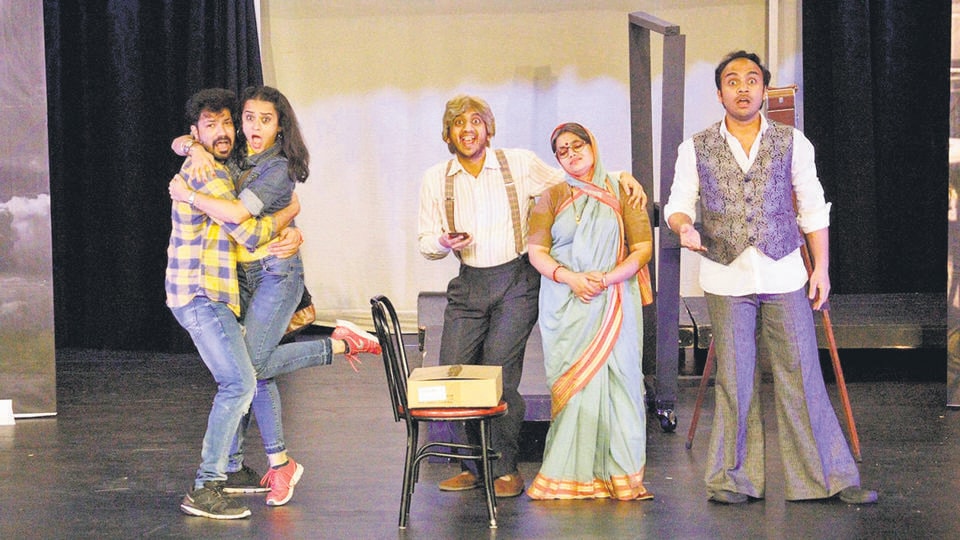
As mentioned in my previous articles, the story of the play was about time travel. The story of the play was pretty unique when it came to commercial Marathi theatre which is usually confined to a single location – the living room of a house. We had made some unusual choices, in all departments. But, they weren’t made for the sake of being unusual. That is what the play required and I had the full support of my producers.
The extensive rehearsal allowed me to experiment with the format of the play and also its technical aspects. We had tried to make hydraulic sets and had also toyed around with the idea of using a projector. There were many magical moments in the play and I did not want to lose them or change them only because I couldn’t execute it.
Everything else had fallen in place. We had left the idea of hydraulic sets behind after realising that the infrastructure of our auditoriums was not ready for it. With my previous experience of working with projectors in plays, I had given up on that idea too. I had found simple, elegant solutions to every other problem. And these solutions only underlined my love for the beauty of theatre. It was during this process that I realised that it was only in this medium that I could pass the onus of believability to the audience when it came to complicated scenes. I need not “show” everything, but make the audience “believe” that they have seen it. And that made a world of difference.
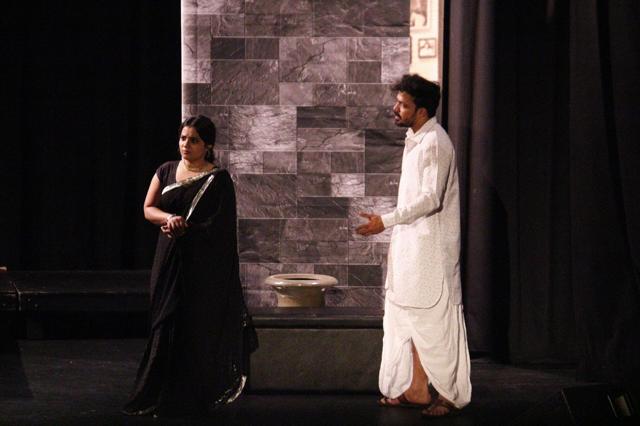
And that is how gradually I came to the solution of the last problem – changing the set mid- scene. As mentioned before, the set was changed during blackouts by backstage artists. This particular scene warranted that the set be changed while a scene was being performed and seeing the set changed by backstage artistes would have taken away its essence.
In the previous scene, the protagonists are being chased by the police. So at a specific cue, when they are being chased, I asked the actors to climb down the stage. The remainder of the scene was performed with the audience! Since there wasn’t any important dialogue in that sequence, the audience sitting in the last rows wouldn’t miss any information too. The actors were told to improvise while they were in the audience. So naturally, everyone was looking at the scene unfold.
Meanwhile, backstage artistes would come on stage in dim light and change the set. But nobody would be looking at them! Again, on cue, the actors would go on stage to a changed location. It was that simple and hardly took a minute. Also, while improvising, the actors were told to interact with some members of the audience while staying in character.
When the play opened this particular segment received a tremendous response. I was pleasantly surprised to see the audience accept this with open arms. They loved the fact that the actors were performing so close to them. And the actors interacting with them was a cherry on the cake.
When the play opened, it received an extremely positive response. Both, from the audience and the critics. Its marketing strategy was also regarded as a gamechanger for advertising Marathi plays. We all noticed that some audience members were still terming the play as “bold”. We knew that it was a different play, but did not understand this particular tag.
Sunil Barve, our producer, rightly identified one instance in the play, that was hardly a few seconds long, but made a majority of the audience think that. More on that next week.
Nipun Dharmadhikari is a storyteller and looks forward to telling stories, on stage, in front of the camera, or in person.


