
 E-Paper



Dawn of a new era: Charting Pune’s journey as nation turns 75
Pune’s population was less than half a million before independence, which is now over five million with city limits expanding beyond 500 sq kms

 Prefer HTon Google


As the country gears up for the 75th anniversary of its Independence, Pune, the state’s cultural capital, has borne witness to a fascinating period of the freedom struggle, and also a boom post-independence.
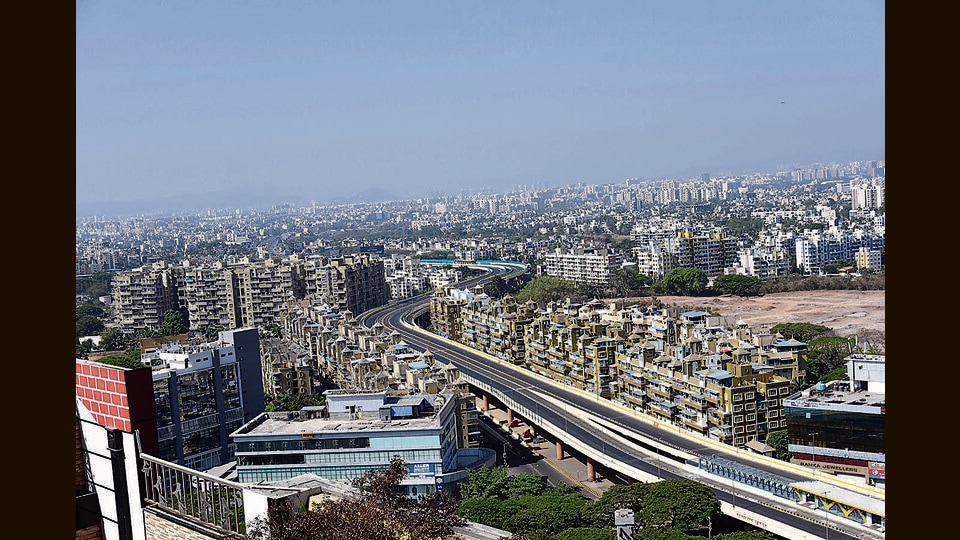
In the pre-independence era, the city was limited only to the eastern bank of Mutha river. In 1942, it was only panic and fear that enforced the city as places liked Vishakhapatnam, Kakinada, and Colombo were bombed in the first week of April 1942 after World War II broke out. The fear, clearly over taking everything else.
When India got independence on August 15, 1947, it was the dawn of a new era for Punekars.
Pune residents, while walking down the memory lane, to the day of Independence, said that residents marched at midnight and there were Prabhat pheris. Some buildings were also lit up.
Sriram Yadav, an 88-year-old Pune resident recalls, “People came out on the streets, read newspapers, gave slogans and drew rangolis. Flags were hoisted at Sassoon and Railway station buildings.”
Before Independence, some houses in Pune along with government buildings already had electricity, although the telephone connections were rare. Pune’s population was less than half a million, which is now over five million with city limits expanding beyond 500 square kilometres.
The only transport available pre-independence was tongas and buses were unheard of. People resided in wadas, clustered houses, which by 1980s began being replaced with apartments.
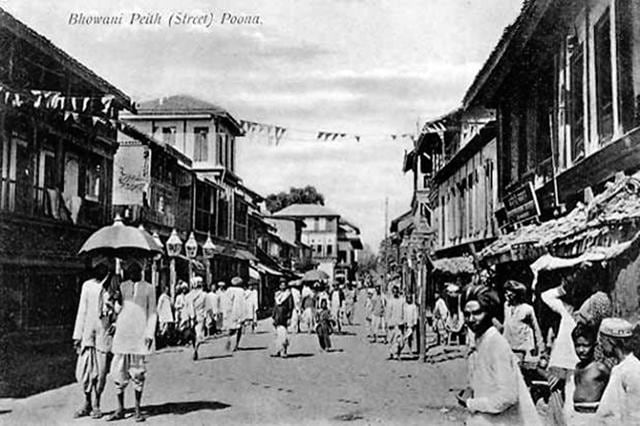
After Peshwa era, British developed new Cantonment areas around Pune, although the city was limited to only peth areas till 1960.
The Panshet floods in 1961 pushed Pune’s expansion beyond peth areas and citizens relocated in various places like Parvati, Shakarnagar, Bibvewadi and Bhamburda.
The now bustling suburbs like Aundh, Baner, Pashan on the western part to Hadapsar, Kharadi, Kalyaninagar on the east and Katraj, Kondhwa on the south did not exit. Some of them were small villages.
While the seven-and-half-decades post-independence changed Pune in every aspect, art and culture, education, science and industries were the only constant.
Even before independence, there were many academic and research institutes like Pune College of Engineering established in the city before 1947. The Kirloskar Group was the first to bring an industry in Pune by setting up Kirlosakar Oil Engines Ltd in 1945 at Kirkee.
Fergusson College came up in 1885 under Deccan Education Society, a prominent education institute founded by the stalwarts of the Indian freedom movement- Lokmanya Tilak, Gopal Agarkar, Vishnushastri Chiplunkar and Madhavrao Namjoshi.
Anil Vaidya, a resident said, “Though I was not born during the independence, my grandmother told us stories about it. My father was working at Karachi port trust. After the India-Pakistan partition, it was difficult for him to return to Pune. Many Muslim families helped him return.”
Vaidya recalled, that post-independence till the 1960s, prabhat pheris (morning march) was carried out in all areas. “When I was in school, we did not have an iron. We would often put hot coal in utensils to get a wrinkle-free white shirt.”
According to Mandar Lawate, a noted historian, there are many references available on how the city celebrated post-independence and newspapers reported of citizens marching on roads.
“After building Mhatre bridge in 1982, Kothrud emerged as the new suburb. Subsequently, many villages on the periphery were merged in the city,” said Lawate.
However, it was the IT revolution, that propelled Pune onto the global stage.
“After the IT revolution brought major tech firms to Pune, people from outside Maharashtra migrated in large numbers resulting further growth of the city,” said Lawate.
What did not change all through these years was lack of traffic sense among Punekars. On the civic part, Pune begun to see better roads only after 1970s even as the municipal corporation came into existence in 1950.
Pune’s city engineer Prashant Waghmare said, “Major milestone for Pune was the formation of Pune Municipal Corporation (PMC) in 1950. Many institutes like National Chemical Laboratory were there although they were outside city limits. Later industries started setting up their units in the 1960s onwards helping in employment.”
Avinash Kango, a retired teacher, said, “We have seen Pune transform in the last 75 years. Earlier, the city was limited only to peth areas mainly from Shivajinagar to Sarasbaug and Deccan to Pune Camp. But now, the city has expanded.”
Headline: Growing alongside a developing Pune
Pune population
1951- 4.88 lakh
1961- 6.06 lakh
1971- 8.56 lakh
1981- 12.03 lakh
1991- 16.91 lakh
2001- 25.38 lakh
2011- 31.15 lakh
2021- 38.91 lakh
Major milestones
1949- National Chemical Laboratory
1950- Formation of Pune Municipal Corporation (PMC)
1950- PMT operations began
1954- National Defence Academy
1961- Panshet flood
1961- Tata Motors (Telco) set up an automobile plant
1998- IT Park at Hinjewadi
2002- Pune-Mumbai Expressway
2008- Common Wealth Youth Games


