
 E-Paper



Global village idiot: Why my alma mater must merge to evolve into a media school with impact
The merger of the department of Communication and Journalism at the Ranade Institute is a welcome initiative as a first step for the university to catch up with the digital age, says writer about his alma mater


Last week I read about protests against the Savitribai Phule Pune University’s move to merge the department of Communication and Journalism at the Ranade Institute on Fergusson College road with the Department of Media and Communication Studies on the main university campus. My first reaction was: yes! A bigger campus and better resources for students.
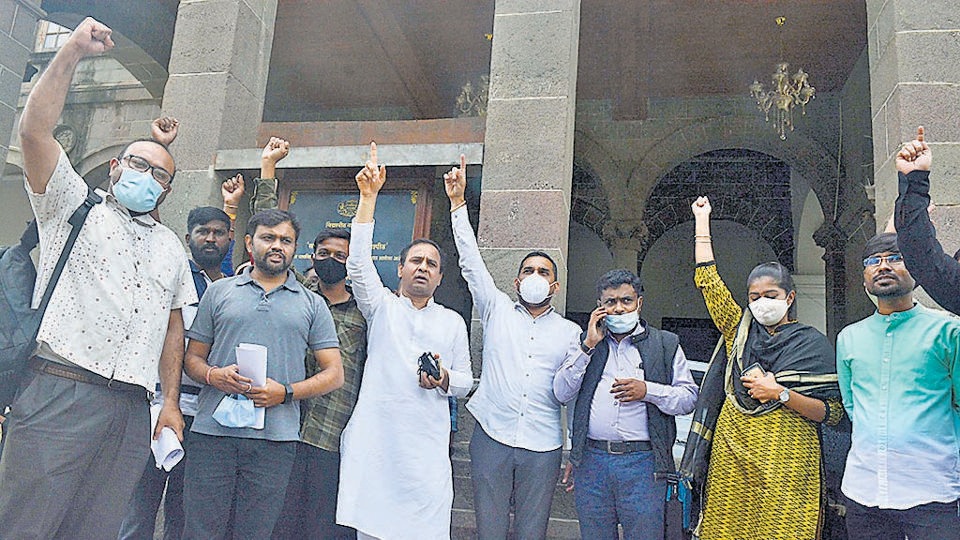
My second reaction was a tinge of sadness at the loss of the sense of history associated with the Ranade Institute.
Over the course of the week, I spoke to former classmates, faculty, and industry peers and the conversations made me think. What is the purpose of education? What is the responsibility of an educational institution with respect to its environment and society?
Protests from a few quarters probably have merit in the context of their particular perspective - access to journalism education for rural students which is related to fees, given the nature of grant and non-grant courses. These are matters that should be addressed by the university since inclusive education is part of its mandate. There are views about the location being central (argumentative since the SPPU campus is 5km from Ranade). There are questions about inadequate communication or lack of process. A random search on the internet seems to suggest that the university had announced last year its intention to merge not just the department of journalism, but many others.
Even at a cursory glance, the exercise seems aimed at organisational efficiency and with intent to providing students the benefit of shared resources, not to mention opportunities that come to larger institutions. The administration could probably adopt a more transparent approach to achieve wider consensus.
The university has a mandate beyond the interest of particular groups, and it definitely has a responsibility much larger than protecting a way of academic life or protecting sections within society: it has to contribute an educational infrastructure that prepares society to address at least the foreseeable changes that will affect our world.
I was at Ranade Institute as a student of the Bachelor’s programme in 1996-97. In the subsequent 25 years, I have visited the department to meet faculty and friends, and also as a guest lecturer. And the department is pretty much as it was when I was a student, which doesn’t augur well for aspiring students, since the facilities and technology resources are from 25 years ago. Pune has a fantastic history in leading the way in the development of journalism and in establishing educational standards in the field of media and related communication. Most of that fantastic track record is more than half-a-century old.
The merger of a journalism department with the department of communication and media studies is pretty much a question from the previous century. The world’s leading universities have consolidated related subjects under the Communication and Media studies head. And while there are many Top 10 and Top 50 lists depending on criteria, when one looks for a graduate or master’s programme in journalism or media studies nowadays, what is not in dispute is the diversity of academic resources, including curriculum, industry connect and technology infrastructure at the college/university.
The University of Amsterdam, Stanford, London School of Economics and Political Science (LSE), University of California at Berkeley, NYU, Nanyang Technological University Singapore, are consistently in Top 10 lists for journalism and media studies. And these are all constantly redefining themselves because they are acutely aware of the rapidly evolving educational landscape.
Technology and new-age platforms have blurred the very strong erstwhile lines between native and mainstream language journalisms, as also altered the very nature of what is cosmopolitan and what is not. Today, I can blog, podcast and videocast reports and opinions in English, Marathi, Bengali and Hindi for different audiences if I so desire, and my ability to do so seamlessly provides me with a much wider audience than a niche language segment. And all I need is a decent smartphone.
What does not change is the ethical and legal parameters of what constitutes good journalism or common good, as opposed to a singular opinion for the sake of a singular opinion.
While a lot has been written and said about technology and curriculum, in the early 1990s it was the University of Florida’s journalism school that launched what was believed to be the world’s first journalism website. Media organisation (as in industry), followed a little later (by the early 2000s Telegraph, BBC Online, Guardian Unlimited had built significant online presences). The Associated Press was among the first movers into multimedia content (including audio and video), beginning the blurring of the line between print and broadcast. Around 2004, audible.com came onto the scene focusing on the spoken-word versions of news and editorial opinion. The list goes on and in the last five years, with the proliferation of social media the lines itself have merged between print and broadcast and audio and online journalism, not to mention the very real redesign of what is news, what is media and what is communication for the public good?
Today, the questions in front of journalists are different, and in the very near future their preoccupations will be different and most of it will be related to identifying their niche audiences and addressing only those (as opposed to addressing all audiences, which social media is much better at with its AI-driven processes). Equipping media students and professionals with the required competencies to function in the current (and future) communication landscape requires educational departments to be aware of and functioning in those environments, and being able to leverage the larger scale of organisational resources available within an umbrella.
The merger is a welcome initiative as a first step for the university to catch up with the digital age, so that students from different parts of Maharashtra can access a better quality of journalism education so that they are equipped to understand and report on the rapidly changing world that we live in.
Mukherjee, author, learning-tech designer and management consultant, is founder of Mountain Walker and chief strategy advisor, Peak Pacific. He can be reached @ thebengali@icloud.com


