
 E-Paper



40 return to Pune, Pimpri-Chinchwad from war-torn Sudan
Workers from the ‘Kenana Sugar Company’ in Rabak city were stuck in Sudan due to the escalating tensions

 Prefer HTon Google


Thirty-five to 40 persons from Pune and Pimpri-Chinchwad – who had been stranded in war-torn Sudan – finally returned home on Wednesday, thanks to the efforts of the Indian Embassy in Sudan and the Government of India.
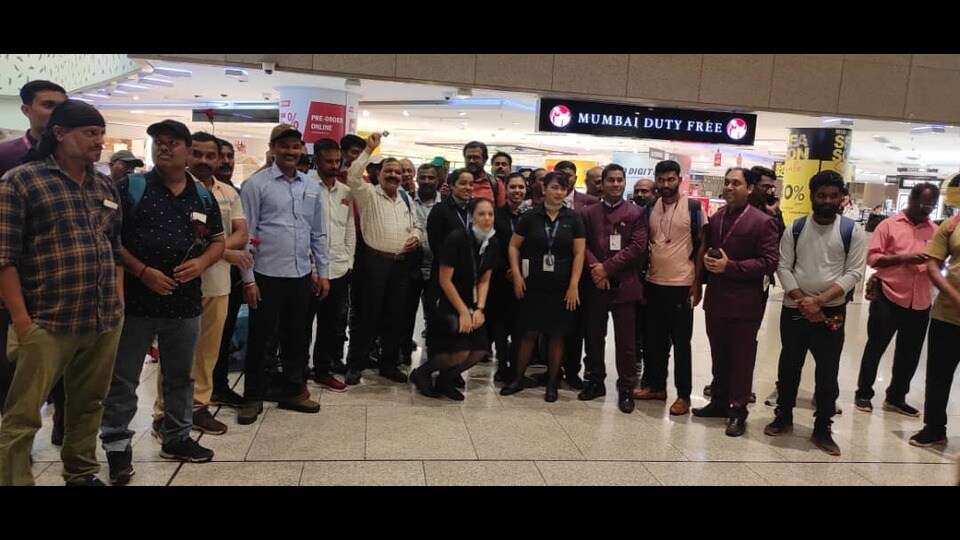
After Hindustan Times reported about the plight of 160 workers from Pune employed at the ‘Kenana Sugar Company’ in Rabak city who had been living in difficult conditions for months on end and been unable to return to India due to the escalating tensions in Sudan, the Indian Embassy in Sudan, in association with the local authorities, managed to safely repatriate them to India. After negotiations and some logistical planning, the embassy was finally able to secure the safe passage of these Indians back to their native place namely Pune.
Uttam Narayan Patil, who hails from the Kalewadi area in Pimpri-Chinchwad and had been working in Sudan for the past 29 years, landed at Mumbai airport early Wednesday morning. “Thank you to the Indian Embassy in Sudan for their efforts at rescuing the workers in Sudan,” he told Hindustan Times.
As his wife needed to undergo surgery, Uttam Patil had been trying to return to Pune but as luck would have it, violence broke out between the army and a rival paramilitary force in Sudan. Ever since, Uttam Patil had been in continuous contact with his family over the phone and had requested the Kenana Sugar Company several times to arrange for his return ticket but nothing happened. Uttam Patil said, “Our passport was with the company and due to the violence and instability in the region, no one at the company would entertain us. My wife needed my support during her medical illness but I was hopeless.’’
However, Uttam Patil said that no one from the Maharashtra government was there to receive them nor was there any transport arranged to drop them to Pune. He said that he paid out of his pocket for his travel from Mumbai to Pune. “Other state governments in Chhattisgarh, Kerala and Karnataka had made special travel arrangements for their employees from Mumbai airport to their respective cities. But no such arrangement had been made for us. Nor was there any government representative present to receive us,’’ Uttam Patil said.
Another worker, Rajaram Patil, 55, who, too, was stranded at the Kenana Sugar Company in Rabak city, said, “After the clashes broke out in Sudan, we were not confident about meeting our family members ever again. Our family members here in India were worried about us. We could not sleep at night because of the tense situation but finally we returned on Wednesday. Thank you, God for showing mercy on us,” he said.
Rajaram Patil said that a batch of 98 returnees were welcomed at Mumbai airport by friends and family members who had been anxiously waiting for their return. Many of them expressed their gratitude to the officials of the Indian Embassy in Sudan and the Indian government for their tireless efforts in bringing them home.
Yet another worker Mohamad Nadaf from the Kenana Sugar Company, who returned on Thursday, said that due to the escalating violence and instability in the region, the market remained closed and that they had faced difficulties purchasing daily requirements. “Because of the war-like situation, the prices of agricultural commodities were skyrocketing. A 20 kg rice bag which is available at 8,500 Sudanese Pounds was being sold for 16,000 Sudanese Pounds. Sugar had reached 1,200 Sudanese Pounds per kg. Hence, it was difficult for us to purchase it from the open market. Hence, we borrowed some rice and other commodities from some Maharashtrian families who had them stocked,” Nadaf said.
It was only after long negotiations between the Indian Embassy and the Kenana Sugar Company that the latter had provided these workers seven buses to reach Sudan port which is 1,100 km from Rabak city. At Sudan port, they were handed over to the Indian Army. They were shifted to Jeddah by aircraft belonging to the Indian Army where they were kept at an international school and provided food and rest by the Indian government. From Jeddah, batchwise workers were transported to Mumbai, Ahmedabad and Delhi using private airplane services. As of now, two batches have reached Mumbai airport while one batch is on its way, the workers said.


