
 E-Paper



Maha has maximum growing stock outside forest area: FSI Report
Growing stock has traditionally been considered as an important indicator of the health and productivity of forests

 Prefer HTon Google


As per the latest India State of Forest Report 2023 (ISFR 2023) published by the ministry of environment, forests and climate change (MoEFCC), Maharashtra has the maximum growing stock outside forest area (441M m3), followed by Karnataka (137.62 M m3), Madhya Pradesh (130.46 M m3) and Chhattisgarh (129.04 M m3). At 13,572 km2, Maharashtra also has the third largest bamboo bearing area in the country according to the report.
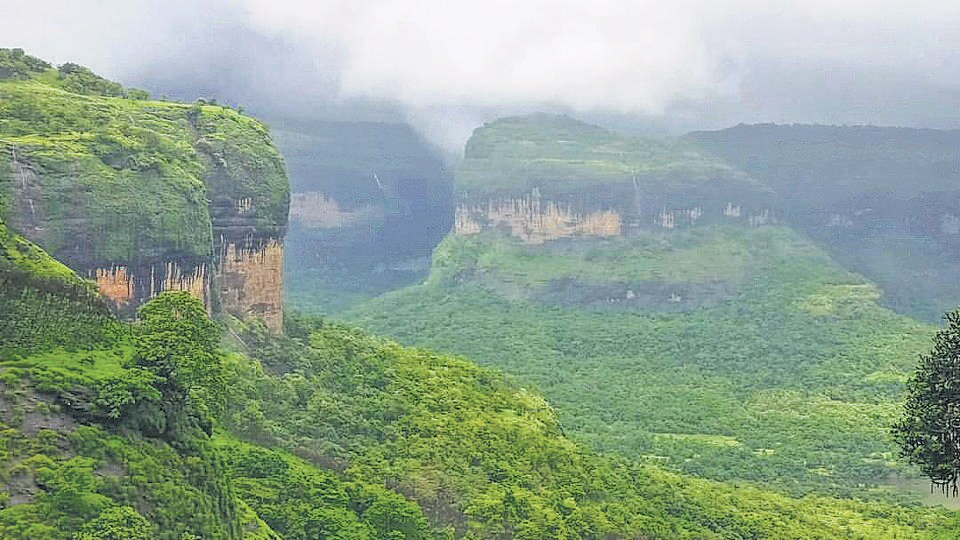
Growing stock has traditionally been considered as an important indicator of the health and productivity of forests. Forest productivity has always been a central concern as it relates closely to the production of timber, biodiversity and more importantly, storage of carbon stock in forests. In the recent past, information on growing stock has assumed significance as it is required for the calculation of carbon emissions. With the implementation of several social/community forestry programmes in the country, trees growing outside forests in the form of block plantations; on homesteads and private lands; farmlands; bunds of agricultural farms; and on other non-forest land play an important role in fulfilling the country’s demand for industrial wood and fuelwood.
According to the report, field data for assessment of the latest growing stock was collected from sample plots with the help of the personal digital assistant (PDA) which contains all field forms of forests and trees outside forests (TOF) inventory. The data collected through the PDA was transferred directly to the central database server located at the Forest Survey of India (FSI) headquarters in Dehradun. The entered data was checked thoroughly for inconsistencies and cleaned prior to processing. Data processing was carried out separately for forests, TOF (rural) and TOF (urban). The data showed that Maharashtra has the maximum growing stock outside forest area. For this, 855 sample plots were surveyed along with 93,145 enumerated trees. The growing stock (volume) in forest cover within reserved forest area and TOF is 441M m3. The data also highlighted that the annual potential production of industrial wood is estimated as 12.38 M m3 in TOF areas in Maharashtra.
Furthermore, at 20,421 km2, Madhya Pradesh has the maximum bamboo bearing area followed by Arunachal Pradesh with 18,424 km2, Maharashtra with 13,572 km2 (third place) and Odisha with 12,328 km2. As compared to the ISFR 2021, the total bamboo bearing area in the country has increased by 5,227 km2 in 2023, according to the report.
The report contains estimates of tree cover, growing stock, carbon stock and important characteristics of forests derived from the data collected from sample plots spread over the entire country under the National Forest Inventory. For the first time in this report, trees in the grid area of 5 to 10 cm have been included in the analysis of tree cover and growing stock as they are major contributors to the paper and pulp industry. Bamboo cover has also been estimated for the first time and included in tree cover. Agroforestry has been analysed separately as it accounts for 127,590 km2 of tree cover and 1,292 M m3 of growing stock, and serves as a livelihood enhancer. Agroforestry has gained further importance due to earning carbon credits, said Anoop Singh, director general, FSI.


