
 E-Paper



Missing link tunnel gets ‘E’ risk tag, vehicles carrying hazardous chemicals barred from entry
‘E’ category, as per international ADR standards, is the highest risk classification for road tunnels and entails stringent restrictions on the movement of dangerous goods. In line with these norms, tankers transporting inflammable fuels and hazardous chemicals will be barred from entering the tunnel.

 Prefer HTon Google


PUNE: While the much awaited ‘missing link project’ along the Mumbai-Pune expressway (e-way) is nearing completion and slated to open to traffic from May 1, the over 10 kilometres’ long tunnel of the project has been classified under the ‘E’ category as per international ADR standards which is the highest risk classification for road tunnels and entails stringent restrictions on the movement of dangerous goods. In line with these norms, tankers transporting petrol, diesel, gas and other inflammable fuels and hazardous chemicals will be barred from entering the tunnel.
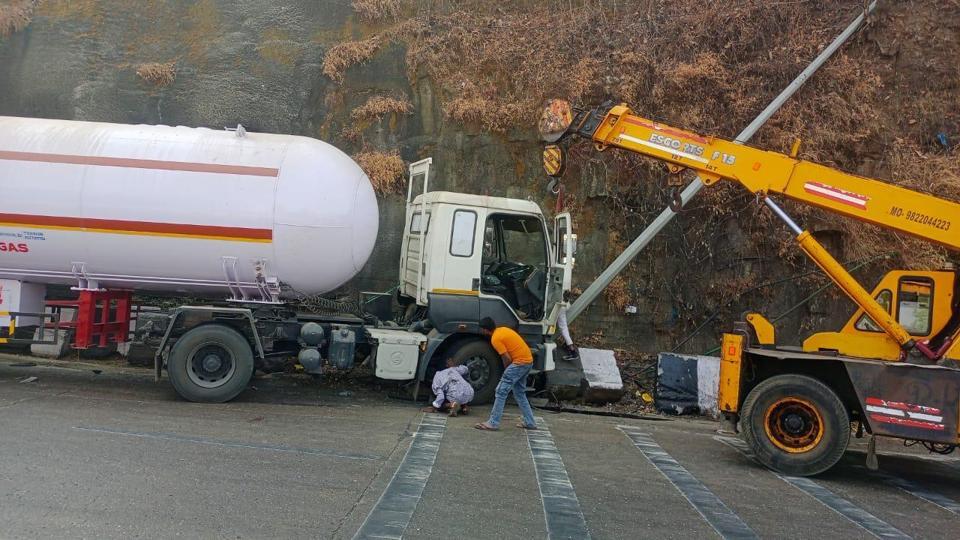
A senior official from the Maharashtra State Road Development Corporation (MSRDC), on condition of anonymity, said that the decision follows a detailed safety assessment of the tunnel’s length, design and risk profile. “The missing link tunnel is more than 10 kilometres’ long and falls under the highest risk category as per ADR norms. In such long tunnels, any accident involving explosive or highly inflammable substances can have catastrophic consequences, including rapid fire spread, toxic smoke buildup and serious structural damage. Passenger safety is our top priority. Therefore, vehicles carrying petrol, diesel, LPG, CNG and other hazardous chemicals will not be allowed through the tunnel,” the official said.
He added that the MSRDC will shortly issue official communication to the highway traffic police and the transport department to ensure strict and uniform implementation of the restriction. “Tanker operators will be instructed to continue using the existing ghat route. Nearly 2,000 fuel tankers use the expressway daily, and the new rule is aimed at ensuring that the travel experience for ordinary motorists becomes not only faster but significantly safer,” the official said.
Superintendent of police (highway traffic) Tanaji Chikhale said that the police department will strictly enforce the restriction once the formal notification is received. “We welcome the safety-first approach adopted for the missing link. After the MSRDC issues the official order, we will deploy personnel at key entry and diversion points to ensure that vehicles ferrying hazardous material are stopped well in advance. Our teams will coordinate with transporters and tanker associations so that there is no confusion on the ground. Any violation will invite strict action. The objective is to prevent high-risk vehicles from entering the tunnel and to safeguard thousands of daily commuters,” Chikhale said.
Earlier last week, Shiv Sena (UBT) MLC Milind Narvekar had written to chief minister Devendra Fadnavis urging him that only passenger vehicles be allowed on the Mumbai-Pune e-way missing link for at least six months on a pilot basis; and that no heavy vehicles be permitted; and that vehicles carrying fuel or other inflammable material not be permitted on this stretch to prevent potential accidents in future.
The missing link project is one of Maharashtra’s most ambitious infrastructure upgrades, and is equipped with a range of advanced, high-tech safety systems. At the tunnel entrances, intelligent traffic management system (ITMS) and number plate recognition (NPR) cameras will automatically detect restricted vehicles and alert the central control room if a tanker or vehicle carrying hazardous material attempts to enter. A specialised slot-gutter drainage system has been installed to prevent fuel or oil leakage from spreading across the tunnel carriageway in the event of accidental spillage. The tunnel’s concrete lining has been designed with a high fire-resistance rating and can withstand temperatures of around 1,000 to 1,200 degrees Celsius for nearly one to two hours. This feature is intended to minimise structural damage and provide crucial time for evacuation and emergency response in case of a fire. In addition, more than 20 cross-passages have been constructed at intervals of approximately 300 metres to facilitate quick evacuation of motorists from one tube to the other during emergencies. Once operational, the project is expected to eliminate chronic traffic bottlenecks in the ghat section, particularly during weekends, holidays and peak travel season, and cut travel time between Mumbai and Pune by 20 to 25 minutes.


