
 E-Paper



Monday Musings: Can drug busts prevent growing substance abuse?
So if law enforcers in India want to control drug misuse, they need to adopt a dual strategy of checking both, supply and demand


It was the early morning of March in 2007. The kuccha road led nowhere, yet some 300 youths had found their way to a small farmhouse called “Janjeera” on the foothills of the Sinhagad fort. The promise was salvation through the mantra of “trance”. It had a great and desired effect. IT professionals, air hostesses and students from prestigious colleges had come to the rave party organised by local drug pedlars in association with international counterparts, based in Ireland.
The SP (superintendent of police) level officer – who later went on to become a high-profile officer in the state police force - had allowed some journalists to accompany the police squad that busted what then was termed as a “rave” party. It had the desired effect for police as the next day’s newspapers were flooded with stories of drug haul.
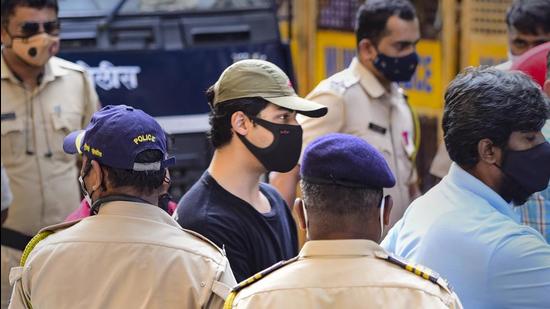
The latest incident involving the son of a Bollywood star in the cruise rave party that the Narcotics Control Bureau (NCB) raided on Saturday night only underlines high-profile drug busts often make for great headlines. However, they may not fix the global problem of addiction.
For example in Pune, from 2007, when the first big rave party was busted to 2021, not much has changed as cases of drug haul have increased as the demand for consumption. The trend in the last few years in the city is well in consonance with what is happening nationally.
In 2019, Pune police had registered 119 cases, arrested 157 accused, and seized nearly three crores of narcotics substances which highest in the last 10 years, as reported by Hindustan Times in its December 25, 2020 edition.
In 2020 the figure went down, but that was mainly due to national lockdown. During the year, police registered 41 cases of Narcotic Drugs, and Psychotropic Substances (NDPS) in which 59 accused (2 Nigerians) were arrested including seizure of 150kg ganja, 69gms MD, 112gms charas, 368gms cocaine, totalling worth ₹40 lakh.
What made the headlines during most of 2020 was the busting of a racket by neighbouring Pimpri-Chinchwad police. The seizure of 20kg mephedrone (MD) in Chakan by Pimpri-Chinchwad police in October led to the exposure of a nexus of producers, distributors and transporters who were involved in the production and sale of MD weighing at least 150kg.
If the police actions have increased, so is the increased substance abuse. Nationally, some 59,806 cases were registered in 2020 under the NDPS Act, according to National Crime Record Bureau (NCRB), which was enacted in 1985 when Rajiv Gandhi was the Prime Minister. Of them, 10,852 cases came from UP alone while 3,246 in overall cases were for possession of quantities lower than the threshold considered to be for personal use.
If we look at the conviction rate, as many as 81% of the 14,340 NDPS cases in which trials were completed saw convictions. This is much higher than other serious crimes. The problem, many experts have noted previously, is that law enforcement agencies have focused more on catching those involved in the supply side. While only a few get caught, those involved know what does work – and how. This often leads to flourishing the trade as demand grows amid societal moral qualms.
According to the Institute of Behaviour and Health in the USA, “Supply reduction is an effective tool for demand reduction because when drugs cost more and are more difficult to obtain there are fewer drug users and less demand for illegal drugs. Demand reduction is also an effective tool in supply reduction because when the number of drug users falls, drug supply falls correspondingly as the market for illegal drugs shrinks. Linking these complementary approaches maximises the impact of the national strategy on illegal drug use by attacking the drug economy from both sides.”
So if law enforcers in India want to control drug misuse, they need to adopt a dual strategy of checking both, supply and demand.


