
 E-Paper



Monday Musings: For protestors, notoriety means free publicity
The outrage followed and Patil took a reconciliatory approach seeking to end the row that began with his utterances and ended with a reiteration of apology


Last week when a bunch of protestors threw ink at Maharashtra minister Chandrakant Patil, it evoked mixed reactions with most denouncing the act although some desisted from outright condemnation.
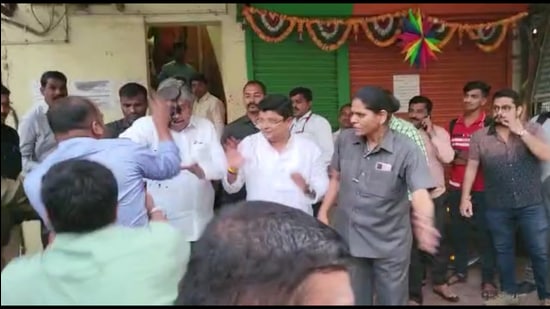
The minister’s face was partially smeared with ink that had almost entered his eyes leading to the arrest of three persons and interrogation of a television journalist. The outrage followed and Patil took a reconciliatory approach seeking to end the row that began with his utterances and ended with a reiteration of apology.
A week before that another bunch of protestors from border areas of Karnataka vandalised vehicles from Maharashtra amid a six-decade-old row. This once again gained centre stage in Maharashtra and Karnataka.
It triggered a series of resolutions from different villages in various border districts of Maharashtra.
According to deputy chief minister Devendra Fadnavis, the people behind some of these resolutions were affiliated with opposition parties, who were deliberately trying to rake up border issues. In one such case, some gram panchayats went on backfoot as the state government took a firm stand.
The 11 villages of Akkalkot tehsil in Solapur district, which had sought a merger with Karnataka last week, later backtracked. After the resolutions, the state government issued them notices, asking them to explain the reason behind their resolution seeking a merger with Karnataka.
After the state took cognisance, the sarpanches of these 11 villages conveyed to the Maharashtra government that they don’t intend to merge with Karnataka and wanted to stay with Maharashtra.
The growing number of such instances is because protesters want to be noticed. For them, notoriety means publicity, which is free and devoured by social media that thrives on manufactured outrage.
The same notoriety was on display when Bharatiya Janata Party (BJP) leader Kirit Somaiya was manhandled, allegedly by Shiv Sena workers, during his visit to the Pune Municipal Corporation (PMC) in February this year. In another incident, a group of Maharashtra State Road Transport Corporation (MSRTC), in April this year, allegedly barged into Silver Oak, the south Mumbai residence of Nationalist Congress Party (NCP) chief Sharad Pawar. Pawar’s daughter and Lok Sabha member Supriya Sule tried to placate the protesters outside the house, but those agitating were in no mood to listen before they entered Pawar’s residence.
Months later, Pune witnessed yet another protest from political workers that further vitiated the atmosphere in the state. Workers of the Congress and NCP staged protests against price rise and entered inside the Bal Gandharva auditorium in Pune where Union Minister Smriti Irani was to address the gathering in May. Once inside, both NCP and BJP workers clashed.
In yet another protest, workers from Uddhav Thackeray-led Shiv Sena attacked Maharashtra minister Uday Samant’s vehicle in Pune. His vehicle was damaged, leading to the arrest of seven.
These acts of vandalization often became a tool of politics to mobilize the constituency during the polls as parties tried to encash the sentiments. If the protesting MSRTC workers got the backing of the BJP, those who attacked Patil got support from various other organisations. The trio emerged to a hero’s welcome to a crowd of supporters outside the court after it granted bail to them. Later, they reached Dr Babasaheb Ambedkar Chowk in Pimpri, where hundreds of supporters assembled and the Dalit icon’s statue was garlanded.
If a protest is a public expression of objection, disapproval or dissent towards any action, the protestors have taken the meaning to another level as they indulge in violence. For these protestors, violence is a sure way to get noticed. If non-violent protest brings awareness to an issue; violent protest brings urgency to it. However, such violence results in a cause losing legitimacy.
In 2015, Maharashtra witnessed more than 50 protest marches from the Maratha community demanding reservation. These marches were unprecedented – because of the large crowd and their peaceful nature. Had there been violence, the agitation wouldn’t have created pressure on the then Fadnavis government which acted to give reservation to the Maratha community.


