
 E-Paper



Monday Musings: The Metro’s real test begins outside the station
A 23-km journey that takes around 45 minutes by Metro, without the uncertainty of road traffic, is certainly attractive

 Prefer HTon Google


Pune’s new Hinjewadi-Shivajinagar Metro corridor has generated considerable excitement, particularly among IT professionals who have spent years negotiating the notorious traffic congestion in the city’s western corridor. A 23-km journey that takes around 45 minutes by Metro, without the uncertainty of road traffic, is certainly attractive. But there is a larger question that will determine whether the new service becomes a preferred mode of daily transport: how much time does a commuter actually save travelling from home to work and back?
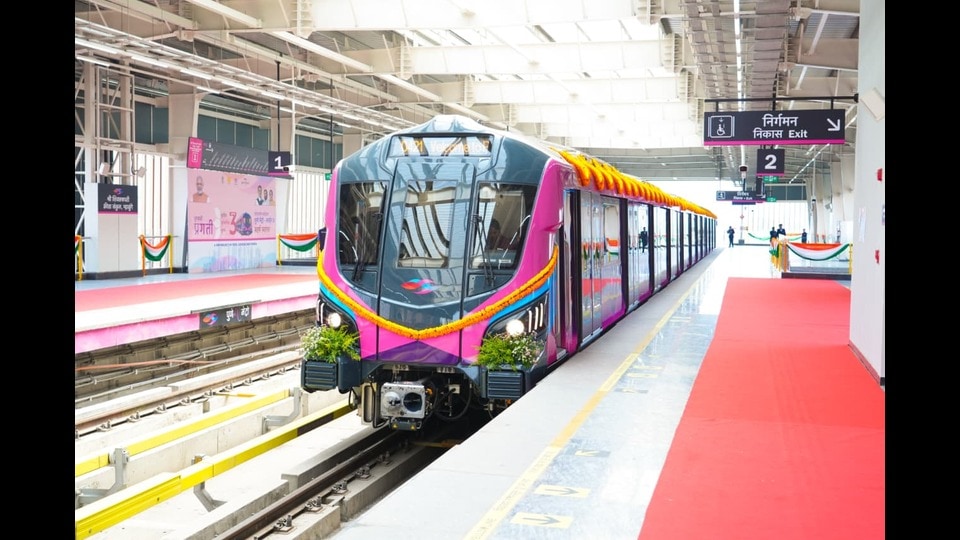
The answer may not be as encouraging as the journey time advertised by the PMRDA.
Public transport efficiency cannot be judged by the time a train takes to travel between two stations. It has to be assessed on an end-to-end basis – from the moment a person leaves home to the time they reach their workplace, and the reverse journey in the evening. On this count, Pune’s Metro network still has considerable ground to cover.
Last-mile connectivity is an obvious problem. A commuter living in a housing society several kilometres from the nearest Metro station must first arrange transport to reach the station. This could mean taking an auto-rickshaw, using a two-wheeler, booking a cab or waiting for a feeder bus. The same exercise has to be repeated after alighting at the destination station to reach the workplace.
For someone working inside Hinjewadi’s sprawling IT parks, reaching a Metro station does not necessarily mean reaching the office. Large campuses have multiple buildings, and employees may still have to walk considerable distances or depend on internal transport. The situation is similar for residential areas that are not adequately connected to stations.
PMPML has announced 11 new feeder routes and additional bus stops to improve connectivity along the new corridor. This is welcome, but the real test will be their frequency, route coverage and reliability. A feeder bus that arrives after a commuter has waited 10 or 15 minutes at a station does little to make public transport attractive. Connectivity must be seamless, not another leg of an already long commute.
There is another aspect that deserves attention: the time taken by the Metro itself. Unlike an express train, a Metro service stops at every operational station. Each halt involves deceleration, passenger movement, door closure and acceleration before the train gathers speed again. Individually, these pauses may appear insignificant, but their cumulative effect adds to the journey time. Closely spaced stations and operational dwell times make it difficult to achieve substantially faster end-to-end journeys.
This does not mean that stations should be skipped or passenger convenience compromised. Rather, authorities must examine whether dwell times can be reduced through better crowd management, efficient boarding and alighting, and improved station operations. Train frequency also matters. Even with a journey time of 45 minutes, a commuter who misses a train and waits another five or 10 minutes has already added to the daily travel time.
Interchange arrangements are another concern. Passengers changing between the new corridor and the existing Metro network at District Court need to navigate the interchange and currently face separate ticketing arrangements. While physical connectivity is available, an integrated ticketing system would make the experience considerably more convenient.
Then there are practical issues such as inadequate parking at some stations, pedestrian access, poorly maintained footpaths and the absence of safe walking routes. Not every commuter will have a feeder bus or auto-rickshaw available at the doorstep. Walking should be a viable option, but that requires continuous, obstruction-free footpaths and safe crossings.
The Metro also needs to match the working hours of its largest potential user base. IT employees often work in shifts, including late evenings and nights. Reliable services during these hours, along with adequate feeder transport, will be essential if they are to give up their private vehicles.
Ultimately, the success of the Metro should not be measured by the length of the corridor, the number of stations or even daily ridership alone. It should be measured by how much time, money and uncertainty it removes from a commuter’s everyday life.
Pune has invested heavily in Metro infrastructure. The next phase of urban transport planning must focus on integrating buses, feeder services, pedestrian infrastructure, parking and ticketing into a single system. The objective should be to make the entire journey convenient, predictable and economical.
A Metro ride of 45 minutes is a good beginning. But if reaching the station and travelling from it to the workplace takes another 30 minutes each way, the promised relief from traffic may remain limited.


